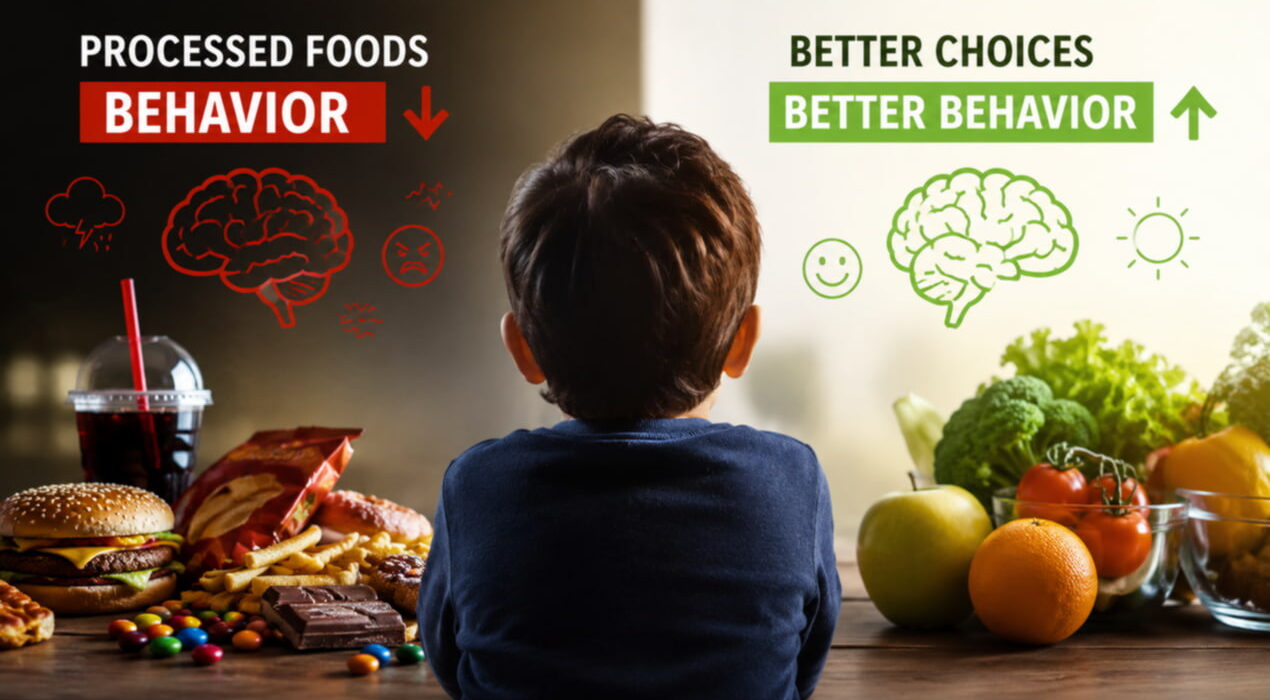
Processed Foods and Preschool Behavior: Study Links Ultra-Processed Diets to Emotional Challenges
A new preschool behavior study suggests that what young children eat may influence how they feel and act later. Researchers found that children who consumed more ultra-processed foods showed higher rates of emotional and behavioral difficulties during early childhood.
Scientists from the University of Toronto analyzed data from more than 2,000 Canadian children. They discovered links between diets high in ultra-processed foods and increased anxiety, fearfulness, aggression, and hyperactivity by age five.
Early Eating Habits Matter
The preschool years play a major role in brain development. Children also develop food preferences during this stage. Therefore, experts believe healthy eating habits should begin early.
The researchers used information from the CHILD Cohort Study. They reviewed dietary patterns when children were three years old. Later, they assessed emotional and behavioral well-being using the Child Behavior Checklist.
Results showed that every 10 percent increase in calories from ultra-processed foods is related to greater behavioral difficulties. Higher scores reflected more reported challenges.
Foods Linked to Stronger Effects
Certain products showed stronger associations. These included sugary drinks, artificially sweetened beverages, and ready-to-eat or ready-to-heat foods. Examples included French fries and macaroni and cheese.
However, the study also offered encouraging findings. Replacing some ultra-processed foods with fruits, vegetables, and other minimally processed options linked to lower behavioral scores.
Small Changes Can Help
Lead researcher Kozeta Miliku emphasized that families often choose convenience foods because they are affordable and accessible. In addition, busy schedules can limit healthy choices.
Still, even modest dietary changes may support healthier development. For example, parents and caregivers can offer fruit as a snack or swap sugary drinks for water.
Researchers stressed that the goal is not perfection. Instead, this preschool behavior study provides evidence that helps families make informed decisions and gradually build healthier eating habits for children.