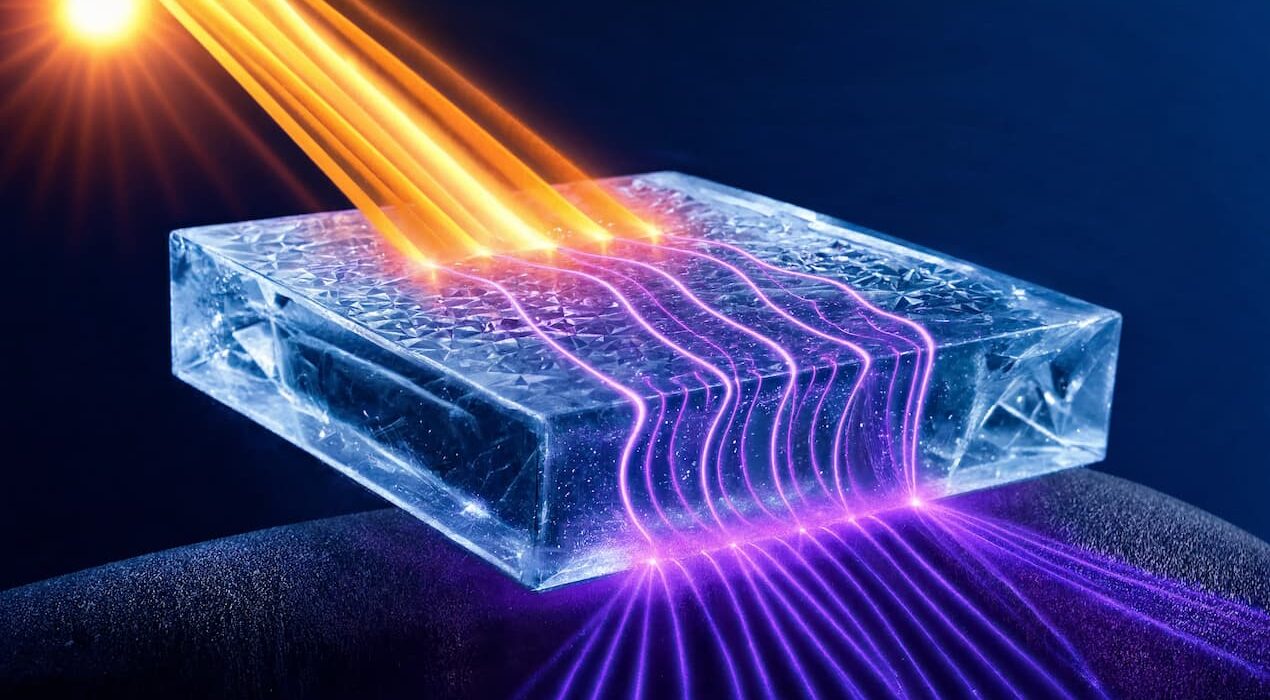
Solid State Upconversion: Turning Sunlight Into UV Light
Solid state upconversion makes sunlight generate UV. The process joins two low‑energy photons into one higher‑energy photon. Kyushu University researchers showed this works in a solid film.
Why Efficiency Matters
Higher efficiency reduces waste and cuts production cost. The team recorded a 1.9 % conversion under natural outdoor light. That level is remarkable for a material that runs on everyday sun. The material starts with DHI molecules decorated with alkyl chains. Those chains set a precise distance between neighboring units. The spacing allows energy to hop while preventing loss pathways. Resulting films emit bright visible light and retain excited states longer. Upconverted UV can drive green‑chemistry reactions. It powers air‑cleaning systems that use light instead of heat. Manufacturers could use it for low‑intensity 3D printing without extra lamps. The synthesis relies on inexpensive chemicals and simple stirring.Scaling up does not require toxic solvents or high‑pressure equipment.Because the material works under low light, it suits indoor installations. Researchers plan to pair it with solar cells for self‑sustaining modules. Future devices may harvest UV for sterilization, curing resins, or water treatment. The breakthrough follows years of effort to lock molecules in place. It proves that careful spacing can turn a quantum trick into a practical tool. The team has filed a patent for the design. They also plan to test the material on flexible panels. Overall the work opens a path toward sunlight‑driven UV technologies. The next step is integrating the film into real devices.