Quantum Computer Breakthrough Extends Magnon Lifetimes
Scientists have achieved a major quantum computer breakthrough that could transform future computing. Researchers extended magnon lifetimes almost 100 times beyond previous records. The discovery came from an international team led by the University of Vienna. Their findings could help create powerful quantum computers as small as a coin.
Longer-Lived Magnons Open New Possibilities
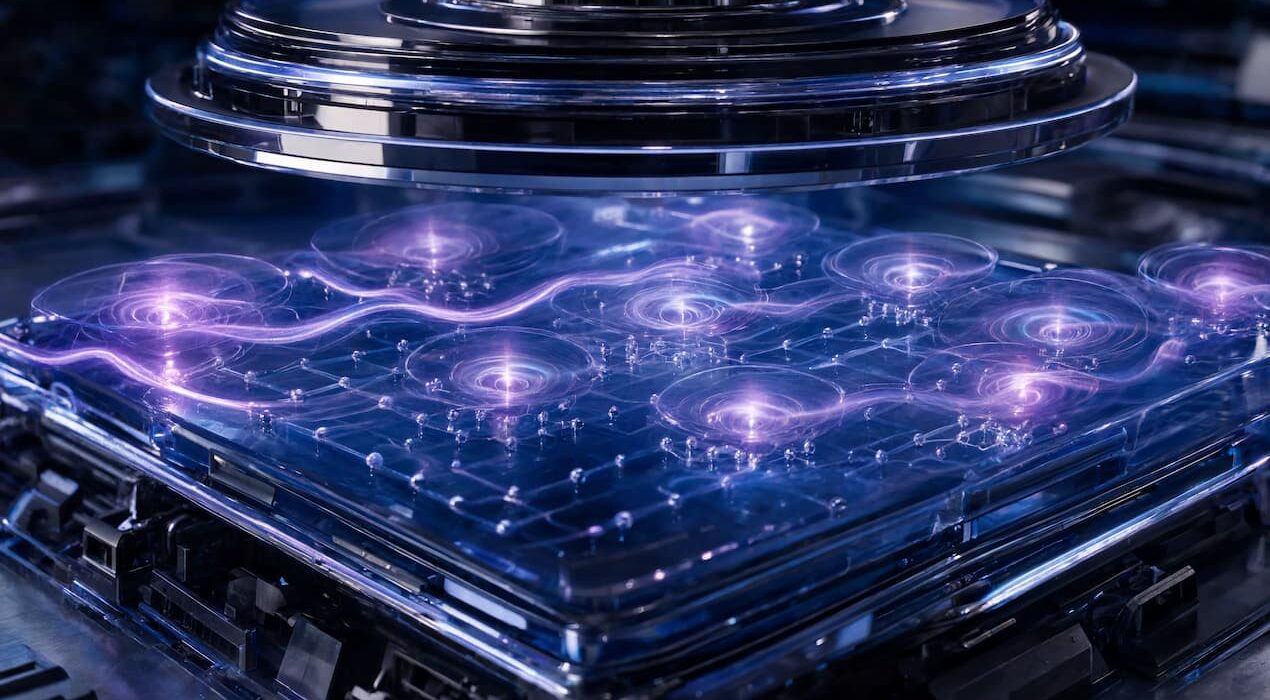
Magnons are tiny magnetic waves that move through solid materials. They can carry quantum information inside extremely small electronic circuits. Previously, magnons survived for only a few hundred nanoseconds. That short lifespan limited their practical use in quantum technology. Researchers solved this challenge with two important improvements. First, they used short-wavelength magnons that resist surface defects better. Next, they cooled ultra-pure yttrium iron garnet spheres to 30 millikelvin. These extremely low temperatures reduced the thermal activity that destroys magnons. As a result, magnons survived for up to 18 microseconds. This lifespan makes them much more reliable for carrying quantum information. The team also tested crystals with different purity levels. Purer materials consistently produced longer-lasting magnons. Scientists concluded that material quality limits magnon performance. Therefore, future improvements may come from cleaner materials instead of new physical theories.
Smaller Quantum Computers Move Closer
The longer lifetime allows magnons to store quantum information more effectively. They may also connect hundreds of qubits through one shared communication channel. Researchers believe magnons could become efficient quantum memory units. They may also help different quantum systems exchange information smoothly. This advancement could simplify future quantum processor designs. It may also reduce the size of advanced quantum devices dramatically. Although more research remains necessary, the results mark an important milestone. Future discoveries could bring compact quantum computers much closer to everyday applications.