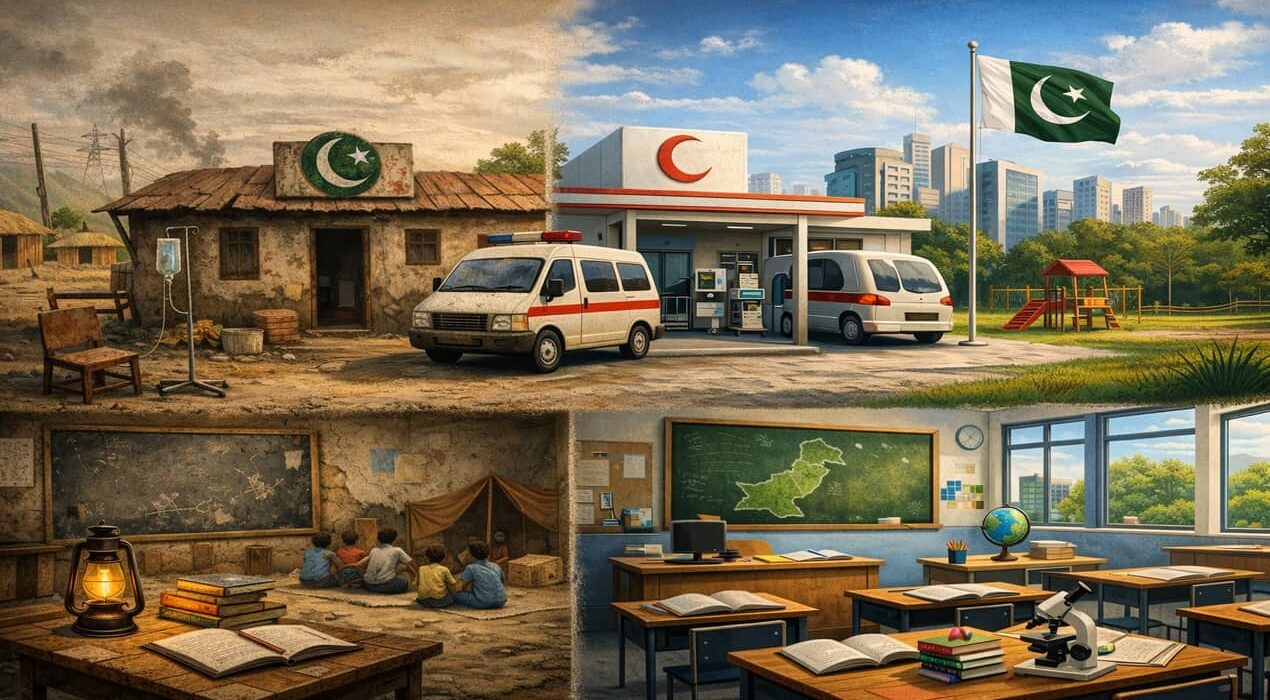
Provincial Spending Gap Pakistan World Bank Flags Inequality in Health and Education
The provincial spending gap in Pakistan continues to grow, raising serious concerns. The World Bank reports major funding differences across cities and districts. For example, Quetta receives 475% more funds per person, while Lahore gets 440% more. However, higher funding does not always improve results. In many areas, performance has declined despite increased spending. This trend highlights gaps in governance and service quality.
Education Spending vs Results
Education spending has increased sharply over the years. Between 2009 and 2023, per capita education spending rose by 200% to 650% in some provinces. However, outcomes do not reflect this growth. For example, Sindh saw a 4% drop in school enrollment. Similarly, Balochistan recorded an 11% decline. Adult literacy in Sindh also fell slightly. In contrast, Khyber Pakhtunkhwa showed better results. Despite lower spending, enrollment increased by 2%. In addition, adult literacy improved by 9%. These differences suggest that efficiency matters more than spending alone. Strong systems and better management can deliver improved outcomes.
Private Schools and Access
Private school enrollment varies widely across provinces. Punjab leads, with 30% to 40% of children in private schools. Meanwhile, Sindh and Khyber Pakhtunkhwa range between 20% and 30%. On the other hand, Balochistan has less than 10% private school participation. This gap shows unequal access to quality education. Therefore, families in some regions depend more on public systems. However, public services often struggle to meet demand.
Health Sector Challenges
The health sector shows a similar pattern. Over the past 15 years, spending increased significantly. Punjab saw a 200% rise, while Balochistan recorded a 440% increase. Despite this, access to healthcare has worsened. The share of people living within 15 minutes of a health facility has dropped. In some areas, access declined by up to 18%. As a result, many communities face limited healthcare options. This issue highlights inefficiencies in planning and service delivery.
The provincial spending gap in Pakistan reflects deeper structural issues. More funding alone cannot solve these challenges. Instead, better governance and accountability are essential. Policymakers must focus on outcomes, not just budgets. Improved service quality can ensure fair access for all communities.