Pakistan’s First MS Stroke Intervention Program Approved by UHS
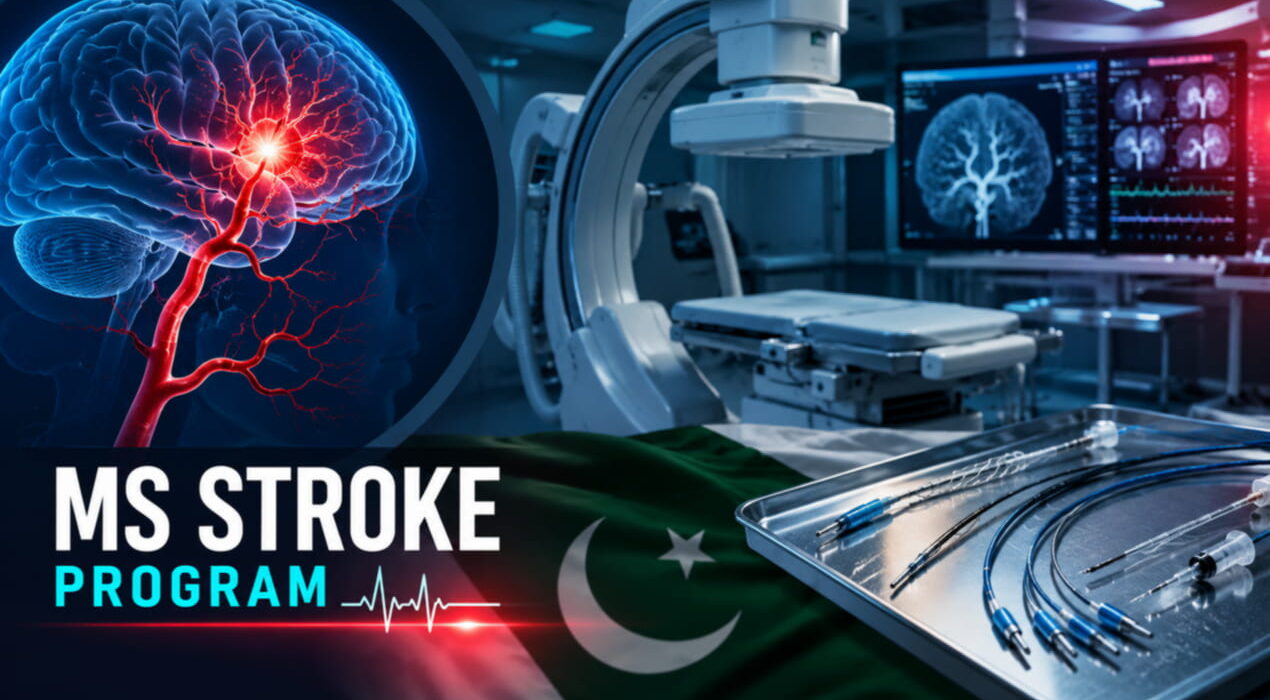
The University of Health Sciences (UHS) has approved Pakistan’s first MS Stroke Program to train doctors in advanced stroke treatment. The decision came during the 43rd Academic Council meeting. UHS Vice Chancellor Prof Ahsan Waheed Rathore chaired the session. The new degree focuses on developing experts in modern stroke care. It also supports Punjab’s growing network of comprehensive stroke centres. Therefore, patients may receive faster and more effective treatment in the future.
Advanced Training for Better Stroke Care
The new program will prepare specialists in interventional neuroradiology and endovascular stroke management. Students will learn advanced catheter-based procedures for treating acute ischemic stroke. In addition, they will gain practical skills for managing other cerebrovascular disorders. These techniques can improve treatment speed and reduce serious complications. As a result, more patients could recover with fewer long-term disabilities.
Prof Ahsan Waheed Rathore said Punjab needs more trained specialists as stroke services continue to expand. He explained that the degree will help meet this growing demand. Furthermore, the program will strengthen emergency stroke care across the province. Experts believe skilled professionals can improve patient outcomes through timely medical intervention. This initiative also reflects UHS’s commitment to modern medical education.
Council Approves New Academic Programs
The Academic Council also approved new PhD curricula in nursing, public health, oral biology, and medical education. Moreover, members updated several postgraduate and certificate programs. These changes aim to improve research quality, clinical training, and healthcare education. The council expects these revisions to better prepare future healthcare professionals.
New Requirement for PhD Scholars
In another important decision, the council introduced a new rule for PhD students. Every scholar must attend at least three national conferences or seminars. They must also participate in one international academic event before receiving a doctoral degree. Consequently, researchers will gain wider academic exposure, strengthen professional networks, and share their work with the global scientific community while improving research standards across Pakistan.