MQM-P New Provinces Demand Gains Momentum with Separate Karachi, Hyderabad Events
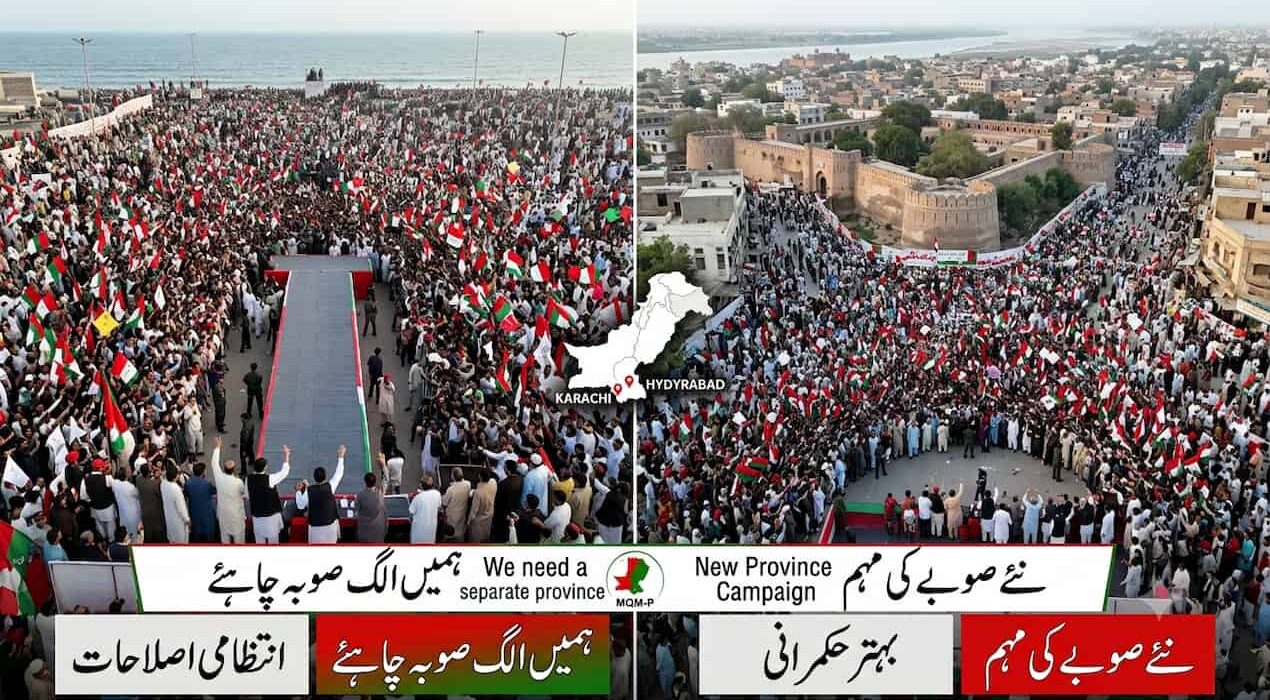
MQM-P new provinces remained at the centre of the party’s political campaign on Saturday as its senior leadership renewed calls for administrative reforms across Pakistan. Party Chairman Khalid Maqbool Siddiqui led a rally in Hyderabad, while senior leader and Federal Health Minister Mustafa Kamal addressed a separate press conference in Karachi. The party argued that Pakistan’s growing population requires more administrative units to improve governance, public services, and fair distribution of resources. However, the separate appearances also highlighted internal differences because neither leader attended the other’s event.
MQM-P Defends Separate Province Proposal
Addressing supporters in Hyderabad, Dr Siddiqui said the MQM-P had not abandoned its demand for a separate province in Sindh. He claimed the proposed province would be formed on the basis of “exchange of land” and “mother tongue.” He also said Mohajirs migrated to Pakistan by choice under the Liaquat-Nehru Pact and rejected criticism of the party’s position.
Furthermore, Siddiqui said Karachi contributes about 97 percent of Sindh’s revenue, while Hyderabad and Mirpurkhas also make significant contributions. He argued that urban areas generate most of the province’s income but do not receive a fair share of development funds. Therefore, he called for equal representation and better administrative arrangements. He added that accurate population counts would strengthen support for the party’s proposal.
Kamal Calls for Administrative Reforms
Meanwhile, Mustafa Kamal stressed that the demand for new provinces is based on administrative needs rather than ethnic or linguistic divisions. He said the current governance structure no longer meets the needs of Pakistan’s expanding population. Kamal claimed the Sindh government received Rs22 trillion over the past 18 years but allocated only Rs680 billion to Karachi despite the city’s major contribution to provincial revenue.
In addition, Kamal criticised the provincial government for failing to improve water supply, sanitation, healthcare, education, and transport services. He also called for stronger local governments and accused the PPP of blocking MQM-P’s constitutional reform proposals in parliament. As a result, he urged citizens to support the party’s public campaign for administrative reforms through peaceful and democratic means.