Food Safety Review Finds 36% of Samples Below Standards
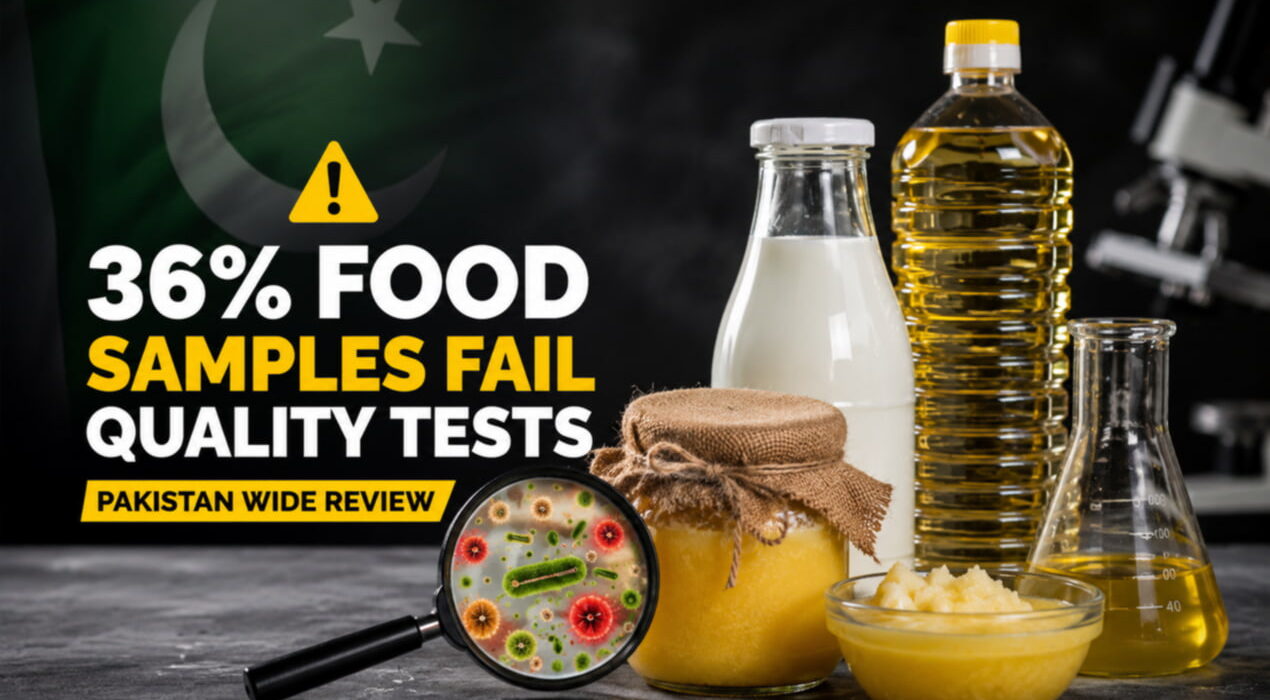
Nearly 36% of packaged ghee, edible oil and milk samples failed national standards in Pakistan. These food safety review tests covered 491 samples across the country.
The assessment found concerns in several kitchen products. However, failure rates differed between categories.
Vanaspati ghee recorded the highest failure rate at 48%. In addition, 27% of blended cooking oil samples failed required standards. Packaged milk followed, with 25% of samples below quality requirements.
The findings have raised questions about food safety. Consumers rely on packaged products daily, making quality checks important.
Government Plans Nationwide Survey
The government has ordered a nationwide survey of loose and unpackaged ghee, oil and milk. Officials will use it to assess product quality across regions.
The review could identify areas with repeated concerns. Therefore, authorities may gain a better picture of food safety risks.
Officials are also reviewing safety measures. As a result, stronger regulatory action could follow if further problems appear.
What the Findings Mean
The results highlight the need for regular testing and stronger monitoring. Moreover, clear standards can help protect consumers and support food businesses.
Loose products will receive attention during the survey. This step may reveal concerns that packaged product checks do not capture.
For consumers, the findings offer a reason to stay alert. Checking labels, choosing trusted products and reporting issues can support safer choices.
At the same time, the government faces a task. Effective inspections, results and timely action can improve public confidence.
The assessment does not mean every product fails quality checks. Instead, it shows why consistent testing matters across Pakistan.
With broader sampling planned, authorities can understand regional trends. They can then target enforcement where it is most needed.
Regular monitoring can encourage manufacturers and sellers to follow national requirements. Ultimately, stronger oversight can improve food quality and protect public health.