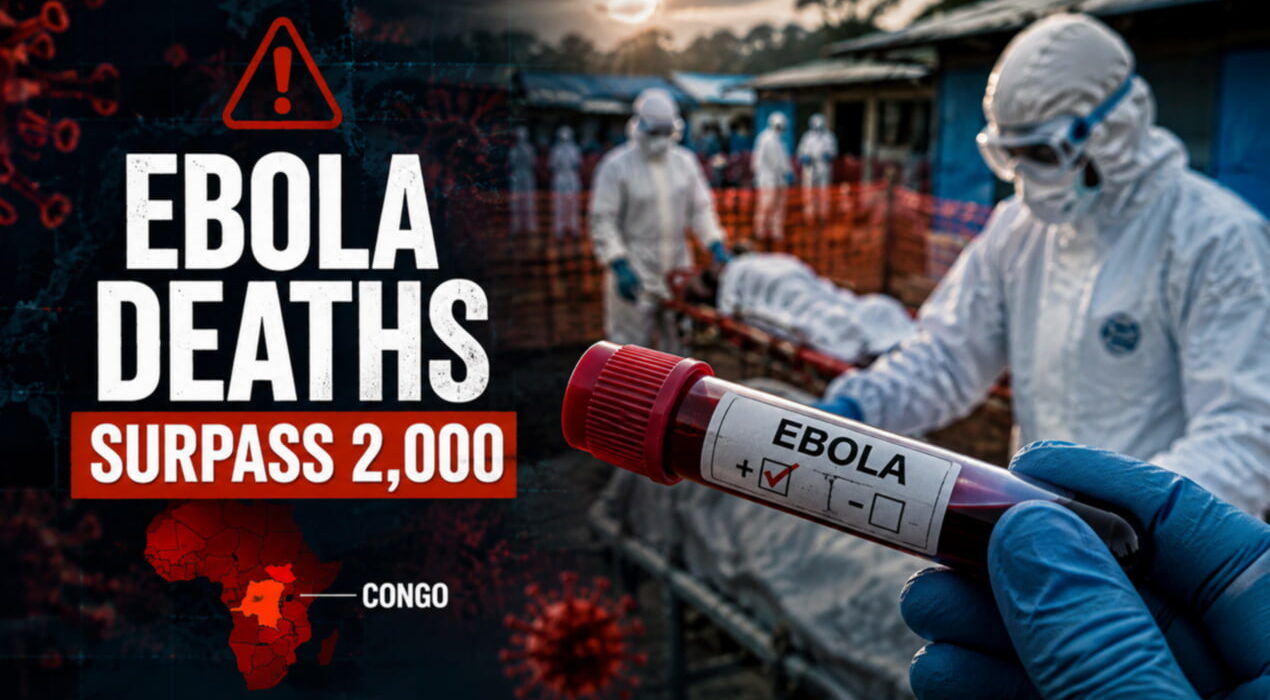
Congo Ebola Outbreak Death Toll Surpasses 2,000
At least 2,000 people have died in Congo’s Ebola outbreak, according to the latest government data. The Congo Ebola crisis has become the fastest-growing outbreak on record.
Officials reported 4,381 confirmed cases, including 2,011 deaths. Meanwhile, 704 patients remain in admission and isolation facilities.
The outbreak began officially on May 15. However, health authorities believe it started months earlier in a remote area.
Rapidly Rising Death Toll
The outbreak reached 1,000 deaths within about nine weeks. Shockingly, another 1,000 deaths followed in only three weeks.
As a result, responders face growing pressure across five affected provinces. Remote communities also remain difficult to reach because of poor roads and rebel conflict.
In addition, work stoppages have affected the response. Many health workers have reportedly stopped working because of unpaid wages.
Most new infections also occur outside monitored contacts. Therefore, health teams face greater challenges when tracking potential cases.
A Major Ebola Challenge
The current outbreak has already become the second-largest Ebola outbreak in history. Only the 2014–2016 West Africa outbreak was larger.
That outbreak recorded more than 28,000 cases and over 11,000 deaths. Congo’s current crisis is therefore gaining global attention.
The outbreak involves the rare Bundibugyo virus. Unlike some other Ebola strains, it has no approved vaccine or treatment.
Clinical trials for potential vaccines and treatments have now started in Ituri. The province remains the outbreak’s epicenter.
WHO Raises Concerns
The World Health Organization said the outbreak likely began in February. Authorities detected it several months later in a vulnerable region.
WHO also reported that some early cases were mistaken for malaria and typhoid. Early testing also focused on a more common Ebola type.
Therefore, delayed detection may have allowed the virus to spread further. Health authorities now face an urgent need for faster testing.
Better access to remote communities could also strengthen the response. Meanwhile, continued clinical research may provide new tools against the virus.
The rising death toll highlights the need for rapid action. Stronger health services, timely testing and community support remain essential.