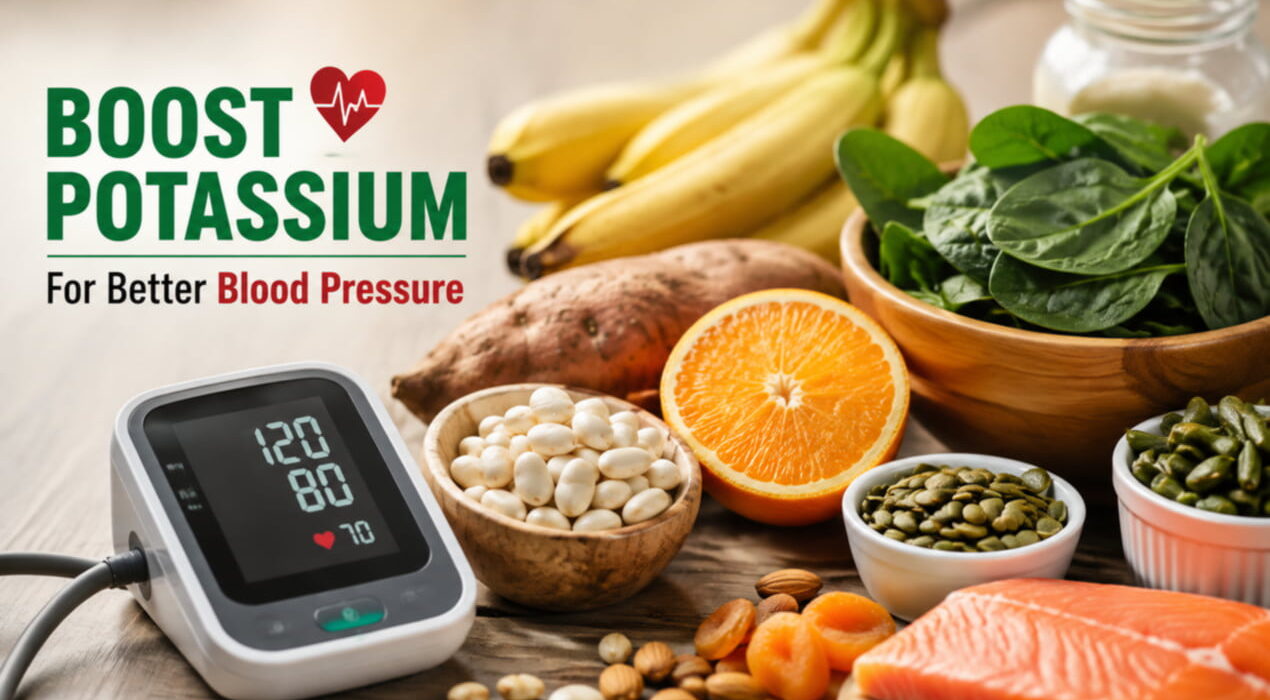
Potassium Intake for Blood Pressure
Improving blood pressure control may require more than cutting salt. New research suggests that increasing potassium intake could support healthier readings.
Experts say sodium and potassium work together in the body. Too much sodium can increase fluid retention, while potassium helps balance sodium and supports normal blood vessel function.
Most people get sodium from packaged foods, restaurant meals, bread, and snacks. Therefore, checking food labels can help reduce hidden sodium.
Why potassium matters
Recent evidence suggests the sodium-to-potassium balance may predict heart health better than sodium intake alone. A 2025 review found that extra potassium may lower blood pressure.
Good sources include potatoes, spinach, beans, lentils, yogurt, salmon, cantaloupe, and bananas. These foods provide potassium and nutrients.
The American Heart Association recommends limiting sodium to 2,300 milligrams daily. An ideal target is about 1,500 milligrams for adults.
Simple dietary changes
A practical approach is to choose fresh foods more often. Add vegetables to meals, eat fruit as a snack, and include beans regularly.
The DASH eating plan can support healthier blood pressure. However, dietary changes should complement medical treatment rather than replace medicines.
People can track meals to estimate their mineral intake. A doctor or dietitian can then suggest realistic goals for individual needs.
Results may take days or weeks, depending on age, medicines, and genetics. Regular blood pressure checks can show their response.
Who should be careful?
Increasing potassium is not suitable for everyone. People with kidney disease, heart failure, high blood potassium, or some conditions should seek professional advice first.
Some medicines can raise potassium levels. Therefore, supplements should never be started without medical guidance.
For most people, whole foods are a better choice than supplements. Combining lower sodium intake with potassium-rich foods may offer stronger support for heart health and healthier blood pressure.