Nicotine Blood Vessels: Review Maps Cardiovascular Harm
A major review has mapped how nicotine affects blood vessels. Published in Nature Reviews Cardiology, the review traces changes from nicotine receptor activation to plaque rupture.
The findings cover cigarettes, waterpipes, heated tobacco, e-cigarettes and oral nicotine products. Researchers found different levels of cardiovascular risk across these products. Combustible products ranked highest, while oral products ranked lower. However, complete abstinence remains the only risk-free option.
How nicotine affects blood vessels
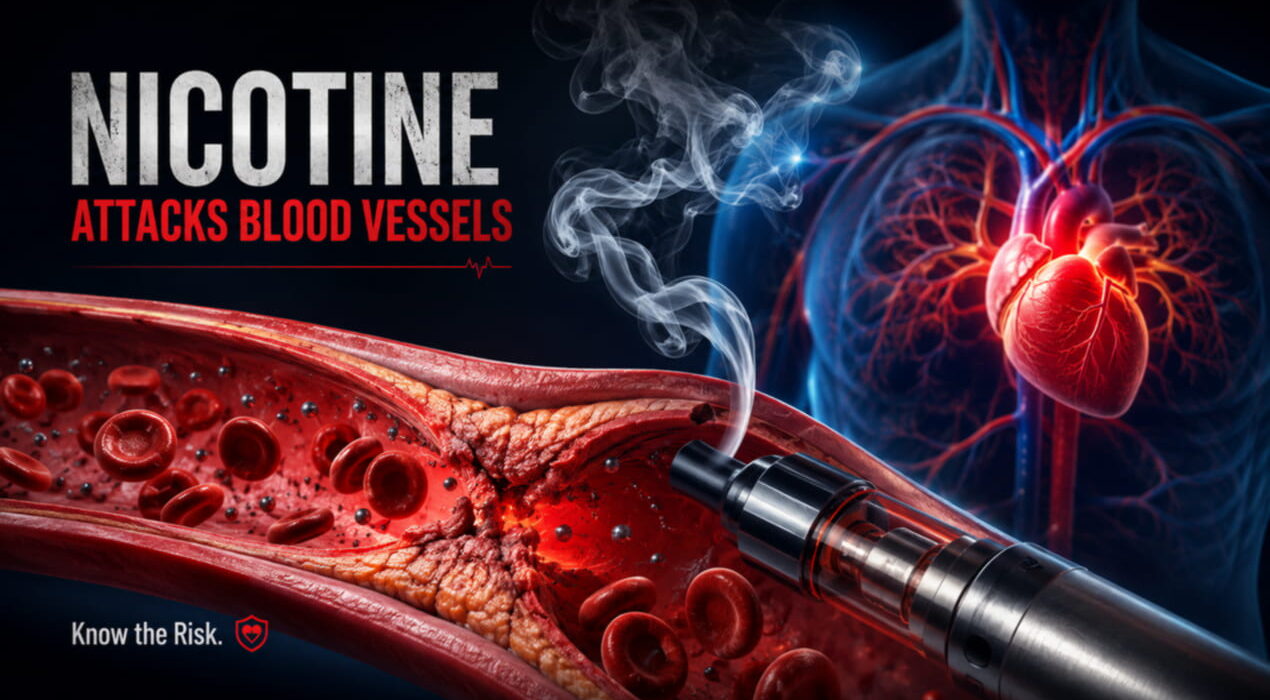
Nicotine can affect two cell types within vessel walls. The review says nicotine can reduce prostacyclin, a substance that supports vessel relaxation. It can also increase endothelin, which narrows blood vessels. As a result, vessels may constrict more and relax less.
Nicotine also directly affects smooth muscle cells around vessels. It can disrupt potassium channels and calcium control. Therefore, these muscles may tighten even when the vessel lining remains healthy.
Cardiovascular risks across products
The review connects these changes with inflammation, clotting and endothelial dysfunction. These processes can contribute to atherosclerosis, high blood pressure and heart failure. In severe cases, plaque rupture can trigger heart attacks or strokes.
Combustion products showed the highest cardiovascular risk. Heated products followed, then e-cigarettes and oral nicotine products. Still, lower exposure does not mean zero risk.
The authors also highlight nicotine’s dependence potential. Addiction can encourage long-term use and continued exposure. For young people, early nicotine use may create a lasting pathway toward dependence.
Why the findings matter
Researchers call for stronger, unified regulation of nicotine products. They also support prevention efforts, especially for young people. Measures such as taxation, flavour restrictions and quitting support may help reduce nicotine use.
Overall, the review shows that nicotine can directly affect vascular function. Understanding these pathways may help improve public health policies. People who use nicotine products can discuss quitting options with healthcare professionals for overall health.