Retailers Tax Net Growth POS Integration Surges in Pakistan
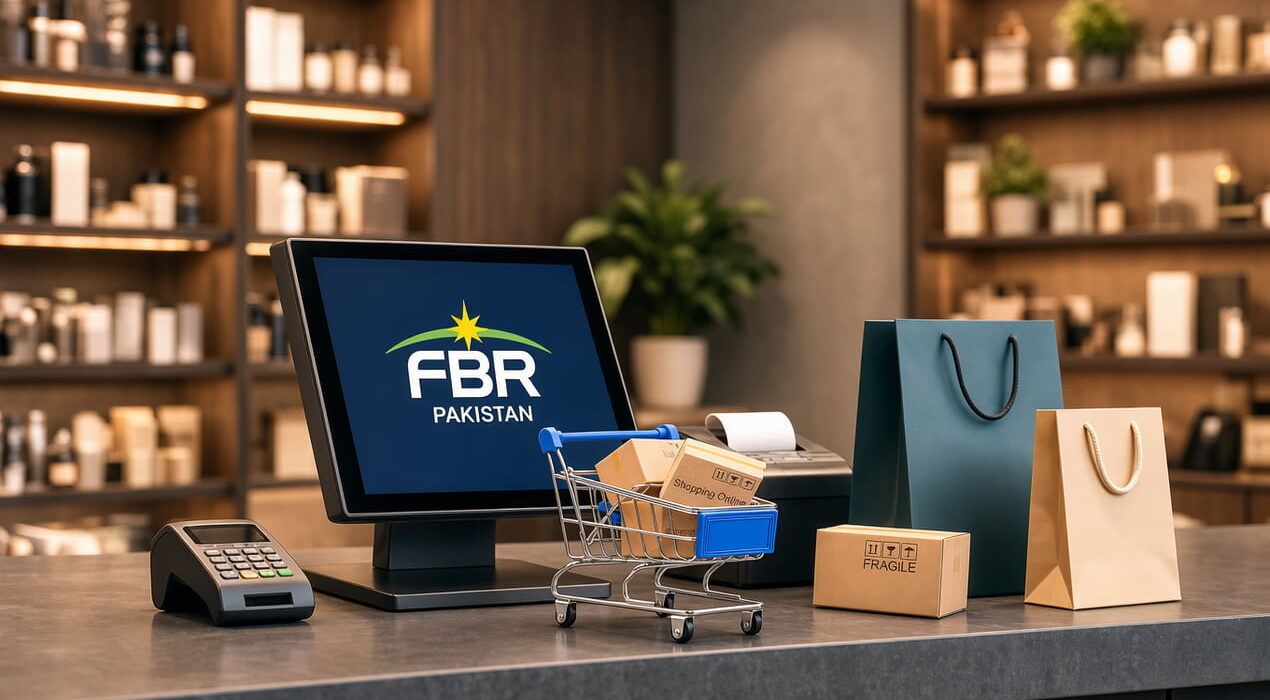
Pakistan saw strong retailers tax net growth last fiscal year. The government added over 17,300 large retailers to the POS system. As a result, the number increased by 31% in one year. This rise shows renewed momentum after years of slow progress. In addition, officials now aim to keep this growing base stable. The Federal Board of Revenue (FBR) launched the POS system in 2019. However, it remained slow due to technical and compliance issues. Now, the system shows better results. Under this system, each sale is recorded instantly. Therefore, retailers cannot underreport their income later. This improves transparency and builds trust in tax collection.
Moreover, the FBR earns Rs1 per receipt for staff welfare. Last year, this income reached Rs871 million, up by 17%.
Revenue Growth and Wider Coverage
Due to this expansion, tax collection also improved. The government collected Rs132 billion from these retailers. This marks a 16% increase compared to the previous year. Tier-1 retailers must connect all outlets to the system. As a result, more branches now report sales digitally. By July 2026, over 46,800 branches were active on the network. This shift supports a real time tax system. In other words, authorities now track sales instantly instead of waiting months.
Challenges from New Trader Scheme
However, the new small trader scheme may slow progress. The government raised the sales threshold to Rs200 million. As a result, some retailers may avoid POS integration. In addition, small traders no longer need digital payment machines. They also pay only 1% tax on annual sales. Meanwhile, salaried individuals face much higher tax rates. This difference raises concerns about fairness. Therefore, experts warn that the policy could weaken documentation efforts.
A Step Toward a Digital Economy
Despite challenges, the results remain promising. Each retailer that joins the system reports higher taxes. This trend confirms the system’s effectiveness. Furthermore, Pakistan is moving toward a digital tax economy. Sales data now connects income tax and sales tax systems. As a result, authorities gain better control and insight. Overall, the retailer’s tax net expansion marks a major reform step. It highlights progress toward transparency, fairness, and stronger economic management.