Indus River Shift Risk Rises as Flood Threat Grows in Sindh
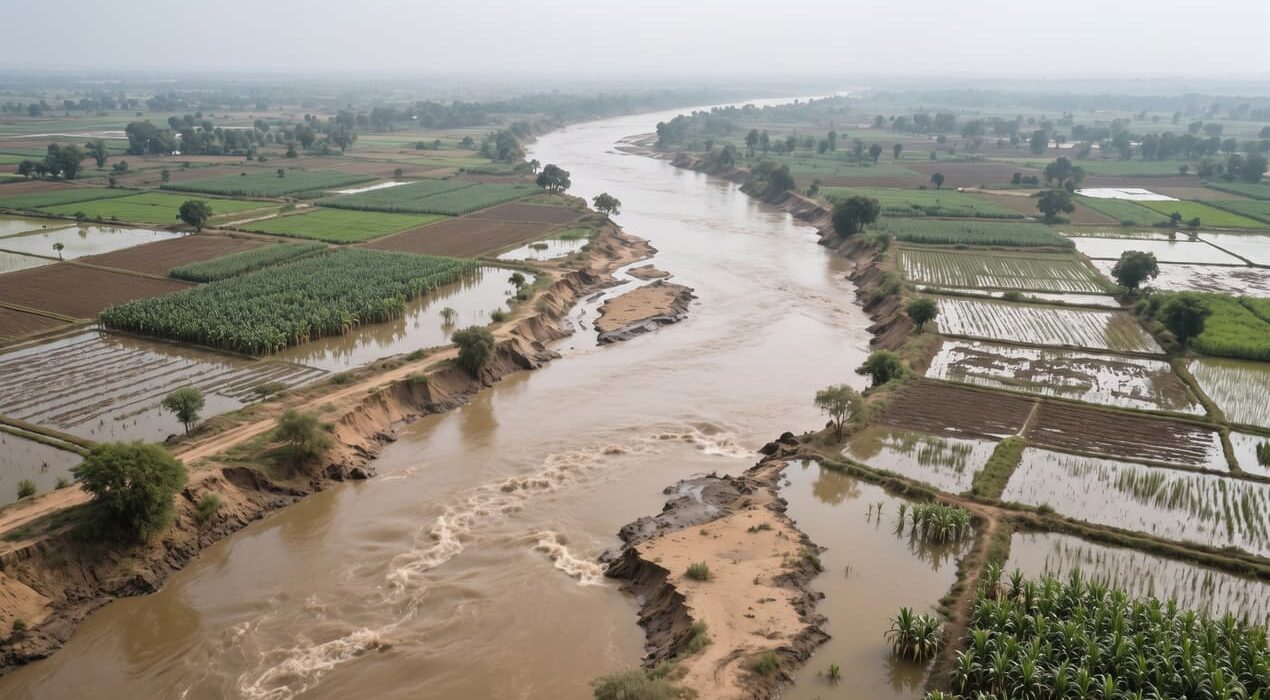
The Indus river shift risk is growing fast near Larkana. New data from SUPARCO confirms the river has moved 4.5 km. As a result, nearby flood protection bunds now face serious danger. Fifteen years after the 2010 Pakistan floods, the region still shows similar risks. However, little has changed on the ground. Therefore, experts warn that another disaster could happen again.
Population Pressure and Urban Expansion
Pakistan’s population has grown rapidly since 1947. Today, it stands at around 250 million people. Consequently, cities continue to expand into unsafe areas. According to the State Bank of Pakistan, the country faces a housing shortage of 10 million units. In addition, the gap increases every year. This shortage pushes people to settle near riverbanks. As a result, natural floodplains are disappearing. These areas once absorbed excess water safely. Now, concrete structures block the river’s natural flow.
Satellite Evidence Shows Alarming Changes
SUPARCO used satellite images from 1990 and 2025 to study the river. The results clearly show major channel movement. For example, the river shifted closer to key flood defenses.
Earlier, the river stayed at a safe distance from the bund. However, it now flows dangerously close. In some areas, it is actively eroding the base of the structure. This erosion increases pressure on the bund. Therefore, even without overflow, the structure could fail suddenly. A collapse would cause a rapid and destructive surge of water.
Why the Risk Is Increasing
Floodplains once gave the river space to spread safely. However, development has replaced these areas with roads and houses. As a result, water levels rise faster during heavy rains.
In addition, climate factors like strong monsoons and glacier melt add more pressure. The river now flows faster and with greater force. Consequently, the chances of a breach increase significantly. If a band fails, people will have very little time to escape. Therefore, authorities must act quickly to reduce the risk.