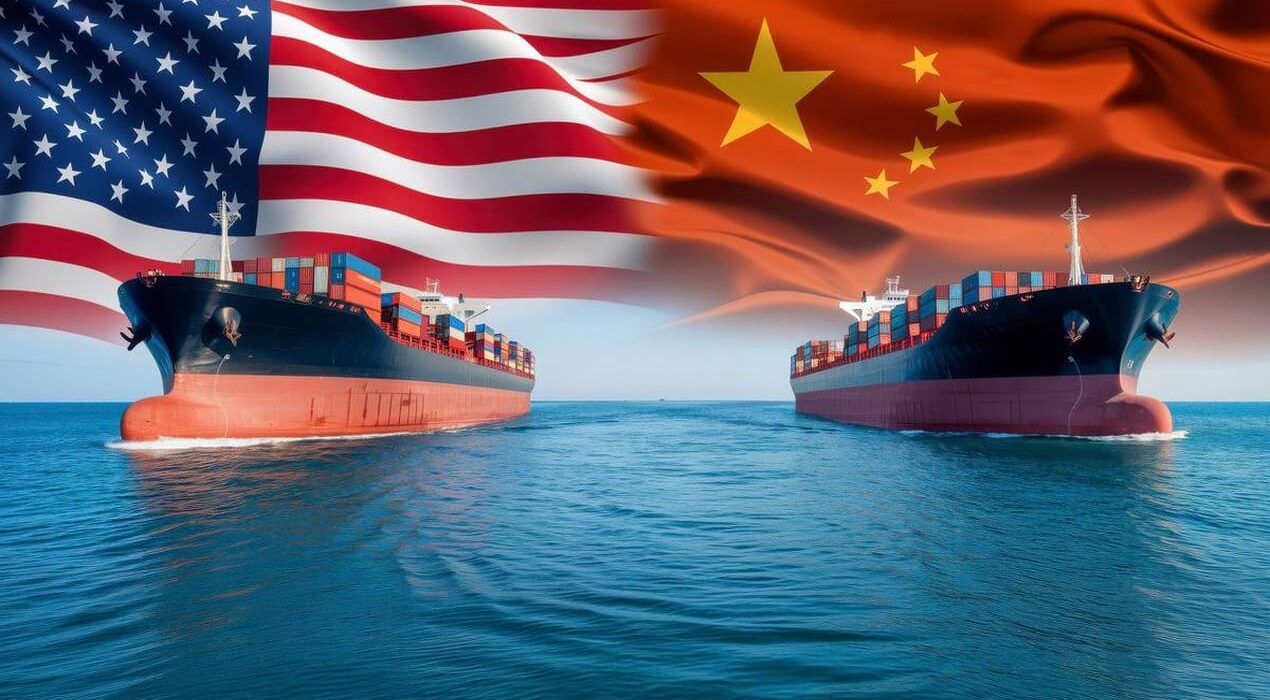
US and China Begin Tit-for-Tat Port Fees, Escalating Maritime Trade Tensions
The United States and China began enforcing new port fees on each other’s ships on Tuesday. This step opens a new chapter in their long-standing trade rivalry.
China confirmed it had started charging additional fees on US-owned, operated, or flagged vessels. However, it exempted Chinese-built ships and empty vessels entering its shipyards for repairs.
According to state broadcaster CCTV, China will collect these fees at the first port of entry or for the first five voyages within a year. The charges follow an annual billing cycle beginning April 17.
Earlier this year, the Trump administration introduced a similar plan. It aimed to reduce China’s control over the global shipping sector and boost US shipbuilding capacity.
Impact Across Global Shipping
The United States plans to start collecting its own port fees on October 14. Analysts expect Chinese shipping giant COSCO to absorb nearly half of the $3.2 billion projected cost by 2026.
In response, China announced identical port fees on US-linked vessels. Analysts estimate the measures could affect 13% of crude tankers and 11% of container ships worldwide.
Experts warn these tit-for-tat actions may distort global freight routes and push up shipping costs. However, some industry consultants believe businesses will adjust and pass on costs to consumers.
Trade tensions rose further after President Trump threatened 100% tariffs on Chinese goods and new export restrictions on critical software. Observers say this shows how trade and environmental policies now serve as instruments of geopolitical influence.
Meanwhile, shares of Shanghai-listed COSCO rose over 2% on Tuesday. The company also announced a share buyback worth $210 million to protect shareholder value.