Pakistan Seeks Qatar LNG Cargo Diversion Amid Oversupply Worries
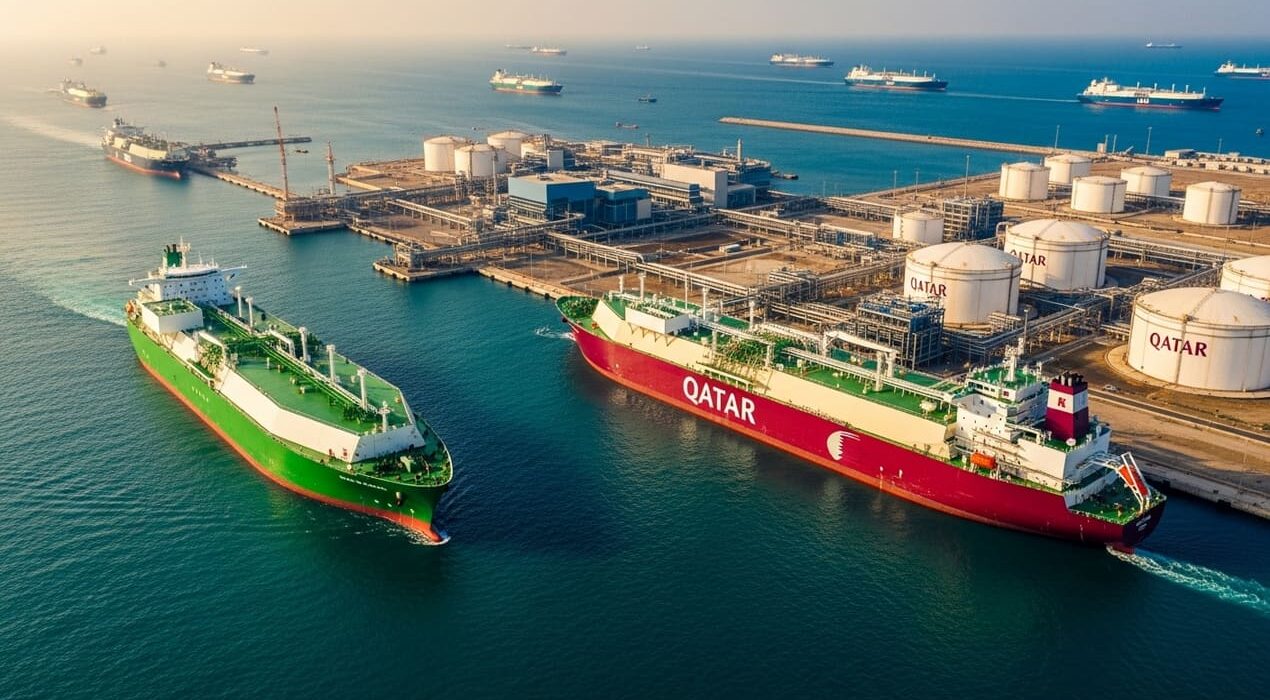
Pakistan has asked Qatar to divert 24 contracted LNG cargoes for 2026. Officials say the plan will be finalised by the end of October. The request comes as gas demand drops across industries and power plants.
The country’s LNG system is facing pressure from excess supply. Storage and distribution facilities are struggling to manage the surplus. As a result, Pakistan wants to sell part of its imported cargoes back to the global market.
Under the net proceed differential clause, Qatar can sell these cargoes internationally. However, Pakistan bears any losses if the selling price is below the contract rate.
Shift in Energy Use
Currently, Pakistan imports nine LNG cargoes from Qatar every month under two contracts. One spans 15 years at 13.37% of Brent crude, and the other 10 years at 10.2%. These deals follow strict “Take-or-Pay” terms, meaning payment is due even if gas isn’t used.
Originally, these imports powered four LNG-based plants in Punjab. However, reduced electricity demand has left the plants running below capacity.
Due to weak demand, Pakistan now faces a surplus of 35 cargoes annually, including 11 from Italian firm ENI. To ease pressure, authorities are diverting one ENI cargo per month to foreign buyers.
Rising Operational Challenges
Pipeline pressure has crossed 5.17 billion cubic feet, surpassing safety limits. To manage this, officials temporarily shut down several local gas fields. However, energy companies warn that repeated shutdowns could damage wells and reduce oil and LPG output.
Attock Refinery has also reported lower crude supply, affecting production levels.
The power and export sectors have seen the sharpest decline in gas use. Power plants consume only 486 mmcfd instead of 800 mmcfd, while industries cut usage from 350 to 100 mmcfd. High RLNG prices and taxes make it harder for businesses to sustain operations.
This oversupply has created financial stress for Pakistan State Oil, which handled LNG imports worth Rs242 billion in 2024–25.