Hidden Gamma-Ray Glow in Milky Way Could Reveal Dark Matter
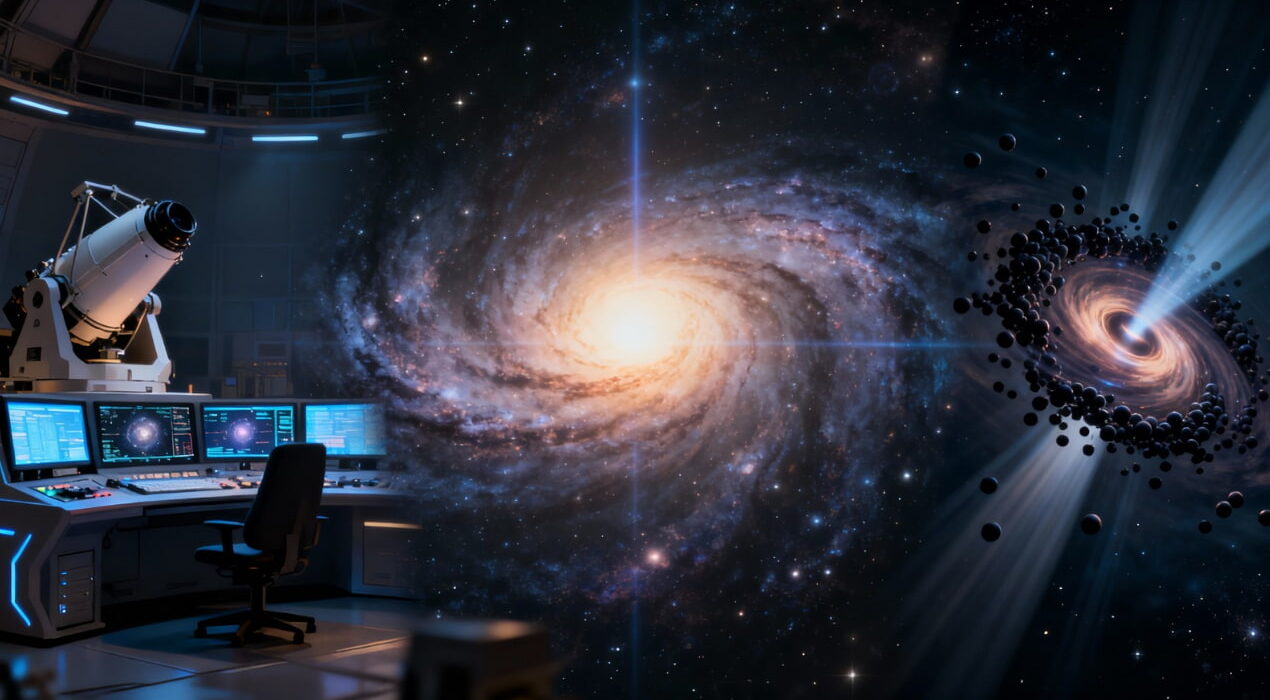
Astronomers have detected a faint but widespread gamma-ray glow across the central region of the Milky Way. This Milky Way gamma glow pushes scientists to ask new questions about our galaxy’s hidden components. Many known sources can’t fully explain the excess energy.
Two Compelling Explanations Emerge
One idea suggests the glow comes from invisible particles known as dark matter colliding and releasing energy. The other idea points to a population of faint, old stars—especially pulsars—that could create similar gamma-ray signals. Both ideas remain under serious investigation.
Dark Matter or Hidden Stars? The Debate Grows
If the Milky Way gamma glow comes from dark matter, it would be one of the strongest pieces of evidence yet in a decades-long search. On the other hand, if the glow is caused by many hidden pulsars, it would reveal a vast new population of stellar remnants we have yet to map. In either case, this finding changes how we view what lies in the galaxy beyond visible stars.
Next Steps: Tools, Telescopes, and Tests
Researchers plan to target the glow with next-generation telescopes and gamma-ray detectors. By mapping details like the glow’s exact shape, spectrum and variability, they hope to narrow down the cause. These investigations could either confirm dark matter’s role or show how much our galaxy still conceals.