Physicists Peek Inside a Molecule’s Nucleus for the First Time
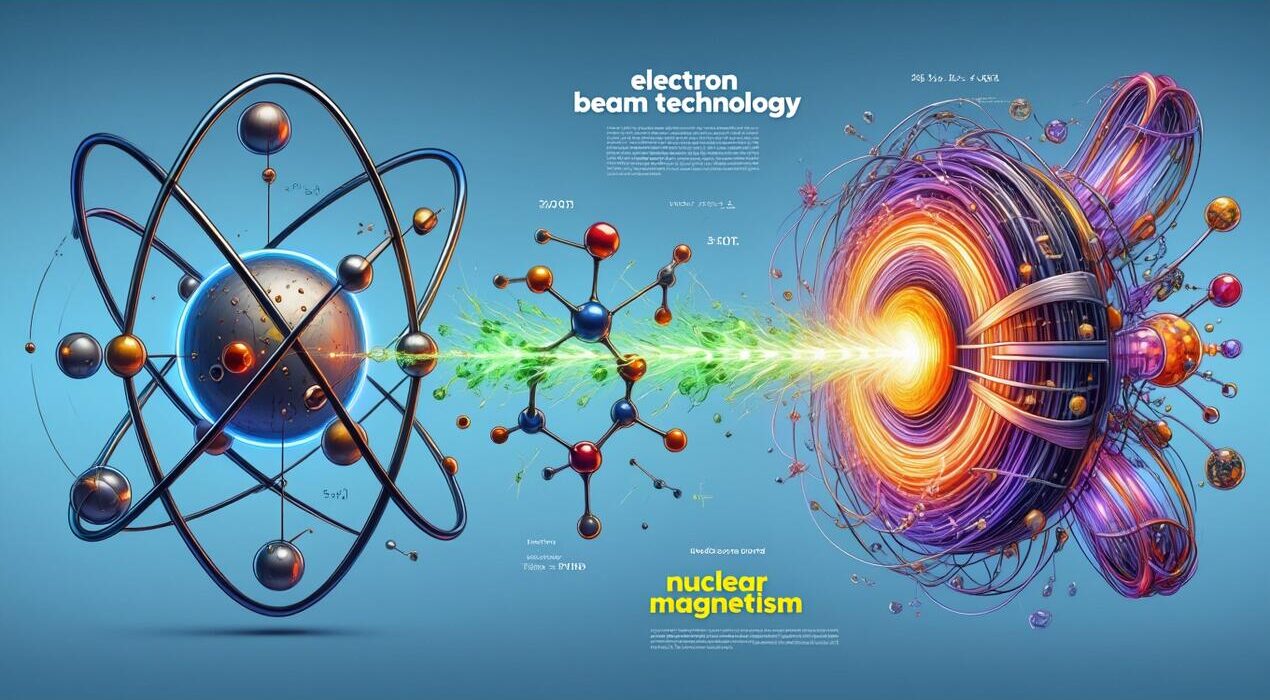
For the first time, physicists have looked inside the nucleus of a molecule using electrons as a probe. This breakthrough revealed a rare phenomenon known as the Bohr Weisskopf effect inside a pear-shaped nucleus.The study marks a major leap in understanding how magnetism behaves within radioactive molecules. Until now, researchers could only study this effect in atoms, not molecules.
Breaking Symmetry in Nature
In physics, symmetry helps explain how the universe stays balanced. If you drop a ball in Tokyo or Seattle, it falls the same way. The laws of physics work consistently everywhere.
However, not everything in nature follows perfect symmetry. For example, matter and antimatter should exist in equal amounts. Yet our universe is filled mostly with matter, and scientists still can’t explain why.This new experiment could offer clues. By examining how magnetism distributes inside a molecule’s nucleus, researchers might better understand why the universe favors matter.
Using Electrons as a Tool
The team used electrons to probe a rare, pear-shaped molecule. These electrons acted like tiny sensors, mapping how magnetism spreads within the nucleus. As a result, scientists observed the Bohr Weisskopf effect for the first time at the molecular level.This finding could help refine theories about symmetry violations in physics. In addition, it may lead to improved models of how matter behaves under extreme conditions.
A New Chapter in Quantum Science
Researchers believe this discovery opens a new frontier in nuclear physics. Therefore, future experiments could explore other exotic molecules to uncover more hidden patterns in nature’s design.