
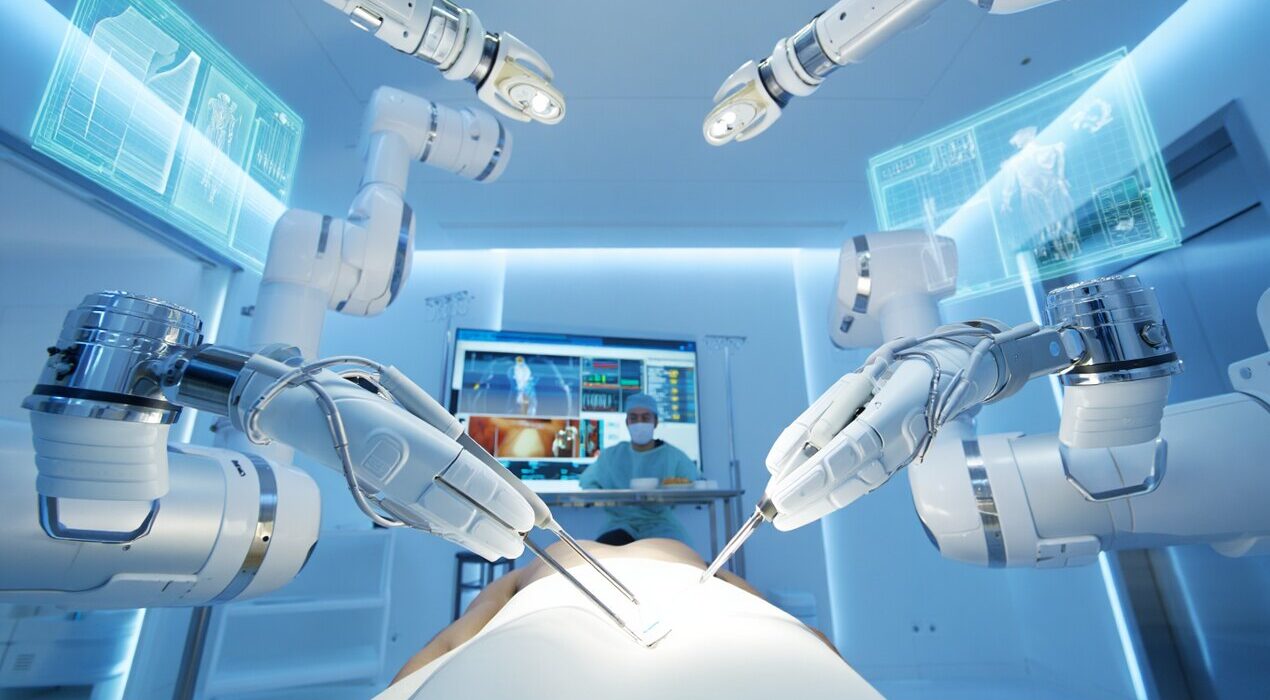
AI Surgical Robots Challenge the Future of Human Surgeons
A bold prediction is reshaping conversations about modern medicine. Advances in surgical robotics now move faster than many expected. As a result, experts question how operating rooms may look soon.AI-driven systems offer speed, accuracy, and consistency. These strengths often exceed human physical limits. Therefore, supporters believe robots could redefine surgical standards.
Real-World Examples Fuel the Debate
One widely discussed case involves Neuralink’s robotic platform. The system implants ultra-thin brain electrodes with micron-level precision. Performing this task by hand would be extremely difficult.In addition, Medtronic’s Hugo robotic system already assists surgeons today. Hospitals have completed more than 130 procedures using this technology. These real-world results add credibility to the claims.
Supporters See Major Benefits
Robots do not experience fatigue or hand tremors. They also maintain focus throughout long procedures. As a result, outcomes can improve in specific surgeries.Studies show reduced blood loss and faster recovery times. Furthermore, machine learning allows systems to improve with each operation. Over time, this data-driven growth strengthens performance.
Surgeons Still Matter
However, many professionals urge caution. Surgery requires judgment, flexibility, and ethical decision-making. Machines cannot fully replicate these human qualities.Unexpected complications often demand quick reasoning. Patient trust also depends on human connection. Therefore, experts view robotics as supportive tools, not replacements.If progress continues, operating rooms will evolve rapidly. Surgeons may shift toward supervisory and decision-making roles. Ultimately, collaboration between humans and machines could define the next era of care.


