Antarctic Glacier Collapses at Record Speed, Raising Sea Level Fears
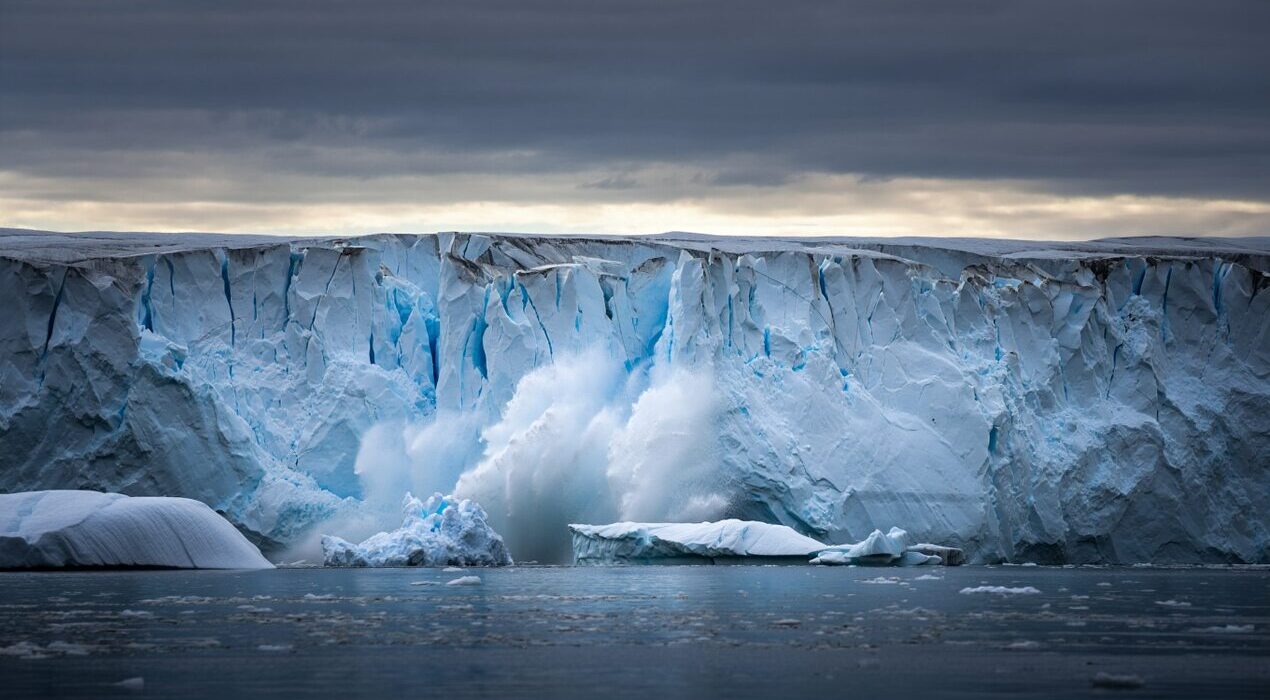
Antarctica is changing faster than we thought. A glacier on the eastern side of the continent just collapsed at an unprecedented speed. Hektoria Glacier lost about five miles of ice in only two months .Scientists call this the fastest glacier collapse ever recorded in modern times. Nearly half of the glacier simply broke apart and disappeared
What Caused the Rapid Collapse?
Researchers from the University of Colorado Boulder led the new study. They published their findings in Nature Geoscience. The culprit lies beneath the ice. Hektoria sat on a flat, underwater bedrock surface. This smooth foundation allowed large sections to suddenly lift off the ground and start floating. Once the ice floated, ocean forces attacked it from below. Cracks opened at the base of the glacier. These cracks eventually connected with fractures on the surface. As a result, a chain reaction caused extensive calving. “We flew over Hektoria in early 2024. I couldn’t believe the vastness of the area that had collapsed,” said Naomi Ochwat, the lead author of the study.
How Scientists Tracked the Disintegration
The team used multiple satellites to watch the event unfold. Frequent observations helped them fill in the time gaps.”If we only had one image every three months, we might not see that the glacier lost two and a half kilometers in two days,” Ochwat explained. Seismic instruments also detected glacier earthquakes. These tremors confirmed that the ice had been firmly grounded before it lifted off.
A Warning for Larger Glacier
Hektoria is relatively small compared to other Antarctic glaciers. It covers about 115 square miles, roughly the size of Philadelphia. However, the same flat bedrock conditions exist beneath many larger glaciers. Therefore, this discovery raises serious concerns.”Hektoria’s retreat is a bit of a shock,” said Ted Scambos, a senior research scientist. “This kind of lightning-fast retreat really changes what’s possible for other, larger glaciers on the continent”. If a massive glacier collapses this quickly, global sea levels could rise dramatically. Scientists now know which conditions to watch for in the future. The flat ice plains beneath glaciers are the key vulnerability.