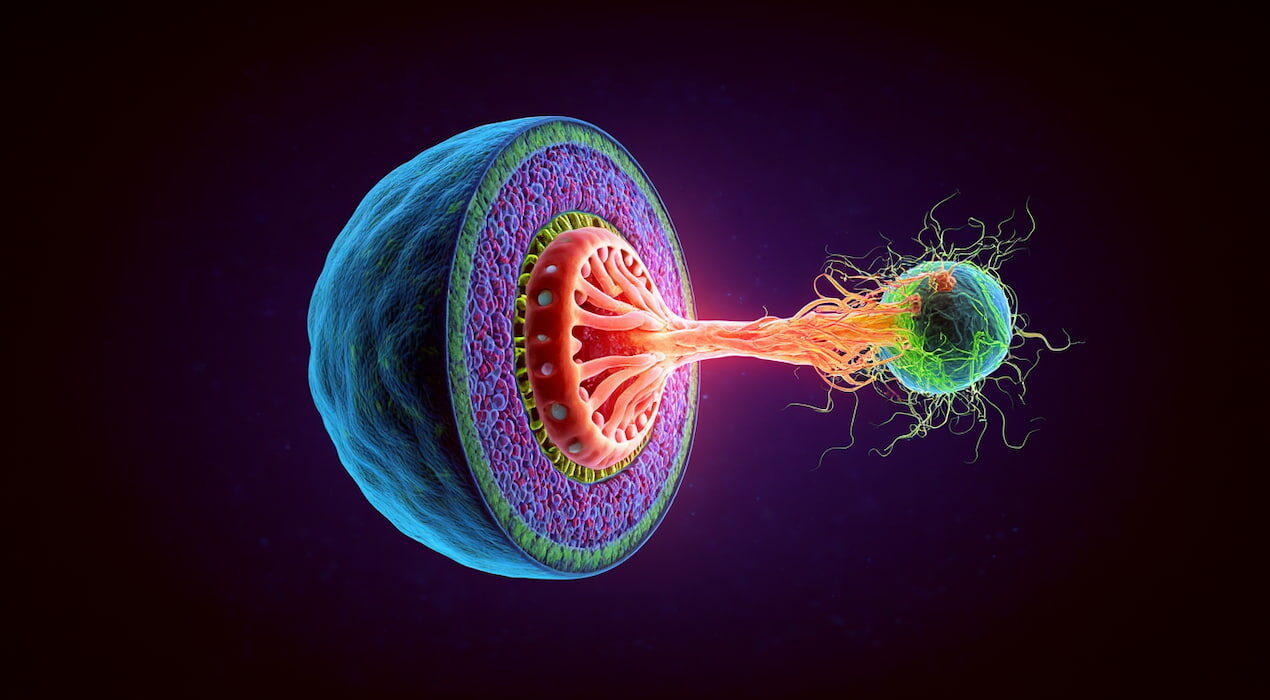
Cell “Overflow Valve” Linked to Parkinson’s Disease
Your cells have a built‑in overflow valve. Think of it like the drain in a sink. It stops things from getting out of balance. Scientists recently decoded this system. They studied a protein called TMEM175. It sits inside lysosomes—the cell’s recycling centers. Its job is to regulate acidity. When TMEM175 works well, waste breakdown runs smoothly. When it fails, harmful buildup can occur. This breakdown is now linked to Parkinson’s disease.
How the Overflow Valve Works
Lysosomes need the right amount of acid to function. A pump pushes protons in to create acidity. But too much acid is also a problem. TMEM175 acts as a pressure release. It lets excess protons escape. At the same time, it transports potassium ions. This dual role keeps the environment stable. The researchers used a technique called patch clamping. They measured electrical activity across the lysosomal membrane. Their results showed that TMEM175 senses rising acidity. Then it adjusts the flow automatically.
Why This Matters for Parkinson’s
For years, scientists debated what TMEM175 actually did. Now they know it is a master regulator. Mutations in this channel disrupt pH balance. As a result, proteins do not degrade properly. Nerve cells become damaged. This process contributes to neurodegenerative diseases like Parkinson’s. The discovery opens a new path for treatment. Drugs that target TMEM175 could help restore balance. They might prevent or slow the disease.
A Promising Future“TMEM175 is the strangest channel I have ever worked on,” said one researcher. But its strangeness may become its strength. By understanding it, scientists can design better therapies. This study was a collaboration across German universities. It was published in PNAS. The findings give hope for future Parkinson’s treatments.