China’s 700 km/h Maglev Train Signals the Future of Ultra-Fast Travel
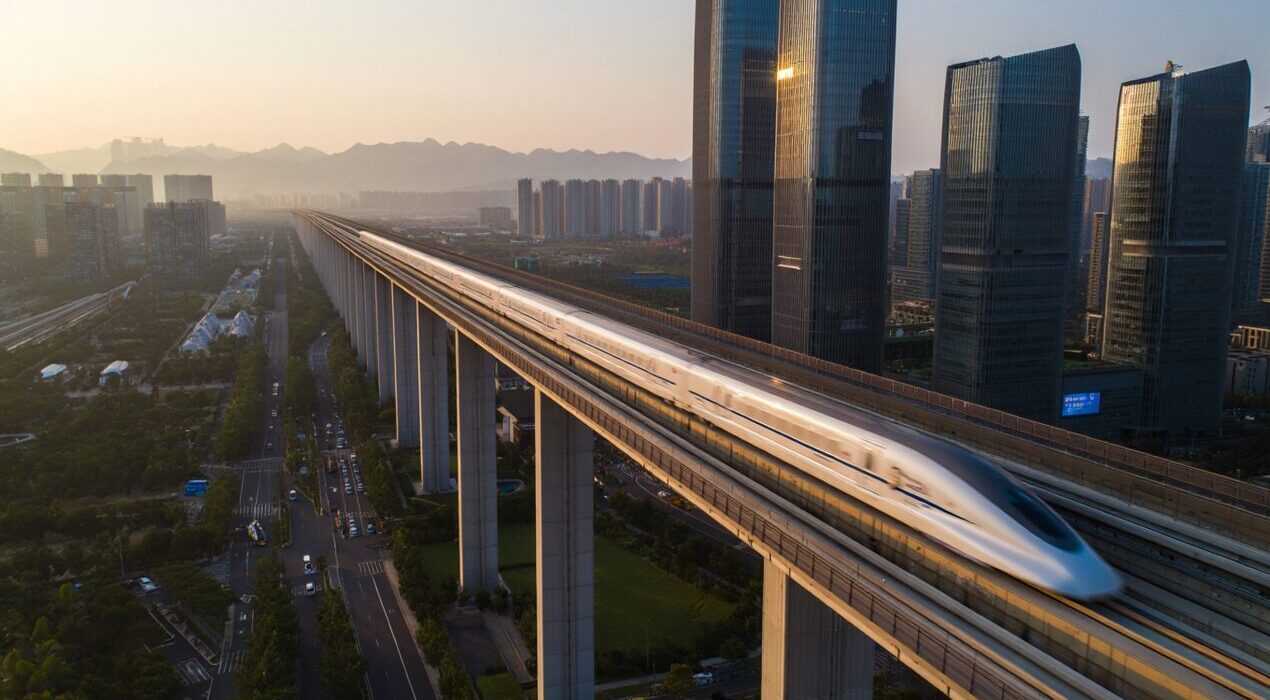
China maglev train technology has reached a historic milestone. Engineers accelerated a test train to 700 km/h in just two seconds. That speed rivals commercial aircraft during takeoff.
Magnetic levitation removes wheel friction entirely. The train floats above its track using electromagnetic forces. As a result, energy loss drops sharply while efficiency improves.
This system guides the train with extreme precision. Without physical contact, mechanical wear also falls. Therefore, maintenance costs remain lower than traditional rail systems.
The rapid acceleration stunned observers worldwide. It shows how far ground transport has evolved. In addition, it highlights China’s leadership in advanced rail engineering.
What This Means for Future Travel
China maglev train development could transform intercity journeys. Trips that once took hours may soon take minutes. Therefore, rail travel could rival flying for speed.
When airport delays count, maglev routes may become faster than planes. This change could reshape how people move between megacities. In addition, it may reduce short-haul flights.
China continues to invest heavily in high-speed rail. The goal includes lowering emissions and easing congestion. Maglev systems emit far less carbon per passenger kilometer than aviation.
Engineers believe future designs could exceed 800 km/h. That speed blurs the line between rail and aerospace transport. As a result, a new travel category may emerge.
This breakthrough represents more than faster trains. It offers a glimpse into post-airline mobility. China maglev train research suggests a cleaner, quicker, and more connected future for travel.