China’s Chang’e 7 Mission to Explore Moon’s South Pole for Water
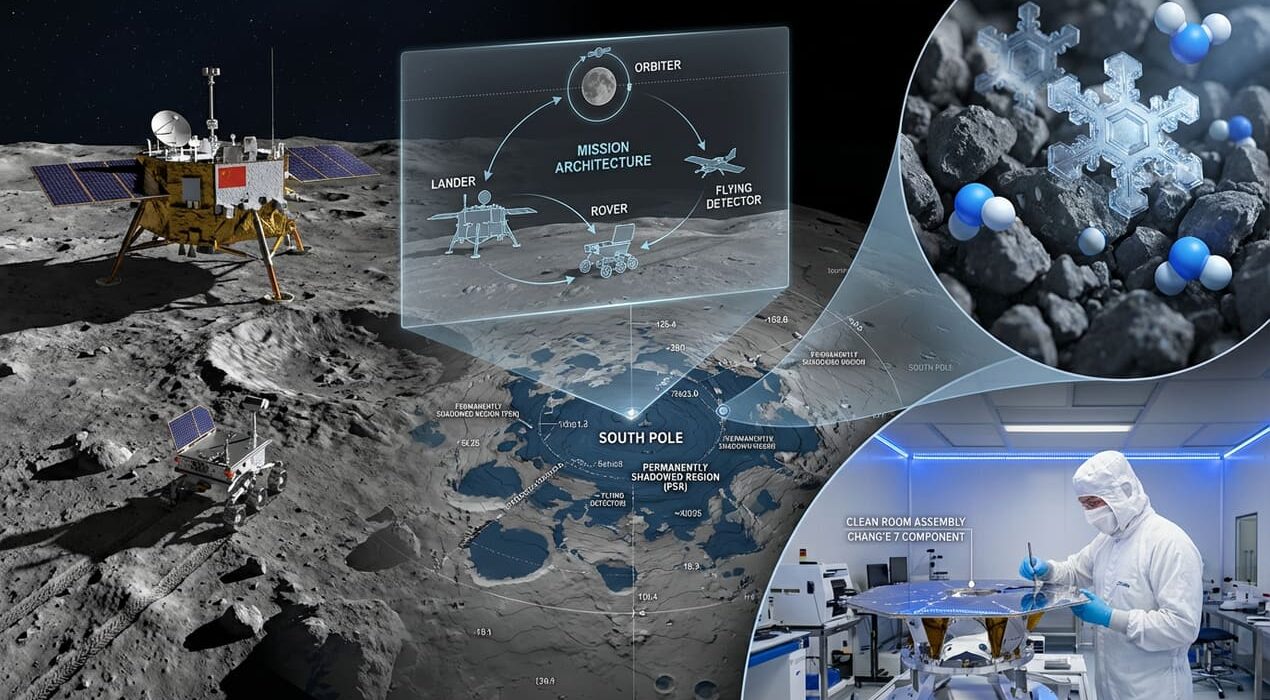
China has unveiled its next major step in lunar exploration. The Chang’e 7 mission will launch around 2026. Its primary target is the Moon’s mysterious south pole region. Therefore, this ambitious project aims to search for critical water ice deposits.
A Scientific Hunt for Lunar Resources
Finding water is the mission’s key scientific goal. Water ice could support future human outposts on the Moon. Furthermore, it could be converted into air and rocket fuel. As a result, confirming its presence is vital for long-term space exploration.
The mission will use a powerful suite of instruments. It includes an orbiter, lander, rover, and a small flying detector. Moreover, this flying craft can access permanently shadowed craters. Consequently, scientists will gather unprecedented data from these sunless areas.
Paving the Way for an International Station
Chang’e 7 is a foundational mission for a larger plan. It will help scout locations for the International Lunar Research Station (ILRS). In addition, the mission demonstrates advanced robotic exploration capabilities. This progress is crucial for planning safe human missions later.
The ILRS is a proposed collaborative project with international partners. It envisions a permanent, robotic base at the lunar south pole. Ultimately, Chang’e 7’s findings will guide the design and location of this future station.
This mission marks a bold new phase in China’s space program. It shifts focus from lunar surface visits to sustained resource exploration. Humanity’s understanding of the Moon is about to grow significantly.