Dengue Action Plan 2026 Activated in Peshawar Ahead of Peak Season
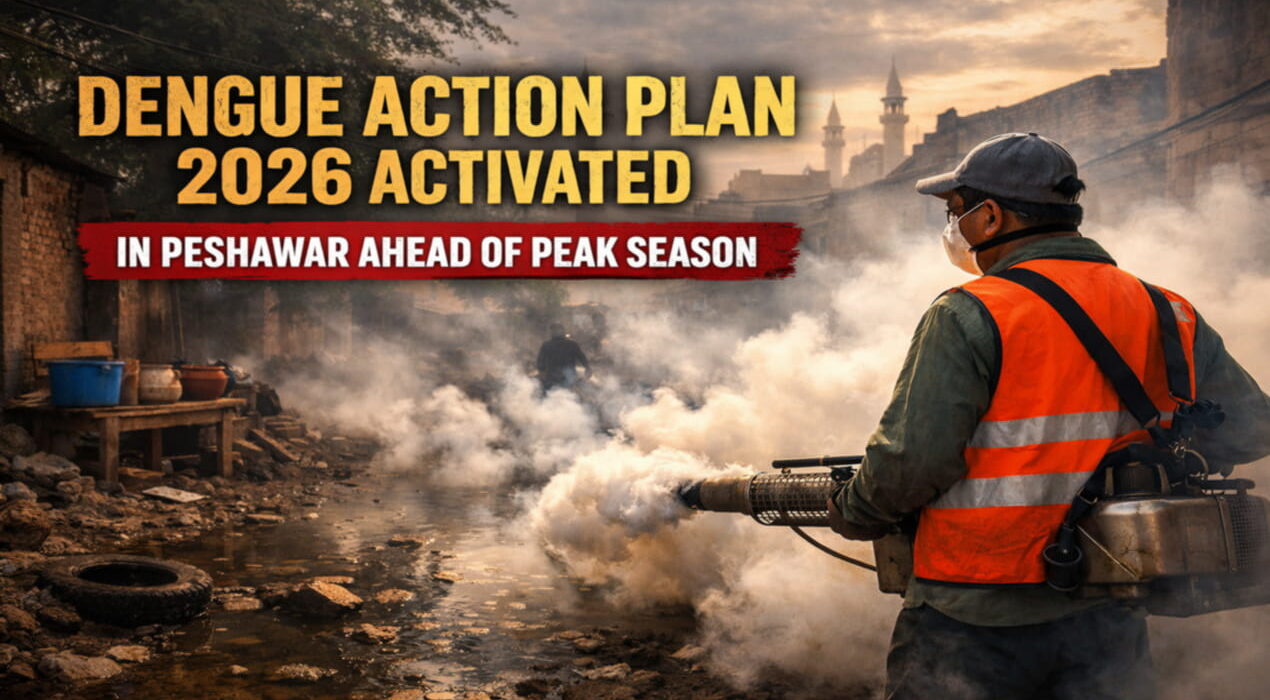
Authorities in Peshawar Division have accelerated efforts under the dengue action plan 2026 after recent Dengue Action Plan 2026 Activated in Peshawar Ahead of Peak Seasonrains. The move aims to control the virus before the peak season arrives. Therefore, officials have started coordinated actions across multiple districts.
A high-level meeting, led by the commissioner, brought key departments together. Participants reviewed progress and shared updates on fieldwork. In addition, teams assessed ongoing surveillance, cleanliness drives, and awareness campaigns.
Coordinated Strategy and Early Action
The dengue action plan follows a structured, three-phase approach. It includes pre-season, peak season, and post-season activities. As a result, authorities can respond effectively at every stage.
Officials now conduct daily vector surveillance in high-risk areas. They also carry out immediate fogging where needed. Moreover, teams focus on larval control to reduce mosquito breeding.
Hospitals have improved preparedness for possible cases. They set up response systems for quick treatment. However, prevention remains the main focus of the strategy.
Past data shows dengue cases rise between August and October. Therefore, early preventive measures are essential. Authorities aim to reduce risks before the situation worsens.
Community Engagement and Enforcement
Public awareness plays a key role in dengue control. Teams visit neighborhoods to guide residents on safety measures. For example, they encourage people to remove standing water from homes.
Experts supervise house-to-house campaigns to ensure accuracy. In addition, media platforms help spread important health messages. These efforts aim to reach a wider audience quickly.
Officials have issued strict instructions to all departments. They must act without delay and maintain cleanliness standards. Negligence in key areas may lead to disciplinary action.
Emergency preparedness has also improved across the division. Authorities established a response cell for quick coordination. Furthermore, they ensured daily reporting and rapid resource mobilization.
Targeted fogging continues in high-risk zones to control mosquito populations. Stakeholders remain committed to joint efforts. Together, these steps aim to protect public health and ensure a safer environment for everyone.