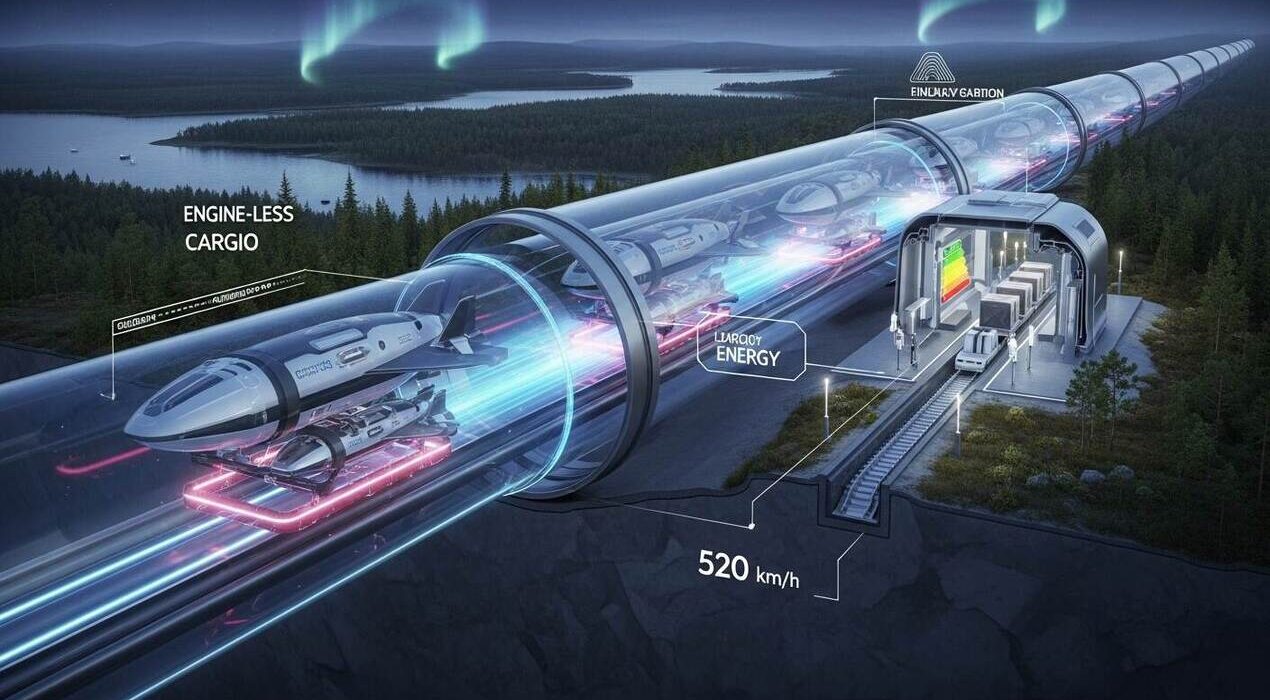
Finland is reshaping the future of logistics with the world’s first engine-less maglev cargo pipeline. The system reached an impressive speed of 520 km/h during testing. It promises faster, cleaner, and more sustainable freight transport.
How the Maglev Cargo Pipeline Works
The pipeline uses magnetic levitation to lift and propel cargo containers. By removing wheels and engines, the design eliminates friction and reduces wear. As a result, the system consumes less energy and requires minimal maintenance.
Unlike trucks or trains, it runs without fuel-based engines. Therefore, emissions drop sharply, creating a greener alternative for large-scale transport.
Speed, Safety, and Efficiency
Engineers designed the pipeline to handle heavy loads while maintaining stability at extreme speeds. Tests confirmed safe performance above 500 km/h. This breakthrough could transform supply chains by moving goods quickly across long distances.
In addition, faster delivery times mean companies can cut costs and boost efficiency. The pipeline also reduces the environmental footprint compared to conventional freight.
A Global Vision
The success of this trial highlights the vast potential of maglev technology. Finland’s system combines magnetic propulsion, frictionless travel, and aerodynamic design. Beyond logistics, the same principles could inspire new infrastructure worldwide.
Although still experimental, the results prove commercial use is possible. Governments, logistics providers, and technology firms are now watching Finland closely.
Looking Ahead
Finland’s maglev cargo pipeline is more than an engineering test. It represents a future where goods move faster, cleaner, and smarter. As the project scales, it could redefine shipping, energy use, and high-speed networks worldwide.