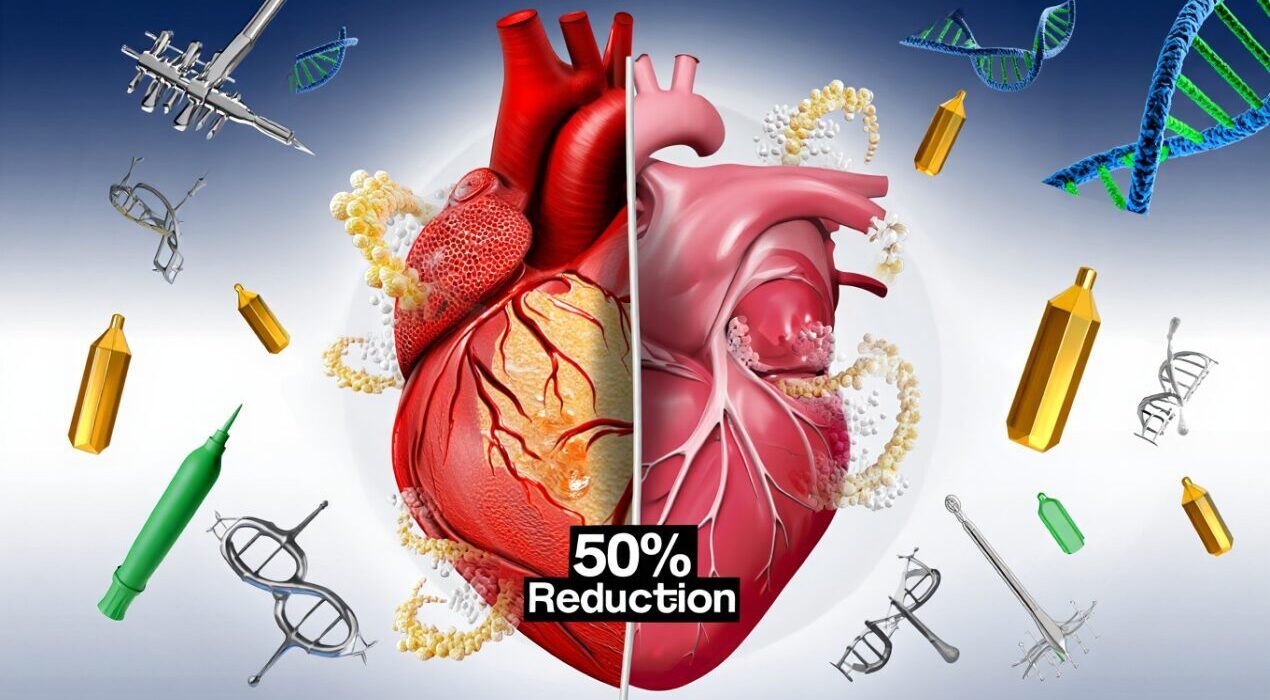
Genetic Therapy Cuts Cholesterol by Nearly 50% in Study
A genetic therapy reduces cholesterol by nearly half in a new clinical trial. The finding surprised many. It opens fresh paths to treat heart disease.
Scientists designed a DNA-based method targeting the PCSK9 gene. That gene helps regulate LDL, or “bad,” cholesterol. By silencing it, the body clears cholesterol more efficiently.
How the Therapy Works
The team used special molecules that bind to DNA and block PCSK9 activity. In turn, LDL receptors increase and clear more cholesterol from the bloodstream.
Tests in animals showed remarkable results. In mice, PCSK9 expression dropped by over 90%. Cholesterol levels fell sharply too. In primates, LDL levels dropped by about 70% after one treatment, and the effect lasted for weeks.
Benefits, Risks, and the Future
This therapy offers major advantages. It could reduce the need for lifelong medication and may work with only a few doses. It might also help people who don’t respond well to current cholesterol drugs.
However, scientists still need to test its long-term safety. Off-target effects could influence other genes, and researchers must monitor for possible risks. Clinical trials in humans will determine how safe and effective it truly is.
If successful, this approach could transform heart health treatment. It might bring lasting relief for people with high cholesterol or inherited conditions.
In short, this breakthrough proves that genetic therapy reduces cholesterol dramatically. If proven safe, it could redefine how we fight heart disease and save countless lives.