Gulf Airlines Recover Slowly as Iran Conflict Drags On
Middle Eastern airlines are recovering slowly from the Iran conflict. The disruption began after the February 28 strikes by U.S. and Israeli forces. Attack drones and missile strikes across the Gulf region disrupted busy airport hubs. Flight numbers at major carriers dropped to near zero initially.
Major state-backed airlines felt the immediate impact. Emirates, Etihad Airways, and flydubai all saw severe drops. Qatar Airways and Air Arabia also faced significant disruptions. The conflict redrew traffic routes across the skies. Airlines had to cancel or reroute many flights.
Uneven Recovery Across Carriers
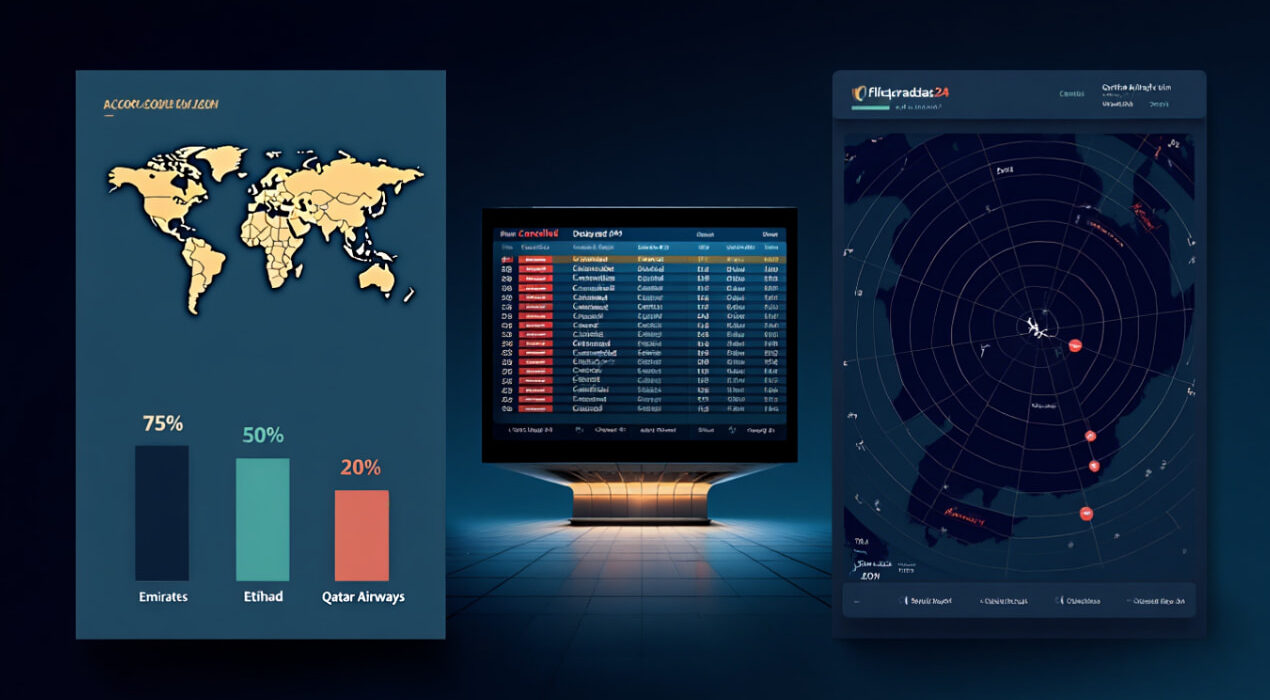
Flight numbers from the UAE have slowly picked up. However, they remain well below pre-conflict levels. Data compiled by Flightradar24.com shows the uneven recovery.
Dubai-based Emirates is now at nearly three-quarters of its pre-conflict capacity. This makes it the strongest performer among Gulf carriers. Air Arabia and Etihad are at around half their normal levels. Flydubai is operating at only a third of its usual capacity. Qatar Airways lags significantly behind at just 20%.
Ongoing Challenges for the Industry
The war on Iran continues to impact airlines in several ways. Fares have increased due to reduced capacity and higher demand. Jet fuel prices have soared, affecting carriers without fuel hedges. Schedules across Europe and Asia remain disrupted.
Some airlines have warehoused planes due to reduced demand. Others operate lengthy “flights to nowhere” to maintain slots. The recovery remains fragile as the conflict drags on. Industry analysts expect a slow return to normal operations. The situation depends heavily on regional stability in the coming months.