Hidden Architecture of Ocean Life Revealed by Breakthrough Microscopy
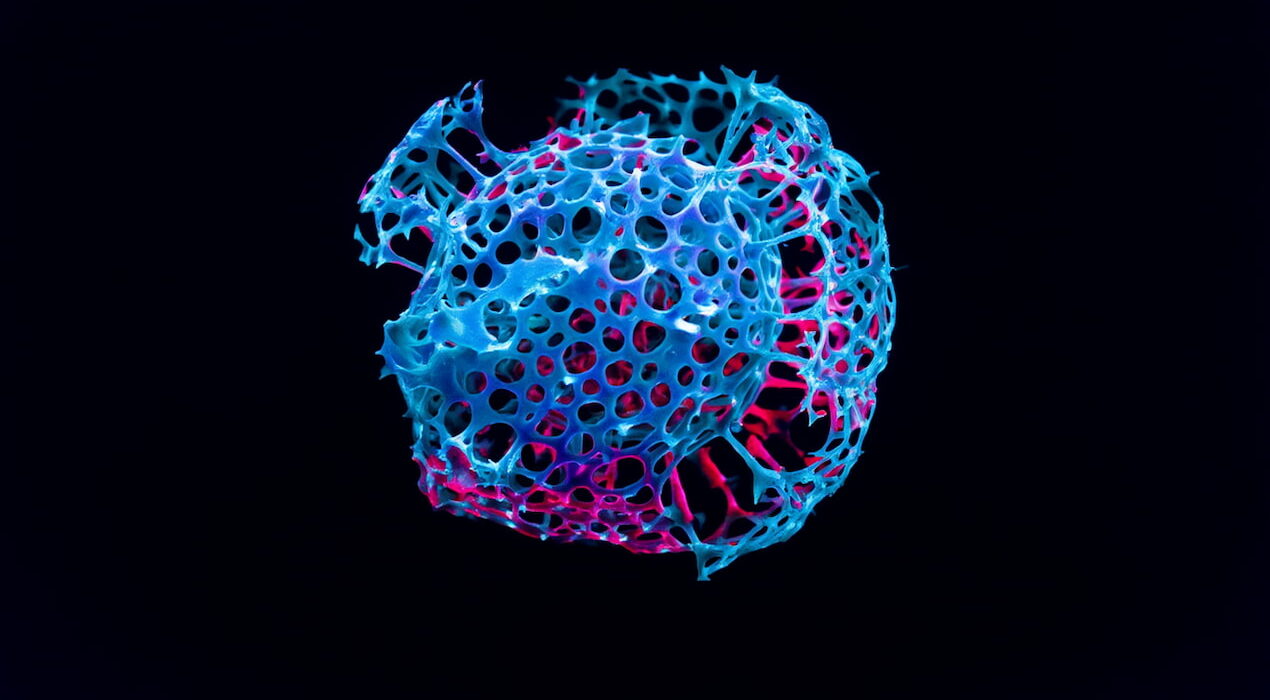
Plankton quietly power life on Earth. They produce much of the oxygen we breathe. They also support ocean food webs worldwide. These tiny organisms show immense diversity. However, their inner structures long remained invisible. For decades, scientists relied mostly on genetic data. That limitation has now changed. As a result, ocean life looks clearer than ever.
A Pandemic Sparked a Scientific Shift
During the COVID-19 pandemic, an unexpected call changed everything. Researchers discussed a new way to study stubborn plankton cells. This method solved a major challenge. Thick cell walls no longer blocked observation. Therefore, scientists finally saw what lived inside. The approach is called expansion microscopy. It gently enlarges cells for close study. Expansion microscopy embeds cells in a clear gel. When the gel absorbs water, it expands evenly. As a result, tiny structures grow larger without damage. Researchers can then use standard microscopes. In addition, this method bypasses normal resolution limits. That makes hidden cell details visible for the first time. Encouraged by early success, scientists joined forces. Their goal became bold and ambitious .They now aim to build a planetary atlas of plankton. This effort includes hundreds of species worldwide. The TREC expedition boosted this work. It provided rich marine samples across Europe.
Discovering a Microbial Treasure
One key site was Roscoff, France. Researchers expected a few samples. Instead, they gained access to over 200 species. Therefore, the team worked nonstop to preserve them. These samples revealed stunning internal diversity.
Linking Cell Structure to Evolution
Scientists focused on the cytoskeleton. This framework shapes and moves cells. They studied microtubules and centrin proteins closely. The findings revealed patterns across many species. As a result, researchers can now explore evolutionary links. This work bridges genetics and cell structure. Ultimately, it reshapes how we understand ocean life.