Hidden Faults Exposed: Tiny Quakes Reveal Major California Earthquake Risk
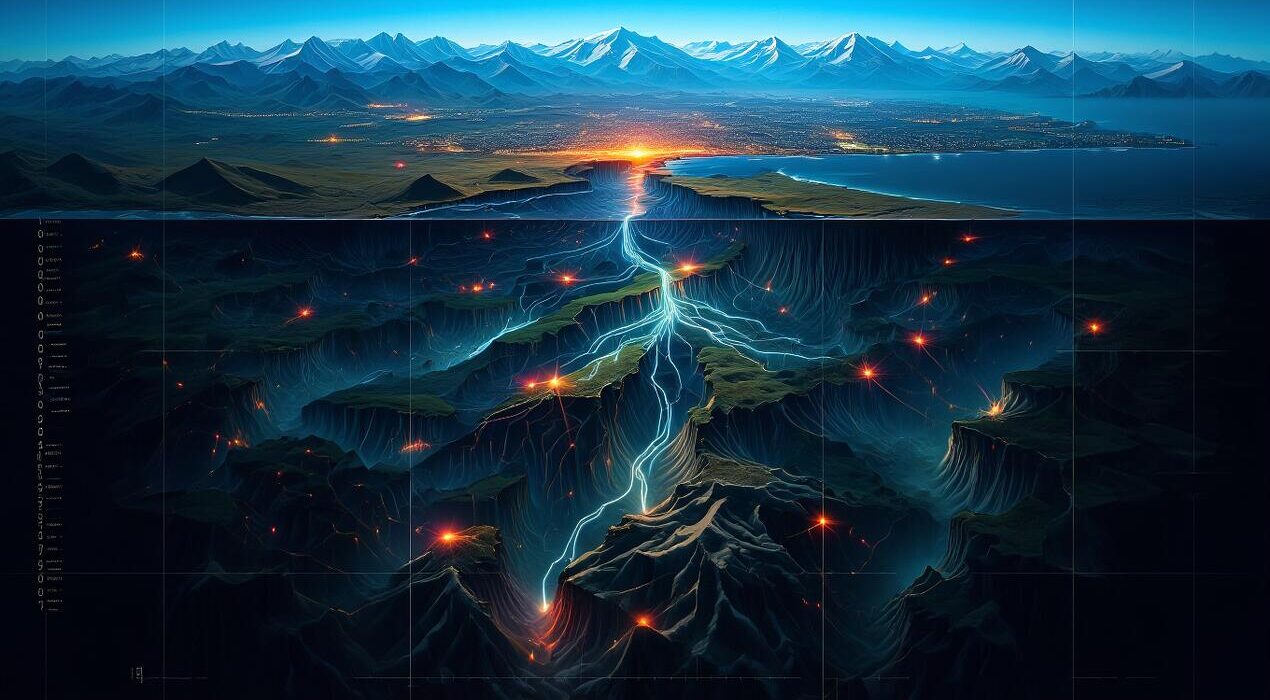
Scientists are uncovering a dangerous secret beneath California. They are tracking swarms of tiny earthquakes. These tremors are far too weak for people to feel. However, they reveal a hidden and complex fault system. This discovery challenges old assumptions about earthquake risks.The research focuses on a crucial offshore region. This is where the San Andreas fault meets the mighty Cascadia subduction zone. Together, they form one of North America’s most dangerous seismic areas.
Mapping the Hidden Seismic Crossroads
A team from the U.S. Geological Survey, UC Davis, and UC Boulder led the study. They used a dense network of sensitive seismometers. These instruments detected minute “low-frequency” earthquakes. Consequently, scientists could map the underground structure in new detail.”It’s like studying an iceberg,” said lead author David Shelly of the USGS. “You see a bit at the surface. Then, you must figure out the configuration underneath.”
A More Complex System Than Expected
The findings were surprising. The region involves five moving pieces, not just three major tectonic plates. For example, part of the North American plate has broken away. It is now being dragged down with the sinking Gorda plate.In addition, a mass of rock called the Pioneer Fragment is moving separately. This fragment is being pulled beneath the continent. Its fault is nearly flat and invisible from the surface.
Solving a 30-Year-Old Earthquake Mystery
This new model solves a long-standing puzzle. It explains a large 1992 earthquake that struck at an unexpectedly shallow depth. The plate boundary is simply not where scientists once believed it was.”The plate boundary seems not to be where we thought,” explained co-author Kevin Materna. Therefore, this work is crucial for improving hazard forecasts.”If we don’t understand the tectonic processes, we can’t predict the seismic hazard,” added UC Davis professor Amanda Thomas. This research provides essential new clues. Ultimately, it helps communities better prepare for future major earthquakes.