High Red Meat Intake Raises Diabetes Risk
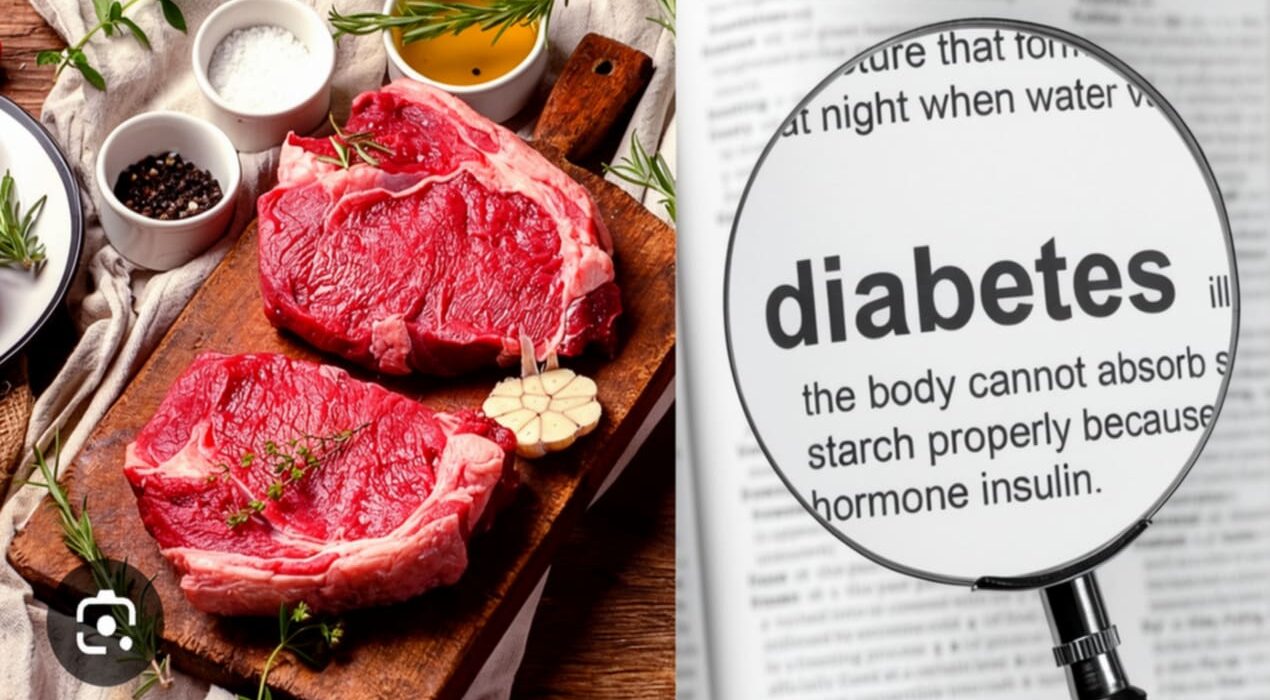
Eating a lot of red meat, especially processed varieties, may raise diabetes risk. A new U.S. study found this risk increases with every additional serving. People who ate the most red meat had up to 49% higher odds of developing diabetes. Therefore, limiting red meat is important for health.
How Red Meat Impacts Diabetes
Red meat contains saturated fat and heme iron, which may harm insulin sensitivity. Processed meats like bacon or sausages can also raise inflammation. Diets heavy in red meat may lack fiber-rich foods that help control blood sugar. The study showed that the link between red meat and diabetes remained even after adjusting for body weight. This means the risk is not only due to obesity.
Reducing Risk Through Substitutions
Replacing red meat with plant-based proteins, poultry, eggs, fish, or whole grains can lower diabetes risk. The strongest benefit comes from nuts, legumes, and other plant proteins. Each substitution may reduce diabetes odds by 9% to 14%. Even swapping one serving per day can make a meaningful difference.
Practical Tips for Healthy Eating
You don’t have to avoid red meat completely. Limit servings to two per week or less and choose lean cuts. Pair meals with vegetables, whole grains, or plant proteins. Regular exercise and maintaining a healthy weight also help lower diabetes risk. In short, moderation and smart substitutions can protect your health while keeping meals enjoyable.