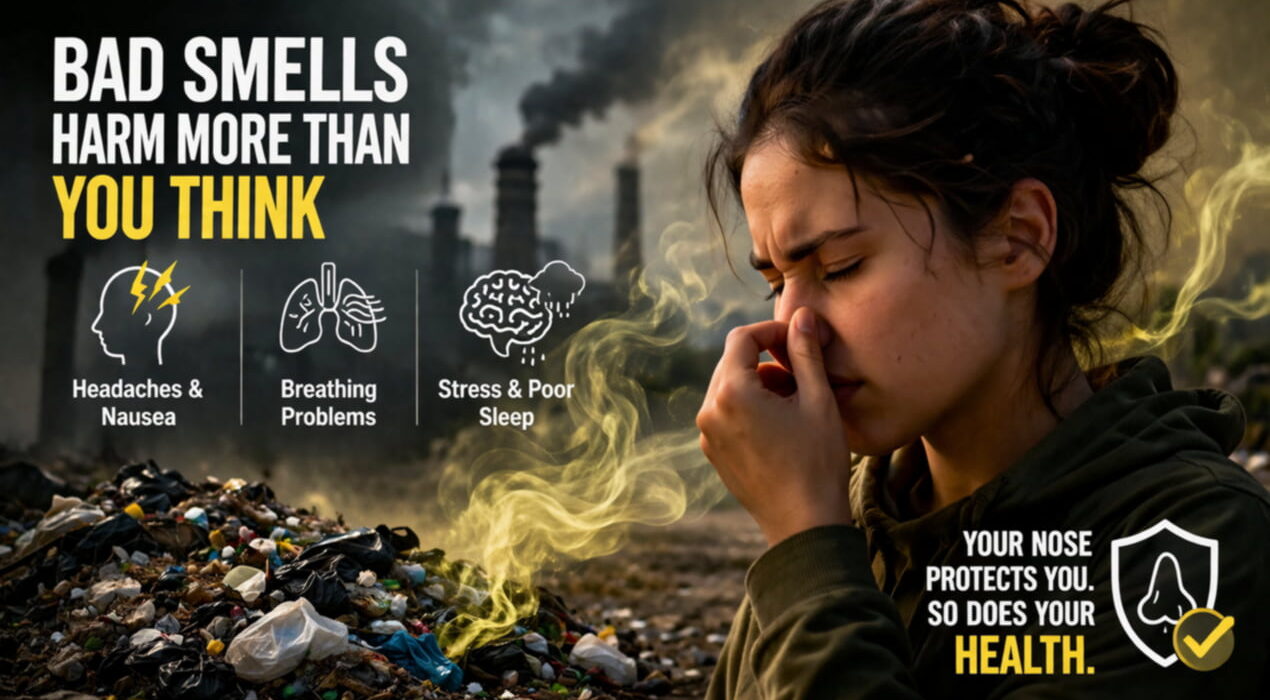
How Bad Smells Affect Your Health: Risks and Tips
That foul odour wafting your way can do more than make you gag – it could also affect your body and mind. For Elaine Corner, stepping into her garden on a summer day can be unbearable. She likens it to “walking behind an open bin lorry.” Even with windows shut, she often cannot escape the nausea-inducing stench from a nearby waste treatment plant. We often encounter unpleasant smells in daily life, from rubbish dumps to factory fumes, but living constantly with them is a very different challenge.
The Science of Smell
Smell is more than a sense it acts as an early-warning system. Harmful odours often indicate bacteria or toxins. Johan Lundström, a professor at the Karolinska Institute, explains that our olfactory system helps us avoid danger quickly. Studies show the brain responds to bad smells within 300 milliseconds. In addition, pairing a scent with a threat can make people detect it at lower concentrations. This explains why even faint smells of rotten eggs from sewage trigger rapid physical reactions.
Real Health Impacts
Unpleasant odours can cause headaches, nausea, disrupted sleep, and even stress. They activate the vagus nerve, linking the gut and brain. Pamela Dalton, a psychologist in Philadelphia, notes that the more anxious someone feels about a smell, the worse the impact on health. Lifestyle changes, like keeping windows closed or avoiding outdoor activity, can worsen wellbeing. Long-term exposure to malodours can reduce quality of life, especially in disadvantaged neighborhoods near industrial sites.
Protecting Your Health
Ventilation and air purifiers help reduce odour exposure. Proper food storage prevents spoilage. Awareness is key: a strong sense of smell is linked to better appetite, enjoyment, and even safety. Losing smell, or anosmia, is associated with poor diet and a higher risk of serious health issues, including cardiovascular and neurodegenerative diseases. Therefore, protecting our olfactory health benefits both body and mind.