Iran War Drug Supply Disruption Threatens Cancer Medicines in Gulf
The Iran drug supply disruption is raising concerns about medicine deliveries to Gulf countries. The ongoing conflict has disturbed major air cargo routes. As a result, companies now struggle to move critical treatments, including cancer drugs.
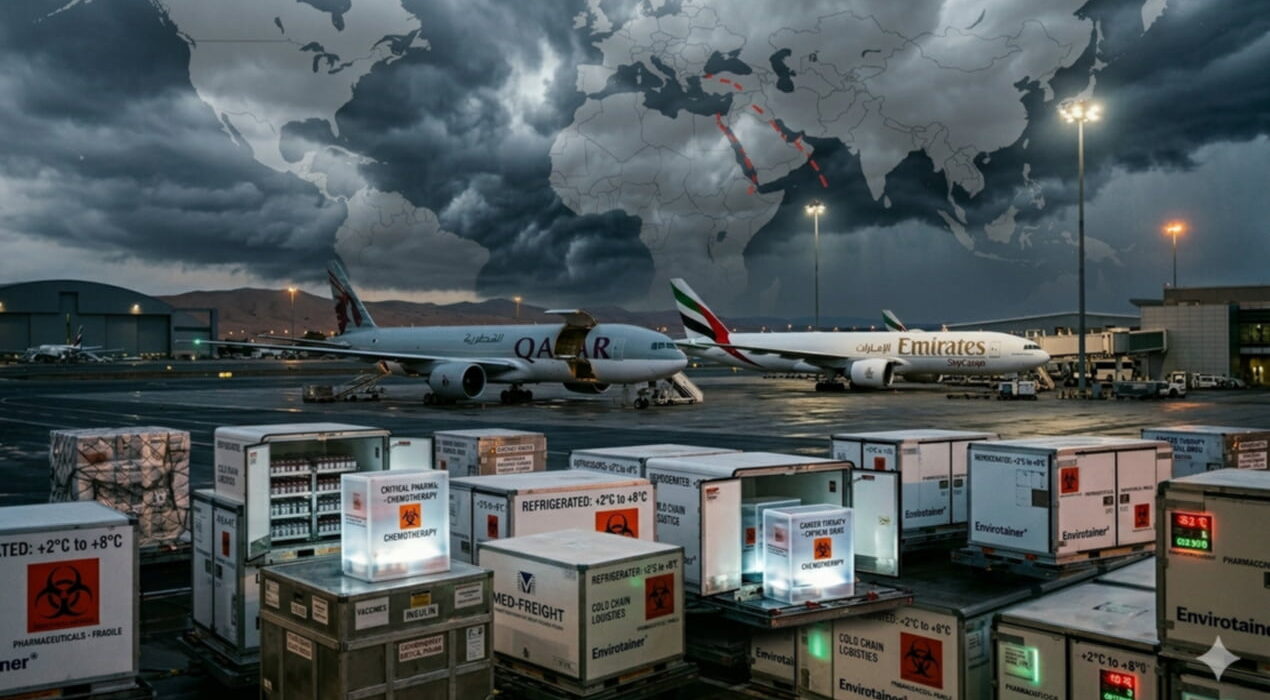
Many medicines need strict refrigeration during transport. However, disrupted air routes make safe delivery more difficult. Therefore, pharmaceutical firms are searching for alternative transport options.
Air Routes Face Major Disruption
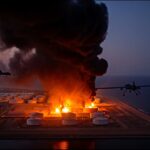
The conflict began after attacks involving Iran, the United States, and Israel. Since then, strikes across the region have affected transport networks. Several major air transit hubs have also faced closures.
These disruptions slow the movement of many essential goods. For example, medicines, food supplies, and oil shipments now face delays. Consequently, global logistics companies must quickly adjust their plans.
Air cargo plays a vital role in transporting life-saving treatments. In addition, many medicines have short shelf lives. Because of this, fast and reliable delivery remains essential.
Pharma Companies Search for Alternatives
Pharmaceutical companies have started rerouting shipments through safer locations. Some firms now send medicines to airports in Saudi Arabia. From there, trucks transport the drugs across the region.
For instance, airports in Jeddah and Riyadh have become key entry points. Other possible routes include Istanbul and Oman. These options help maintain the cold chain needed for sensitive medicines.
However, overland transport takes longer than air cargo. As a result, companies must carefully monitor temperatures during delivery.
Risk to Future Medicine Supply
So far, the region has not reported major shortages. Nevertheless, experts warn that risks could rise if the conflict continues. Gulf countries rely heavily on imported medicines. Therefore, any long disruption may affect hospitals and patients. Researchers say a large share of global air cargo passes through Middle East routes. Because of this, continued instability could impact medicine supply worldwide.