Japanese Scientists Create Holograms You Can Actually Touch
It sounds like something out of a sci-fi movie, but it’s real. Japanese scientists have created holograms you can actually feel.
Researchers from the University of Tsukuba and the University of Tokyo developed experimental systems that let users touch mid-air holographic images — no gloves, no physical screens, just light and air.
These new technologies could change how we interact with digital objects forever.
How the Touchable Holograms Work
1. Plasma-Based “Fairy Lights” (University of Tsukuba)
Scientists at Tsukuba use ultra-short femtosecond laser pulses to fire light into the air. This creates tiny plasma voxels — glowing points that hover in space.
When your finger touches one, it releases a small, harmless shockwave you can feel. Therefore, users experience the sensation of touching light itself.
Unlike older laser systems, these “Fairy Lights” are completely safe and can form small, interactive 3D shapes.
2. Ultrasound-Based “Haptoclone” (University of Tokyo)
Meanwhile, Tokyo researchers are using ultrasonic transducers to project pressure waves onto a person’s hand. When paired with floating holographic images, these waves create the illusion of touching that image — like a button or object in thin air.
A Glimpse Into the Future
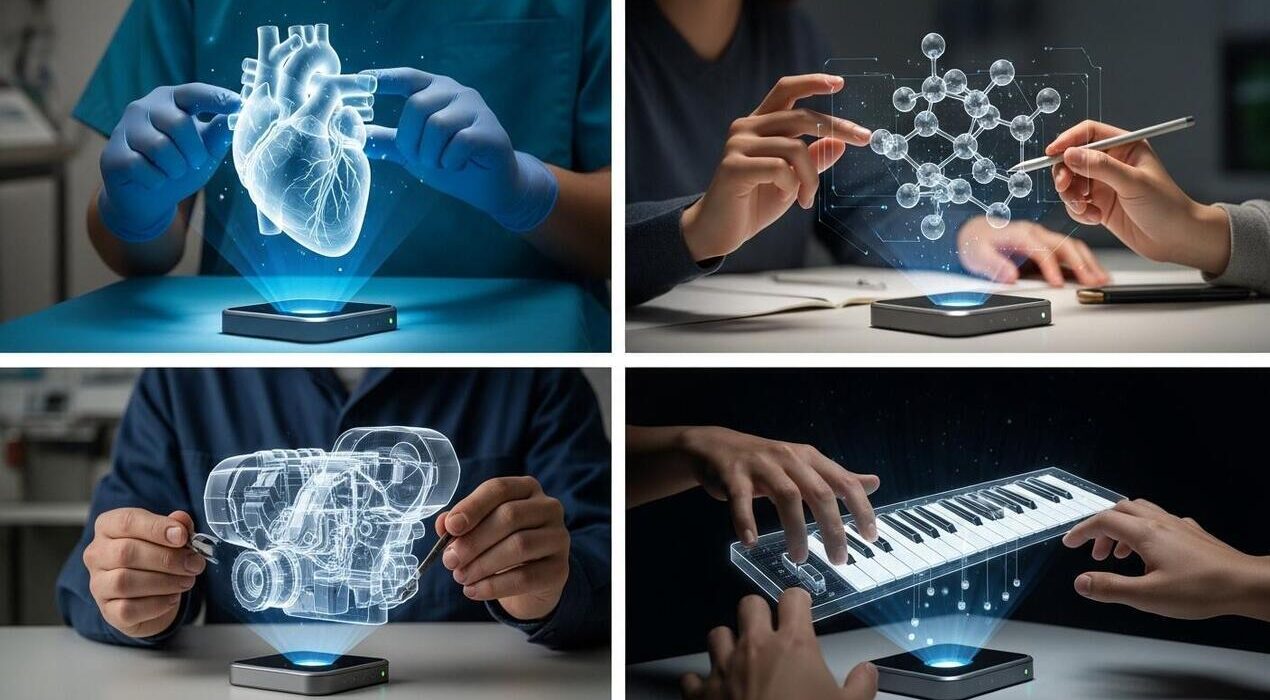
Together, these systems point toward a future where digital and physical worlds blend seamlessly. Imagine pressing a floating holographic button, exploring a virtual heart model, or playing a 3D game mid-air.
These projects are still in the early stages, but one thing is clear — Japan is turning science fiction into science fact.