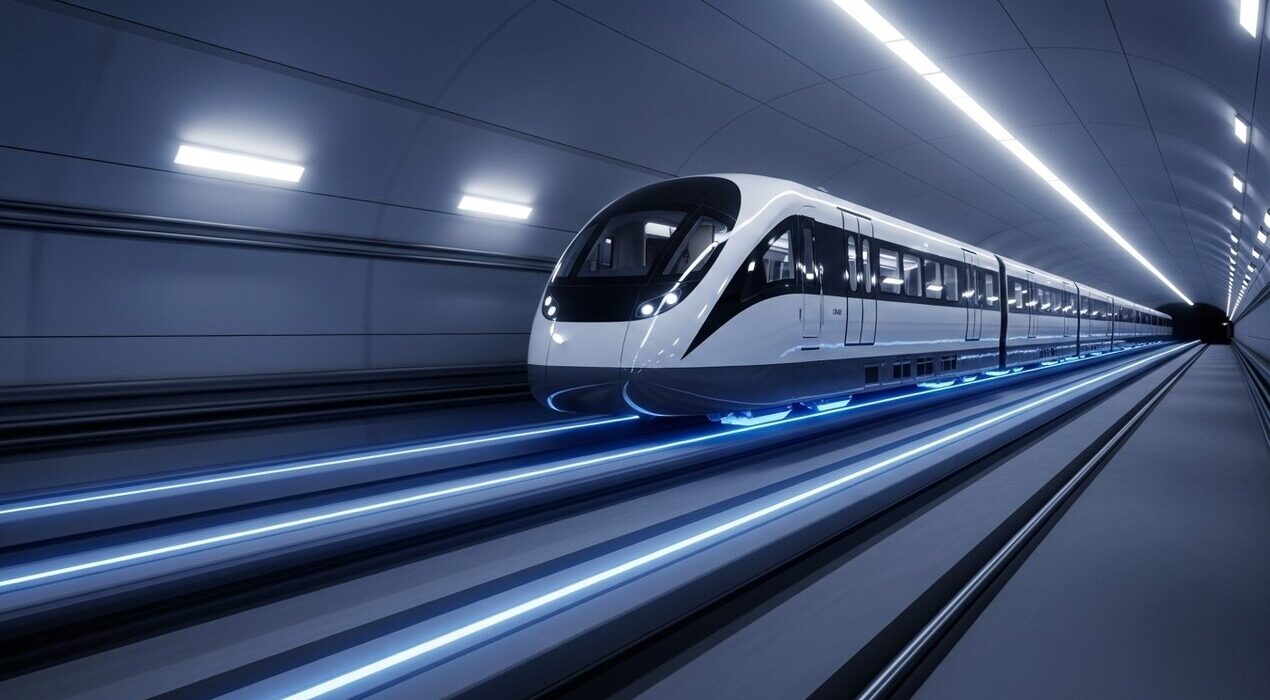
Japan’s Maglev Train: The World’s Fastest Ride Is Almost Here
Japan is redefining the future of travel with its Chuo Shinkansen Maglev train. This next-generation train doesn’t touch the tracks—it floats using powerful superconducting magnets. As a result, it moves without friction, making the ride smoother and faster than ever before.
Unbelievable Speed and Route
In tests, the Maglev reached an incredible 603 km/h, setting a world record. When it officially launches, it will run at 505 km/h (314 mph). That’s faster than any train currently in service anywhere in the world.
The first section will connect Tokyo and Nagoya in just 40 minutes, compared to today’s 97-minute trip. The line will eventually extend to Osaka, possibly by 2037. However, the first phase is now expected to open around 2034 due to environmental delays in Shizuoka Prefecture.
A Modern Engineering Marvel
Nearly 90% of the route will pass through tunnels carved beneath Japan’s mountains. The system uses superconducting magnetic levitation (SCMaglev)—a technology that lets the train silently “fly” above its guideway.
How It Stacks Up Globally
China’s fastest commercial maglev in Shanghai runs at 431 km/h. While Chinese engineers have tested a 600 km/h prototype, it’s not yet in commercial use. Therefore, when Japan’s maglev opens, it will once again hold the title of world’s fastest train.
A new era of transportation is coming, one where trains don’t just move fast; they float into the future.