Jewel Changi: The Airport That Redefined Future Travel Hubs
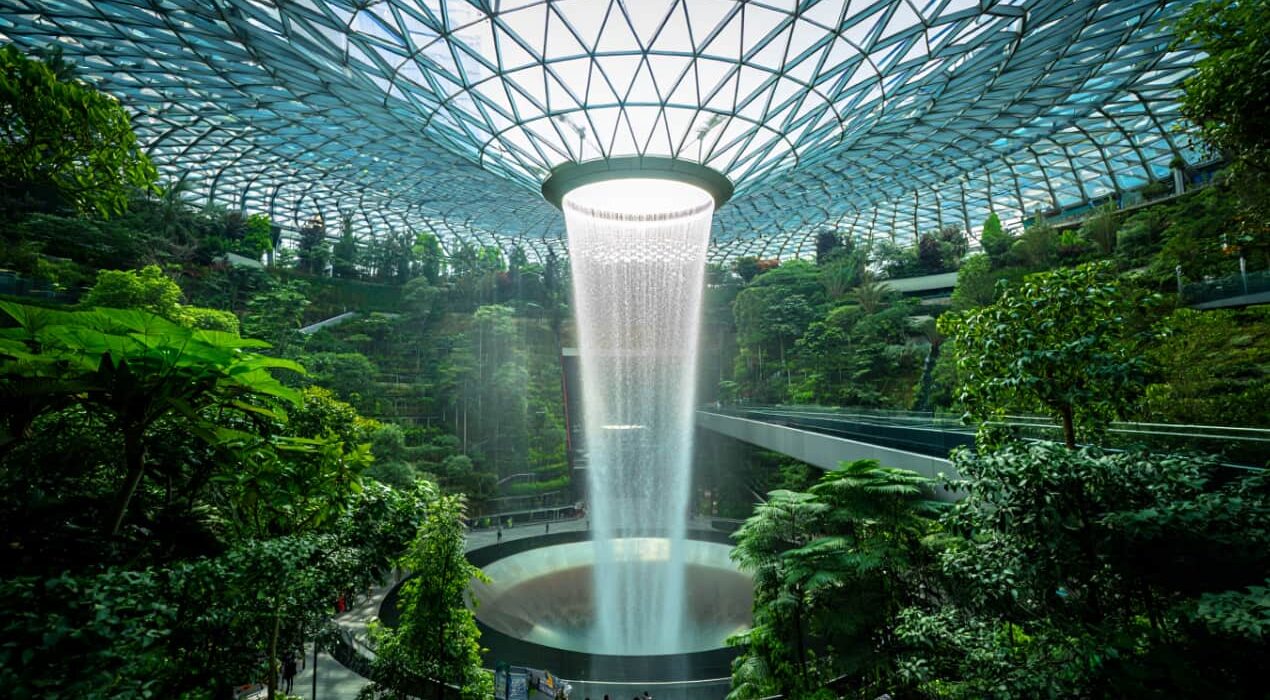
Singapore’s Jewel Changi Airport changed how we think about travel hubs. It opened in 2019 and redefined the global understanding of airports. This space is not just a terminal or a mall. It is a 135,700m² mixed-use destination. At its heart sits the Rain Vortex, the world’s tallest indoor waterfall. Surrounding it is the Forest Valley, a terraced garden with over 2,000 trees. All of this rests under a nearly 200-meter-wide glass-and-steel roof.
The result is a vast, light-filled civic room. Locals treat it as a weekend destination. Travelers actually plan longer layovers just to enjoy it. This introduces a radical idea: an airport can be somewhere you want to be.
Engineering a Place for People
Buro Happold served as the lead structural and façade engineer for this project. They worked closely with Safdie Architects to turn a bold concept into reality. Their team engineered the iconic gridshell roof. They also integrated the oculus that feeds the Rain Vortex. Crucially, they shaped the experiential qualities of light, airflow, and moisture. Every engineering decision aimed for sensory resonance, not just efficiency.
For example, the humidity signals a shift from terminal to garden. The sound of the waterfall becomes a form of wayfinding. The light filtering through the spiraling roof creates an emotional journey. These are all engineered outcomes designed to make people feel something.
The Blueprint for Future Hubs
Jewel’s success offers a clear blueprint for future travel hubs. It shows that airports can merge nature, culture, and movement seamlessly. The goal is to create “sophisticated experiential environments.” These spaces must still be grounded in human comfort. The lesson is not that every airport needs a waterfall. Instead, every major hub should offer a sense of arrival and delight. People should feel invited to stay, not just ushered through. This human-centered ambition defines the future of public space.
In the end, Jewel’s greatest achievement is simple: people choose to be there. It is a space engineered as a landscape, a landmark, and a gathering place. It elevates daily life in the most unexpected context—an airport.