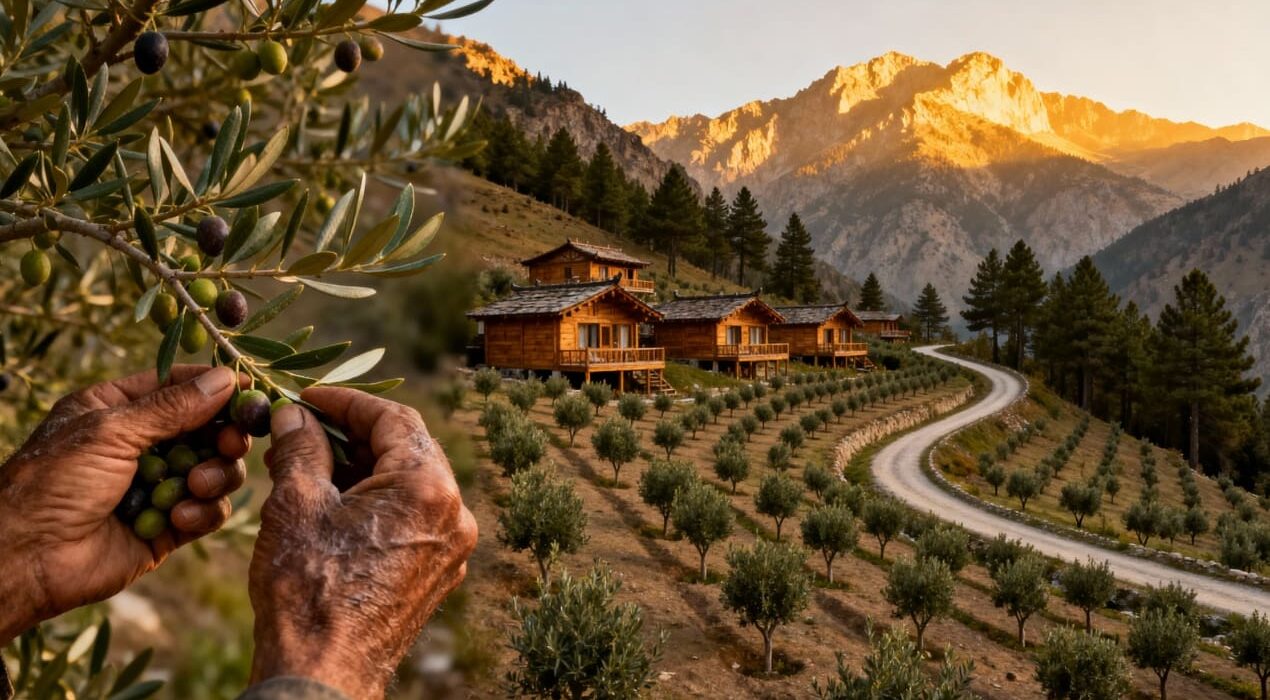
Kohat’s Olive Cultivation Boosts Tourism Potential
Kohat has begun large-scale olive cultivation. Farmers plant olive trees across many valleys and hillsides. These efforts aim to improve incomes and green the land.
Local authorities support these projects with training and sapling supply. They teach best practices in pruning, tree care, and harvesting. In addition, they monitor soil quality and water use.
Picturesque Mountains Attracting Visitors
Kohat lies near scenic mountain ranges. The hills are rugged but welcoming. Tourists already travel here for fresh air, trails, and views.
Villages tucked in the hills offer culture, food, and local crafts. Hiking routes traverse oak and pine forests. Because of this, nature lovers see Kohat as an undiscovered gem.
Synergy of Agriculture and Tourism
Combining olive farming with nature tourism can uplift Kohat. Visitors may stay in guest houses or eco-lodges among the trees. They can learn about planting, harvesting, and olive oil making.
Farmers may sell olive products like oil, tapenade, or cured olives to tourists. Locals may guide hikes or host cultural shows. As a result, tourism may bring extra income besides agriculture.
Challenges and Paths Forward
Water scarcity and road access remain obstacles. Some olive saplings suffer from drought or lack of irrigation. Mountain routes require better maintenance for tourism.
Government and private sector need to invest in infrastructure. They should build reliable roads, promote Kohat’s scenic sites, and support small businesses. With planning, Kohat could become a model for rural tourism and agro-industry.
Hope and Growth for Communities
For many communities in Kohat, olives mean jobs and greener land. Tourists bring demand for food, lodging, and local art. Together, agriculture and tourism can improve livelihoods.
Hope lies in realizing Kohat’s natural beauty and fertile lands. If development is sustainable, Kohat’s olive cultivation and mountain views will shine on the map.