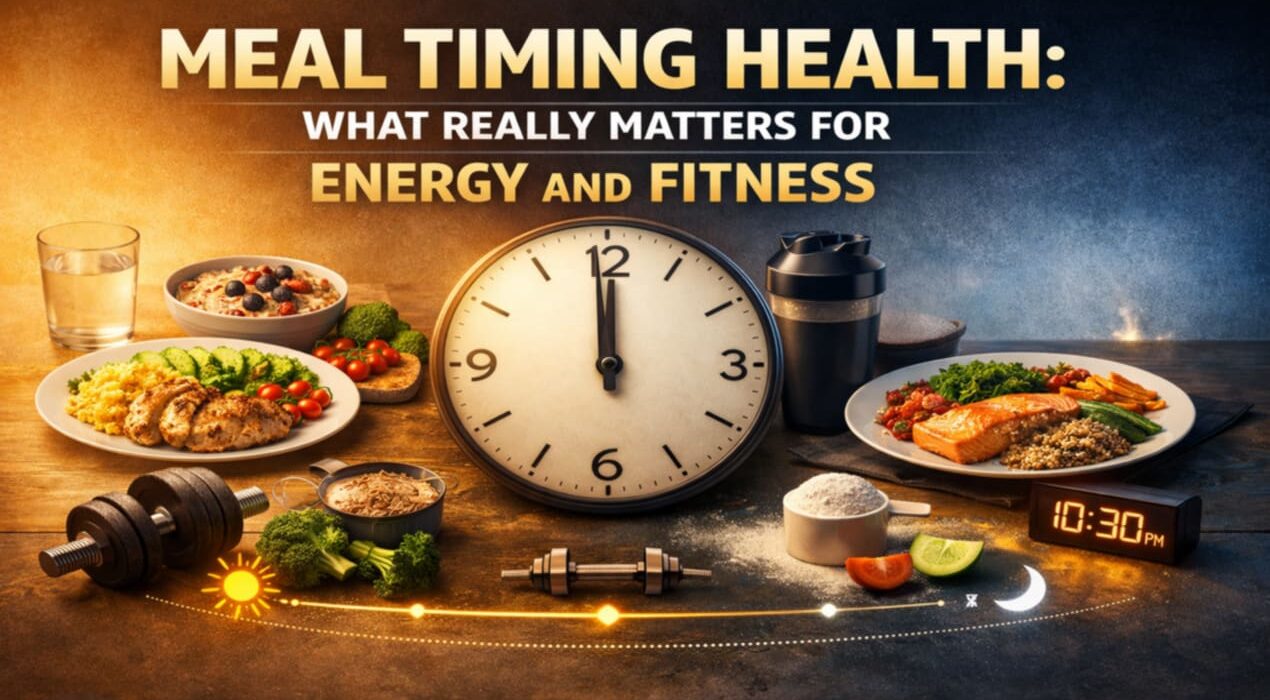
Meal Timing Health: What Really Matters for Energy and Fitness
Meal timing health is often debated in nutrition. Many people focus on eating schedules. However, research shows calories and protein matter more. Some follow strict fasting plans. Others eat small meals all day. In reality, timing helps, but it is not everything.
Focus on Total Intake
Calories play the biggest role in body changes. If you eat more, you gain weight. If you eat less, you lose weight. For example, two people eating the same calories often see similar results. Therefore, meal timing health depends more on total intake. In addition, food quality also matters. Balanced meals support better energy and overall health.
Protein and Performance:
Protein supports muscle growth and recovery. Spreading protein across the day helps your body use it better. For example, eating protein every few hours improves muscle repair. As a result, this supports strength and fitness goals. Timing meals around workouts also helps. Eating before exercise boosts energy. After workouts, protein helps muscles recover faster.
Align with Your Body
Your body follows a daily rhythm. Eating earlier can support better energy and focus. However, late heavy meals may affect sleep. Consistency is also important. Regular eating patterns help control hunger and prevent overeating later. Still, avoid overthinking every meal. Meal timing health works best when it fits your routine. Therefore, choose a plan that matches your lifestyle. In conclusion, timing is a useful tool. However, calories, protein, and balance matter more. Small changes can improve your daily energy and results.