MIT Finds Hidden Remains of Earth’s First Ancestor Deep Underground
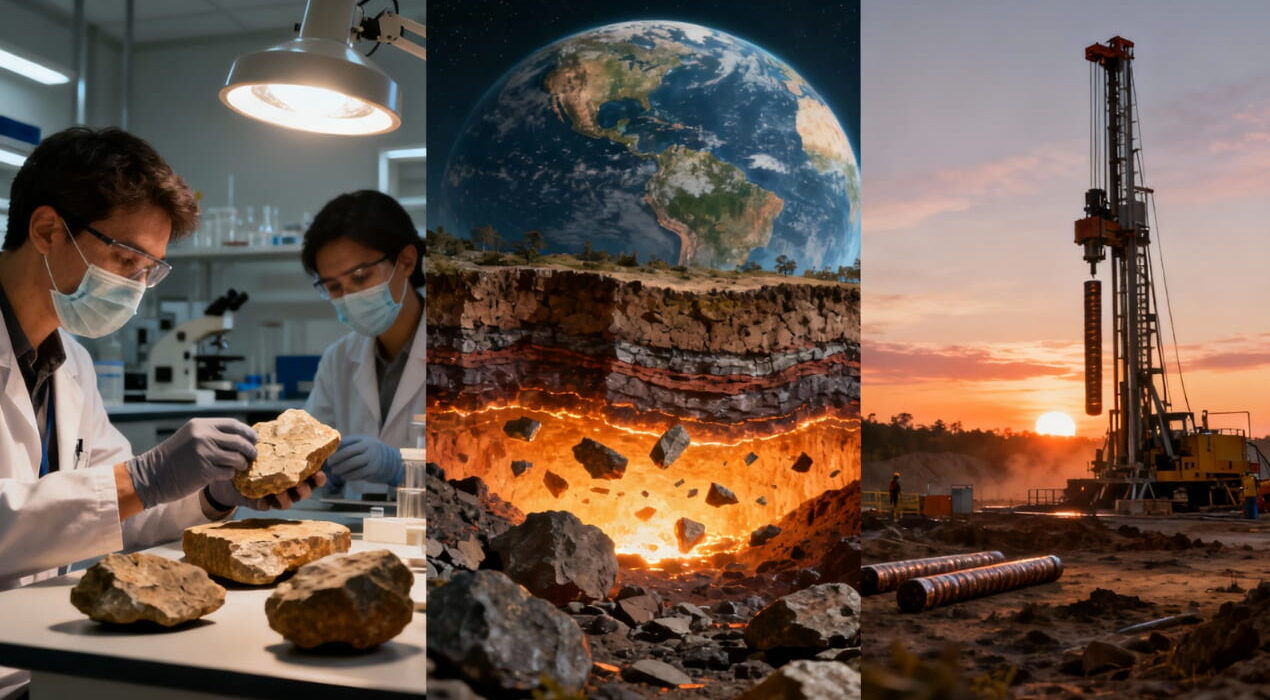
Scientists from MIT and other global institutes have made a groundbreaking discovery. They found traces of an early Earth ancestor buried deep within the planet’s crust. These ancient materials are older than most of Earth’s current structure.
What makes this find remarkable is that these fragments survived violent impacts and intense heat from Earth’s early years. This challenges the idea that the planet completely melted during its formation.
Ancient Chemistry Hidden in Modern Rocks
Researchers studied volcanic rocks from places like Greenland, Canada and Hawaii. Inside, they detected unusual chemical signatures. For example, the rocks contained lower levels of potassium-40 than modern Earth materials.
This difference suggests that these rocks may come from a much older layer—possibly a remnant of the planet before it fully evolved. In addition, it hints that Earth’s first building blocks still exist far below the surface.
A New Chapter in Earth’s Story
This discovery changes how we think about Earth’s beginnings. Instead of being entirely reshaped by early collisions and magma oceans, parts of the original planet may still be intact. As a result, scientists now have a way to study Earth’s true origins—not just what remains after billions of years of change.
Furthermore, this could help researchers understand how other rocky planets form in the universe. It opens a door to studying planetary history in a deeper and more accurate way.