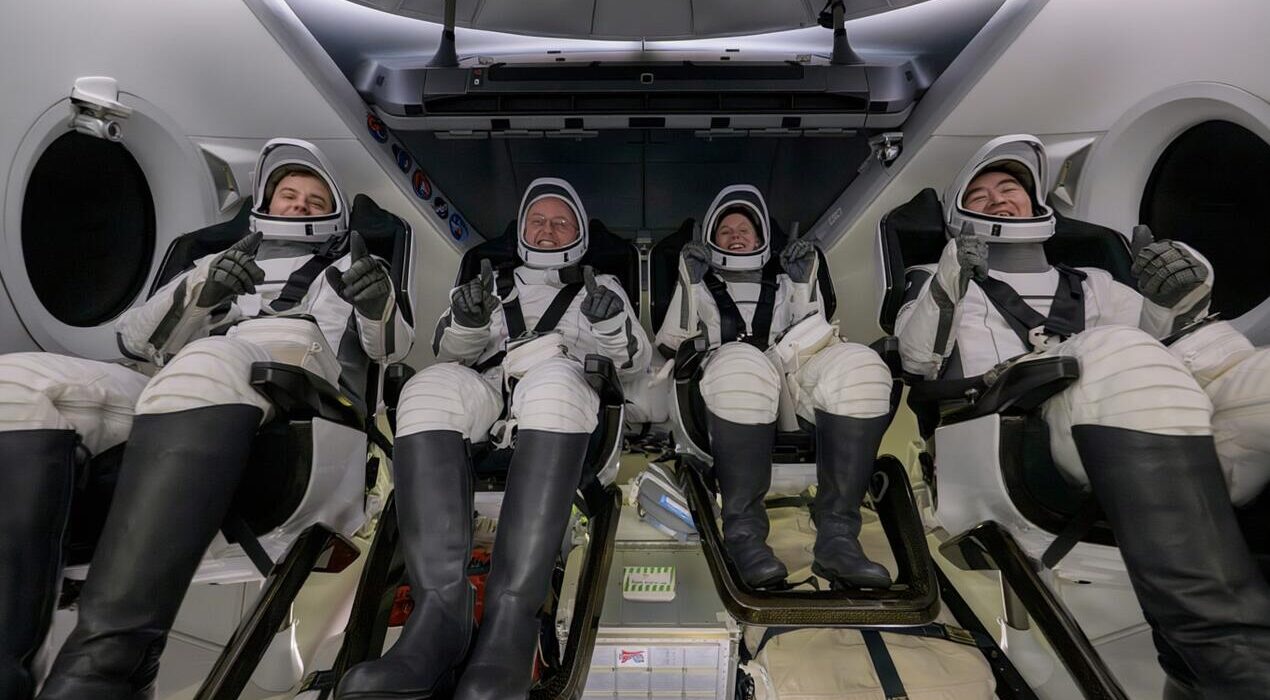
NASA Executes Rare Medical Evacuation from Space Station: Crew Returns Safely
NASA’s SpaceX Crew-11 mission safely returned to Earth. Their Dragon capsule splashed down in the Pacific Ocean early on January 15, 2026. This marked the end of a 167-day mission aboard the International Space Station (ISS).
A Mission Cut Short for Medical Reasons
Crew-11 returned about one month earlier than planned. Therefore, NASA made the decision due to a medical concern for one crew member. The agency has not shared specific details to protect privacy. However, they confirm the individual is stable.Recovery teams met the spacecraft immediately after landing. They then transported all four astronauts to a nearby hospital for evaluation. This action ensured quick access to Earth’s best medical resources.
Significant Scientific Work Accomplished
Despite the early return, the mission was a major success. For example, the crew completed over 140 science experiments. Their work advances research for future Moon and Mars missions. In addition, they helped celebrate the ISS’s 25th year of continuous human habitation.The international crew included NASA astronauts Zena Cardman and Mike Fincke. JAXA astronaut Kimiya Yui and Roscosmos cosmonaut Oleg Platonov also served. Together, they orbited Earth 2,670 times and traveled nearly 71 million miles.
Preparedness for Future Exploration
This event demonstrated NASA’s robust crew return capabilities. As a result, the agency proved it can adapt to unforeseen challenges. Commercial partnerships, like the one with SpaceX, make this flexible response possible.The Crew-11 mission underscores a key point. Human spaceflight requires constant vigilance and preparation. NASA’s protocols ensure astronaut safety remains the top priority, even during unexpected events.