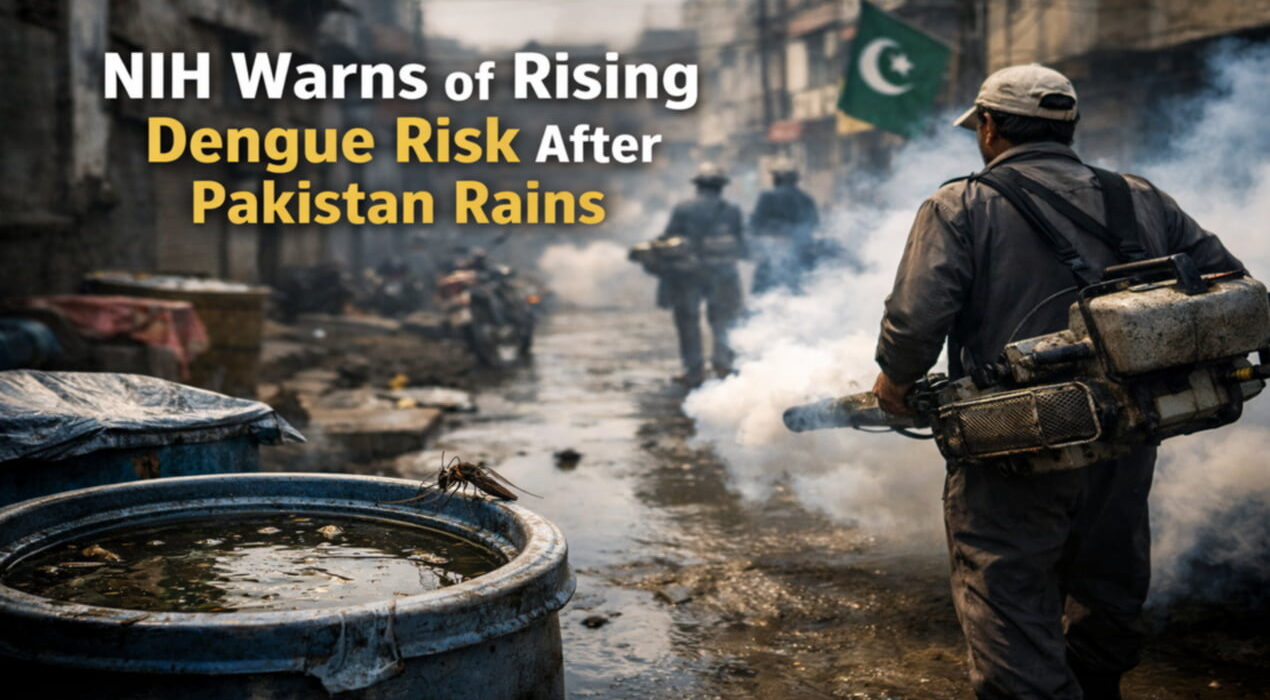
NIH Warns of Rising Dengue Risk After Pakistan Rains
Recent heavy rains in Pakistan have increased the risk of dengue, the National Institute of Health (NIH) warns. Mosquitoes that spread dengue breed in stagnant water. Therefore, residents should stay alert and take preventive measures.
Dengue Cases Could Increase
Mosquitoes thrive in uncovered water containers, drains, and trash. Simple steps, like covering water and cleaning drains, can reduce breeding. In addition, fogging in high-risk areas helps limit mosquito numbers. Symptoms of dengue include fever, headaches, and joint pain. People experiencing these signs should seek medical care immediately. Early prevention remains more effective than treatment.
How to Protect Yourself
Wear long sleeves, use mosquito repellents, and install window screens. These small actions reduce bites significantly. Community participation is equally important. As a result, collective efforts help prevent outbreaks and protect neighborhoods. Healthcare systems may face pressure if dengue spreads widely. Therefore, following official health guidance is crucial. Everyone can contribute to lowering the risk this rainy season.
Stay Informed and Safe
NIH urges residents to monitor local dengue alerts. Sharing information with family and neighbors keeps communities safer. Remember, small precautions today prevent serious illness tomorrow.