Pakistan Afghanistan Border Conflict Escalates as Leaders Push for Talks
The Pakistan Afghanistan border conflict has entered its third day of intense fighting. Both sides continue air strikes and drone attacks. As a result, fears of wider regional instability are growing fast. Global leaders have urged restraint and dialogue. The European Union’s foreign policy chief, Kaja Kallas, called for immediate talks. In addition, Antonio Guterres and officials from several countries demanded de-escalation. However, Pakistan rejected negotiations and insisted that cross-border attacks must stop first.
Border Clashes Intensify
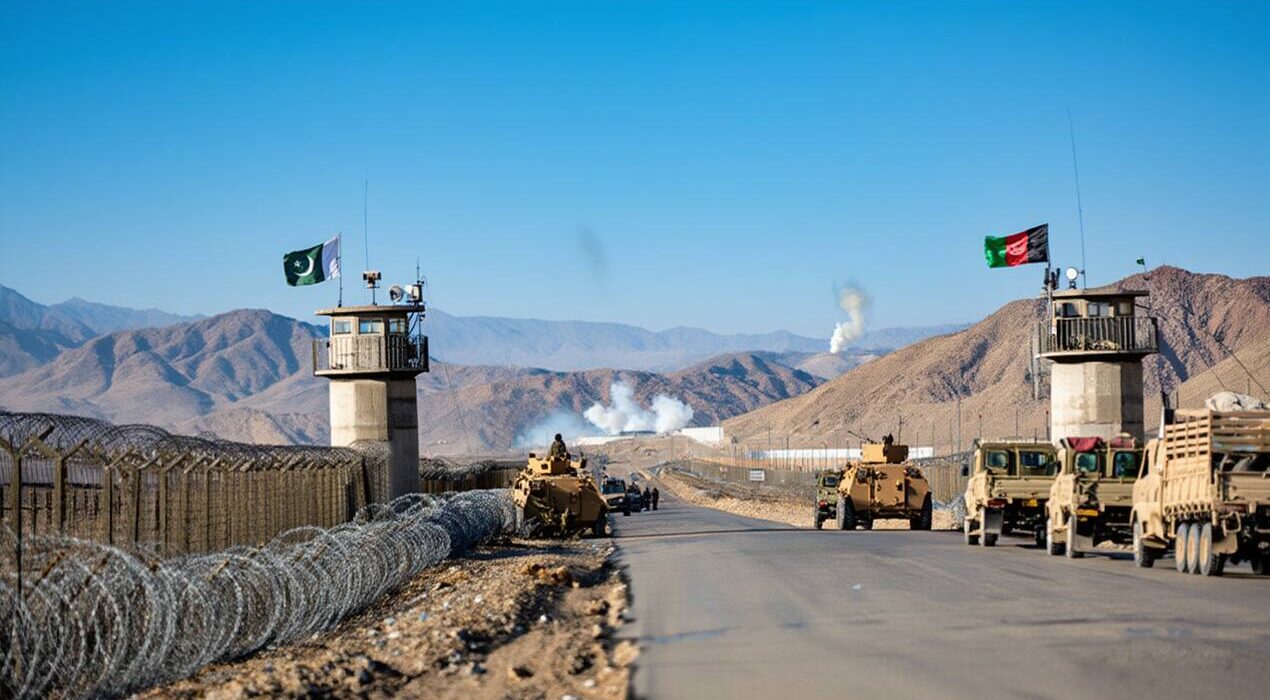
Fighting has spread across key frontier areas. Afghan media reported drone strikes on Pakistani camps in Miranshah and Spinwam. Meanwhile, Pakistan’s Dawn newspaper said a drone hit a mosque in Bannu and injured five people.
Pakistani forces responded with fresh strikes on Taliban positions. The violence began after Pakistan carried out air raids inside Afghanistan last weekend. Afghan forces then launched retaliatory attacks across six Pakistani districts. Soon after, Pakistan targeted Kabul, Kandahar, and Paktia. This marked its first strike on Kandahar since 2021. Both sides now claim heavy battlefield losses.
Rising Casualties and Global Pressure
Pakistan said 12 soldiers died and 274 Taliban fighters were killed. However, Taliban officials claimed 13 fighters and 55 Pakistani soldiers died. Independent groups have not verified these numbers.
The United States backed Pakistan’s right to defend itself. At the same time, Pakistan blamed armed groups operating from Afghan soil. Kabul denied those allegations and rejected responsibility.
Pakistan has a stronger and nuclear-capable military. However, Taliban fighters have decades of combat experience. Therefore, analysts warn that continued escalation could destabilize South Asia.
World leaders now press for urgent mediation. Without dialogue, the Pakistan Afghanistan border conflict could spiral further.