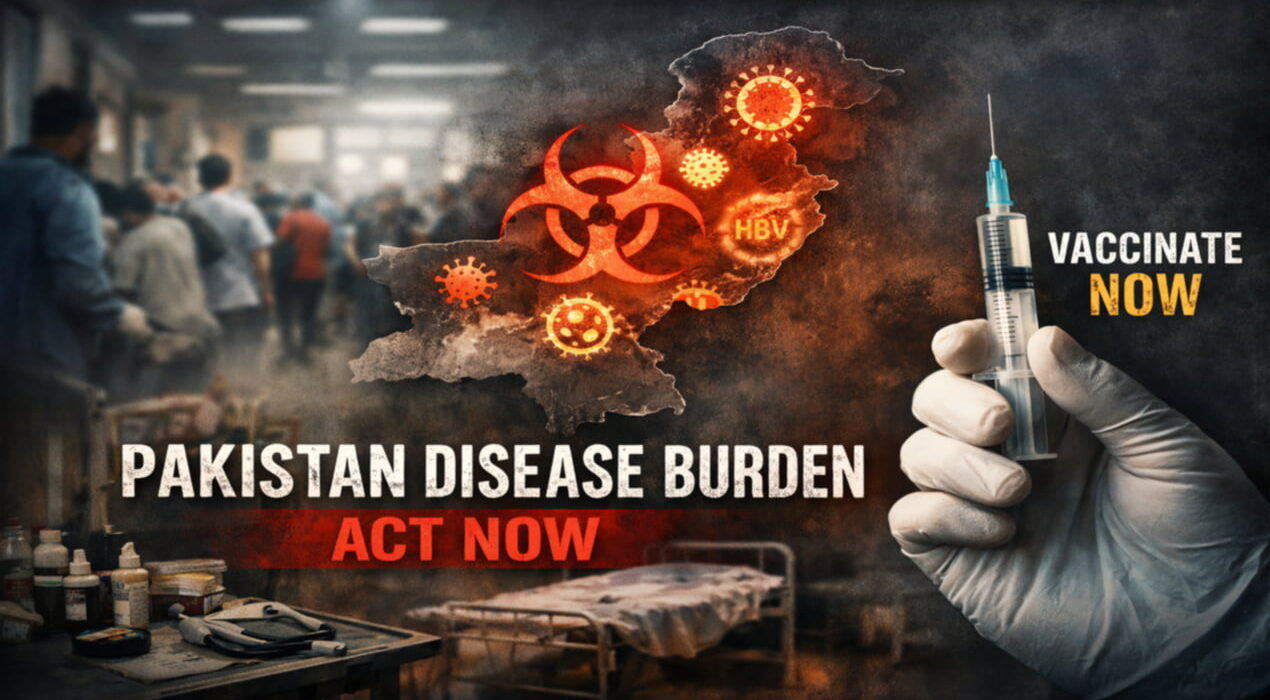
Pakistan Disease Burden Persists as Communicable Illnesses Challenge Health System
Pakistan continues to struggle with a rising Pakistan disease burden, a senior minister said recently. Communicable diseases still affect millions across the country. These illnesses create serious challenges for families and healthcare systems.
The minister explained that infections such as tuberculosis, hepatitis, and dengue remain common. However, early detection and timely care can reduce their impact. Many communities still lack access to basic health services.
Health System Under Pressure
Hospitals often face heavy patient loads due to increasing infections. As a result, doctors and staff work under constant pressure. In addition, limited resources make treatment more difficult in many areas.
Rural regions face even bigger challenges in healthcare access. For example, some areas lack trained staff and proper facilities. Therefore, patients often travel long distances for treatment.
Clean water and sanitation also remain key concerns. Without these, infections spread more easily. As a result, prevention becomes harder to achieve.
Importance of Prevention and Awareness
The minister stressed that prevention is the most effective solution. Vaccination campaigns can protect communities from many diseases. In addition, hygiene practices like handwashing can reduce infection risks.
However, misinformation continues to create barriers. Some people avoid vaccines due to fear or false beliefs. Therefore, clear and inclusive awareness campaigns are essential.
Schools and community programs can play an important role. They help spread accurate health information. As a result, more people can make informed decisions.
Future Plans and Collective Action
The government plans to improve disease monitoring systems nationwide. In addition, efforts will focus on expanding affordable healthcare services. These steps aim to detect outbreaks earlier.
International partnerships can also support better healthcare solutions. For instance, global organizations can provide funding and expertise. As a result, Pakistan can strengthen its response.
Communities must also take responsibility for their health. Simple actions can prevent many illnesses. Together, these efforts can reduce Pakistan disease burden over time.
K