Punjab Tractor Scheme Launched to Boost Farmers’ Independence, Says Maryam Nawaz
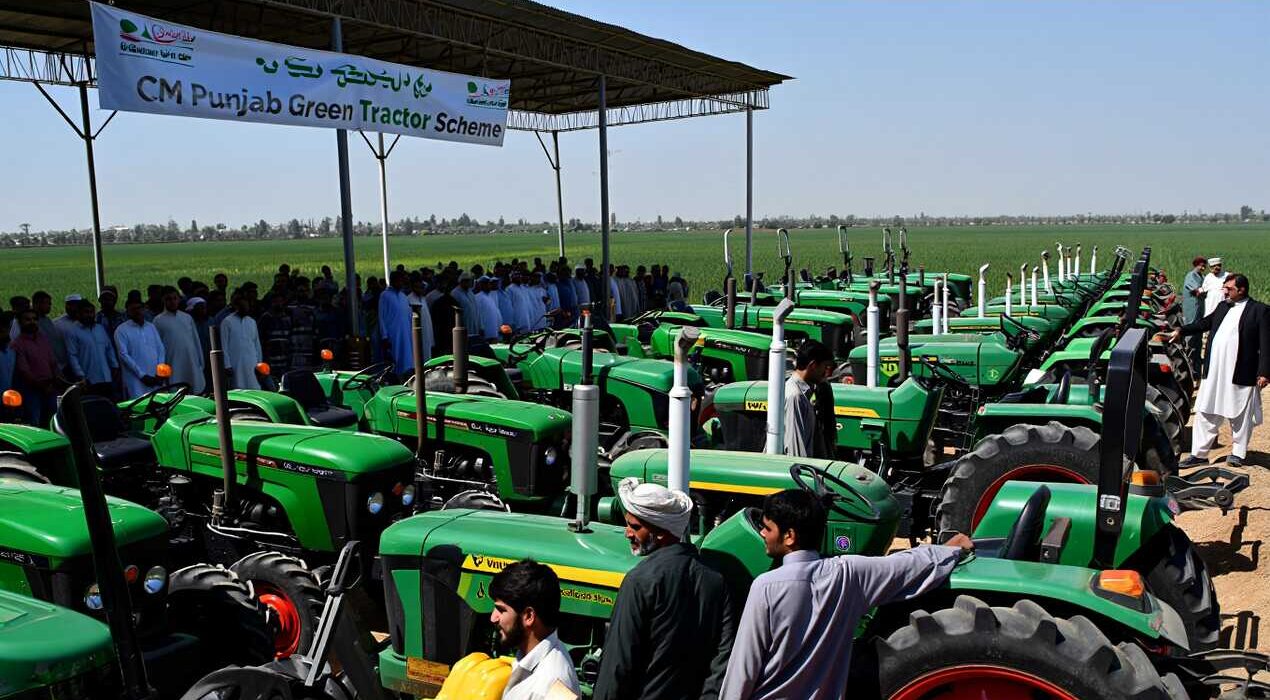
Punjab Chief Minister Maryam Nawaz Sharif has launched the Punjab tractor scheme, the largest of its kind in the province. The initiative aims to strengthen farmers’ economic independence and improve agricultural output. As a result, thousands of farmers are gaining access to modern farming equipment.
The provincial government has already distributed 20,000 tractors in two phases. In the first phase, officials provided 10,000 tractors with 50 to 75 horsepower. Meanwhile, the second phase included 10,000 tractors with 75 to 85 horsepower, and deliveries are currently in progress.
Subsidies and phased distribution plan
The Punjab government is offering strong financial support under this program. Each high-horsepower tractor comes with a subsidy of Rs1 million. Therefore, the total subsidy allocation for this phase has reached Rs10 billion.
Officials confirmed that the third phase will begin in January. This phase will focus on tractors with 50 to 55 horsepower. Applications will open in mid-January to ensure fair access for small and medium-scale farmers.
Maryam Nawaz Sharif assured farmers of continued government support. She emphasized that assistance will cover every stage of farming. This includes sowing, harvesting, and selling crops. As a result, farmers can plan their seasons with greater confidence.
Modern farming and farmer empowerment
In addition, the government has introduced interest-free loans for larger tractors. These tractors range from 100 to 120 horsepower. The loans fall under the “High-Tech Farm Mechanization Financing Program.” This effort promotes modern and efficient farming practices across Punjab.
While addressing the ceremony, the chief minister shared her vision for agriculture. She stated that the Punjab tractor scheme aims to raise crop yields and improve rural livelihoods. Moreover, she expressed happiness at seeing farmers become owners of their own tractors.
According to her, empowered farmers create a stronger agricultural economy. Therefore, the government will continue investing in initiatives that support inclusive growth and long-term food security.