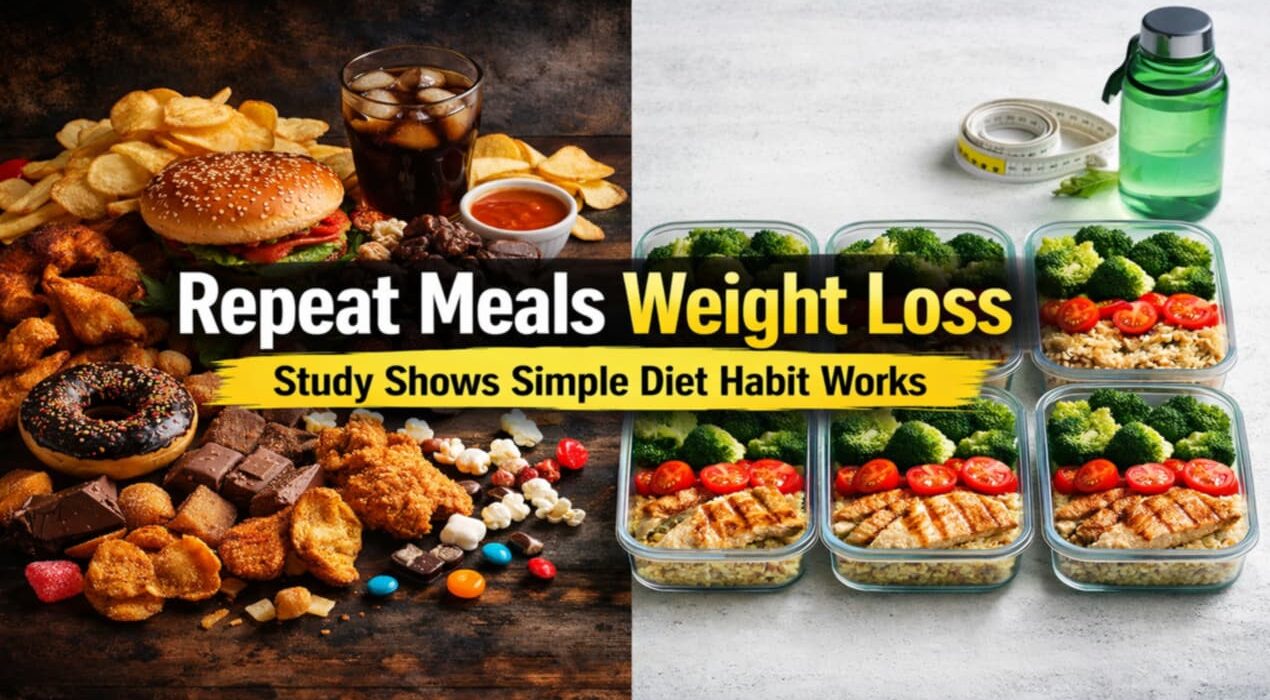
Repeat Meals Weight Loss: Study Shows Simple Diet Habit Works
If you want to lose weight, repeated meals weight loss may help simplify your diet. A new study suggests consistent daily calories matter more than variety. Instead of chasing special foods, building repeatable eating habits can support better results.
The American Psychological Association researchers published these findings in Health Psychology. They studied 112 adults with overweight or obesity in a behavior program. Participants logged meals on an app and checked weight daily.
Researchers tracked calorie changes across days and noted meal patterns. They compared those who repeated foods with those choosing new options often. In addition, they examined how steady calorie intake linked with results.
Why Repeating Meals Helps
The analysis showed that people who repeated meals lost about 5.9 percent of body weight. However, those with more varied diets lost around 4.3 percent. Smaller calorie swings are also linked with greater weight loss.
This pattern suggests routine makes decisions easier. For example, familiar meals reduce daily guesswork and stress. As a result, people avoid impulsive eating and stay within planned calories.
Limits and Practical Tips
The study shows a link but not a direct cause. Other factors, such as strong self control, may influence outcomes. Careful food tracking might also play an important role.
Still, experts say simple routines can support long term success. Although variety in healthy foods remains important, consistency can be more realistic. Therefore, repeating balanced meals may help people build lasting habits.
Start small by choosing two or three meals to repeat each week. Then adjust portions and ingredients to meet your needs. In the end, repeated meals weight loss offers a practical and sustainable approach.
This method does not mean eating the exact same foods every day forever. Instead, you can rotate a few nutritious options to keep meals enjoyable. By keeping structure simple, you reduce decision fatigue and improve consistency, which supports healthier choices over time.
That balance makes dieting easier and more sustainable overall.