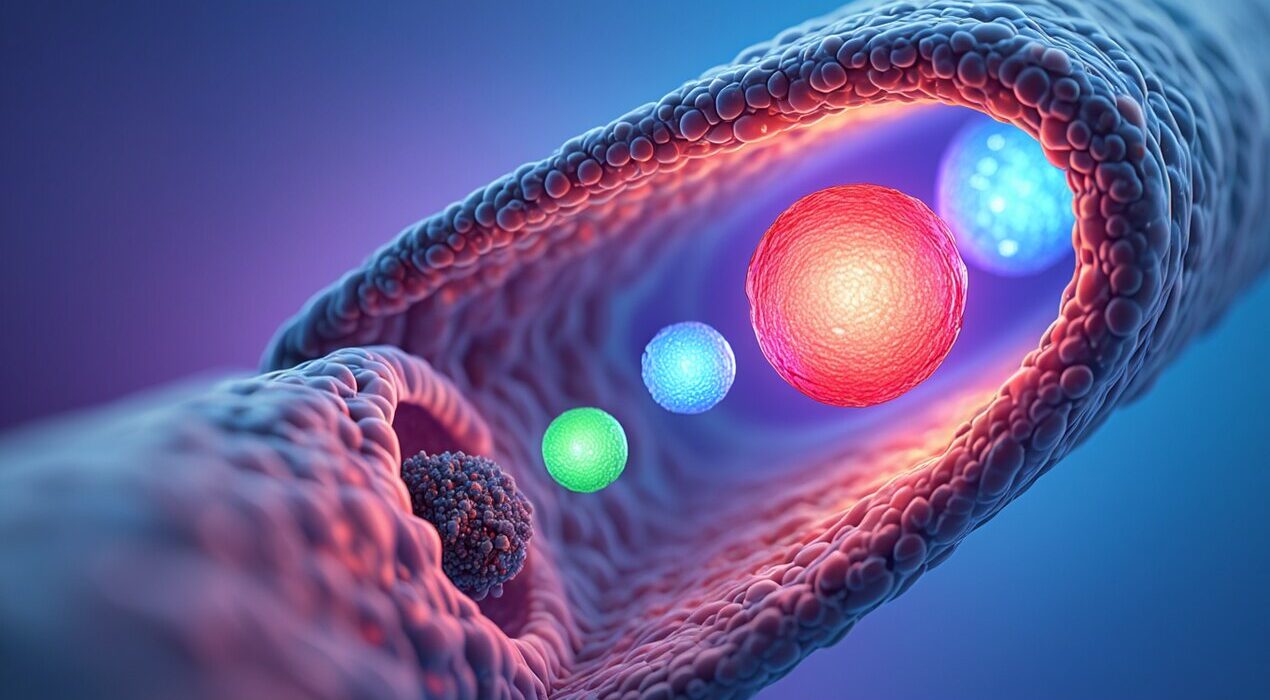
Scientists Create Atom-Sized Gates Inspired by Human Cell
Scientists have built atom-scale “gates” that mimic living ion channels. These tiny structures open the door to next-generation sensing and brain-inspired technology. Researchers at The University of Osaka achieved this breakthrough by creating ultra-small pores just a few atoms wide
What Are Ion Channels?
Ion channels act as tiny openings in living organisms. They control how charged particles move through cell membranes. These narrow pathways are essential for many biological functions. In some cases, their tightest sections measure only a few atoms across.For years, scientists struggled to recreate structures this small. The precision required made it one of nanotechnology’s toughest challenges. However, researchers have now found a solution.
Building Nature’s Gateways
The team published their findings in Nature Communications. They used a miniature electrochemical reactor to produce incredibly small pores. The process began with a nanopore in a silicon nitride membrane. This nanopore then served as a tiny reaction chamber.When the team applied a negative voltage, something interesting happened. A chemical reaction produced solid material inside the nanopore. This material gradually expanded until it completely blocked the opening.Then came the clever part. By reversing the voltage, the precipitate dissolved. This restored conductive pathways through the pore once again.”We repeated this opening and closing hundreds of times,” explains lead author Makusu Tsutsui. “This demonstrates that the reaction scheme is robust and controllable.”
Watching Ions in Action
The researchers monitored ion current passing through the membrane. They observed sharp spikes in the current. Interestingly, these patterns closely resemble those seen in biological ion channels.Further analysis confirmed something exciting. Numerous subnanometer pores had formed within the original nanopore structure.The team also discovered they could fine-tune the pore behavior. By adjusting chemical composition and pH, they altered both size and properties. Senior author Tomoji Kawai notes, “This enabled selective transport of ions through the membrane.”
Real-World Applications
This chemically driven approach offers exciting possibilities. It allows scientists to generate multiple ultrasmall pores inside a single nanopore. Researchers can now study how ions move through extremely confined spaces.The technology could support several emerging fields:DNA sequencing becomes more precise with single-molecule sensing. Nanopores can read genetic information one molecule at a time.Neuromorphic computing uses electrical spikes to mimic brain neurons. Atom-sized gates could make these systems more efficient.Nanoreactors create unique reaction conditions through confinement. This opens doors for new chemical discoveries.
The Future Looks Small
This breakthrough proves that mimicking nature at the atomic scale is possible. The gates operate reliably and respond to electrical signals. As research continues, we may see these tiny structures powering tomorrow’s technology.For now, the team celebrates a major step forward. They have built something remarkable: gates that rival nature’s own designs.