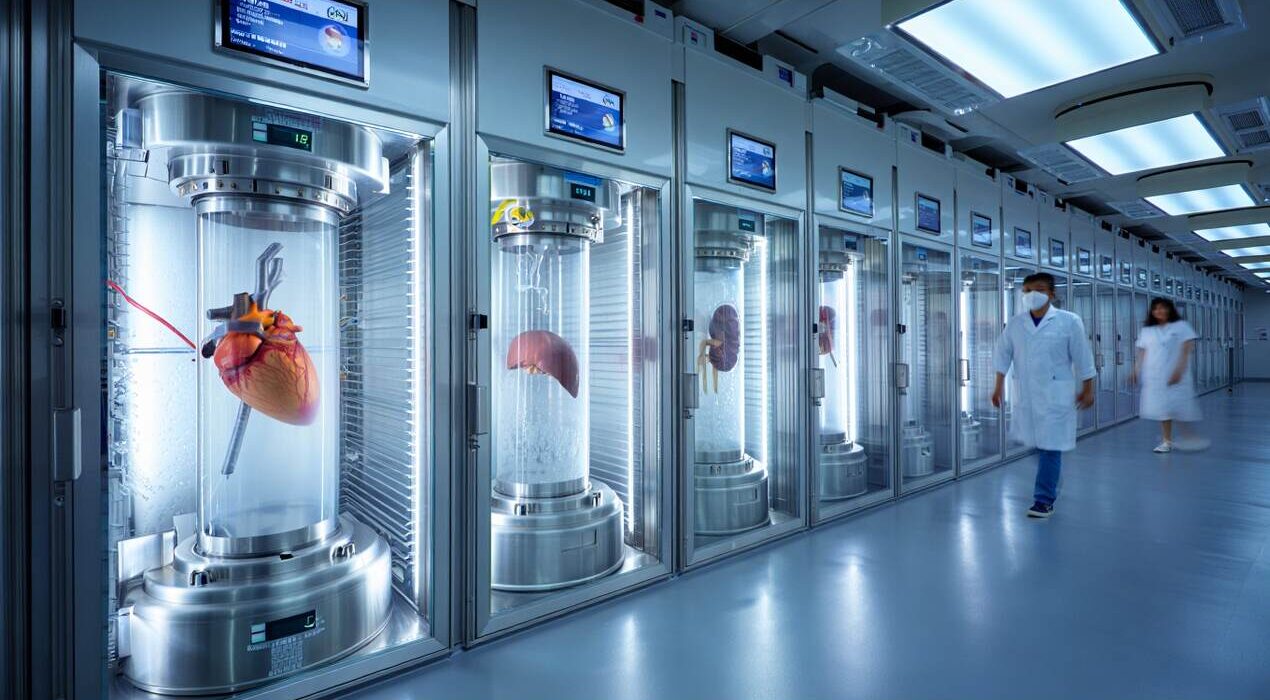
Scientists Discover New Method to Freeze Organs Without Cracking
Scientists may have finally solved a problem that has challenged medicine for a century. A team at Texas A&M University has introduced a new method that helps prevent cracking in frozen organs. As a result, long-term organ storage may soon become a reality.Cryopreservation involves cooling biological tissue to very low temperatures. It sounds futuristic; however, researchers have worked on this concept for decades. Progress sped up in 2023 when scientists successfully transplanted a cryopreserved rat kidney.
Why Organs Crack During Freezing
Larger organs freeze unevenly, which makes them vulnerable to fractures. These cracks can damage tissue and limit the chances of a successful transplant. Therefore, preventing them is essential.The Texas A&M team, led by Dr. Matthew Powell-Palm, explored a new technique to reduce this cracking. Their research focuses on improving how organs transition into a glass-like state during freezing.
Understanding the Freezing Process
Scientists use a process called vitrification to store organs outside the body. This method freezes tissue in a special solution that avoids harmful ice formation. By adjusting the formula of this solution, researchers can influence how likely the organ is to crack.“In this study, we tested different glass transition temperatures,” said Powell-Palm. “We found that higher temperatures greatly reduce cracking.” This insight gives researchers a clearer path toward better cryosolutions.
Designing Better Cryosolutions
The next challenge is creating solutions that increase glass transition temperatures while staying safe for tissues. In addition, these solutions must support the organ’s structure during thawing.
Broad Impact Across Medicine
This research benefits more than transplant medicine. Cryopreservation also helps protect endangered species, stabilize vaccines, and reduce food waste. Therefore, improvements in the field can support many areas of science.Mechanical engineering students and faculty collaborated on this project, combining chemistry, physics, and biology. Their work brings the idea of long-term organ storage closer to real-world use.