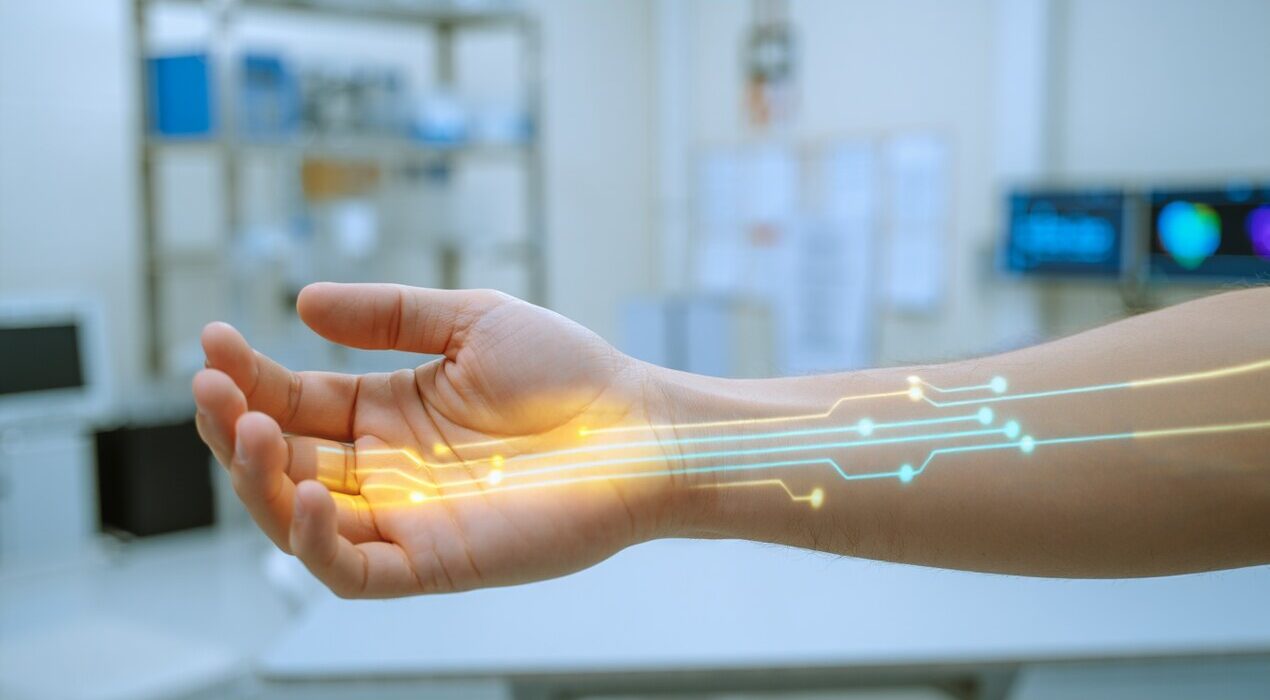
Scientists Print Electrodes on Skin Using Light Technology
Scientists have developed a new way to print electronic electrodes directly onto human skin. They use light instead of heat or pressure. As a result, the process feels gentle and safe. This breakthrough could change how people use wearable health technology. For example, future sensors may feel like temporary tattoos instead of bulky devices.
Light-Based Printing Works
Researchers apply a special liquid ink to the skin. They then shine focused light on specific areas. The light activates the ink and turns it into a solid electrode. Therefore, no wires or stickers are required during printing. In addition, the method avoids skin damage. This makes it suitable for sensitive or long-term use. Comfort Meets High PerformanceTraditional wearable electrodes often feel stiff or uncomfortable. However, these new printed electrodes move naturally with the skin. They stretch, bend, and stay attached during daily activities. As a result, users can wear them for longer periods. The electrodes also deliver strong electrical performance. This allows accurate signal detection from the body.
This Discovery Matters
Printed skin electrodes can monitor heart signals, muscles, or hydration levels.Therefore, doctors could track patients without invasive tools.In addition, athletes may benefit from real-time performance data.This technology could also support rehabilitation and remote healthcare.The system reduces waste compared to disposable sensors.As a result, it supports more sustainable medical practices.
Looking Ahead
Scientists continue to test durability and safety across skin types. However, early results look promising. In the future, this technology may reach hospitals and homes. It could redefine how people interact with health electronics.