Scientists Solve 50-Year-Old Magnetic Mystery in Steel
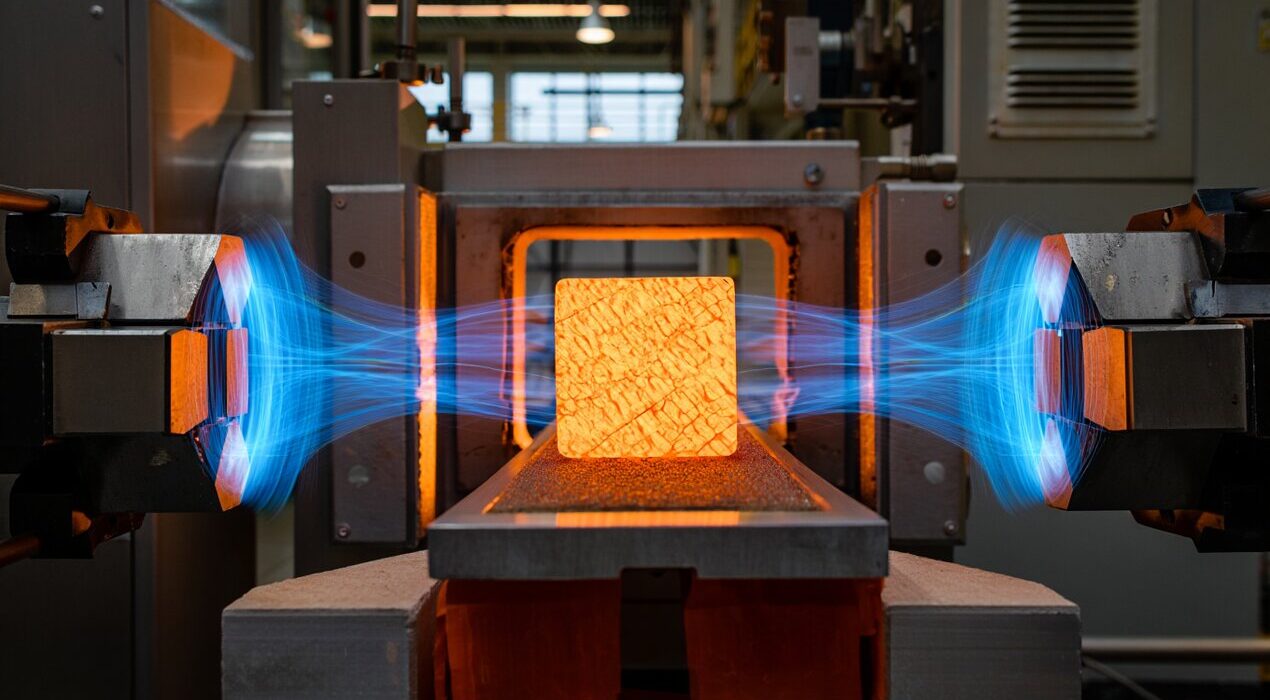
Researchers have solved a 50-year-old scientific puzzle. They now understand a strange magnetic effect in steel. This discovery could make steel production greener. The mystery involved heat treatment. For decades, engineers knew magnetic fields improved some steel’s properties. However, no one knew the exact physical reason why. A team from the University of Illinois found the answer. Their study was published in Physical Review Letters. The key lies in how carbon atoms move inside iron.
How Carbon Moves in Steel
Steel is mainly iron and carbon. During production, heat makes carbon atoms diffuse. This process shapes steel’s final strength and structure.Carbon atoms sit in tiny “cages” made of iron atoms. To move, a carbon atom must jump between these cages. The team discovered magnetism changes this jumping process.They used advanced computer simulations. These models showed how atomic spins affect the cage. Magnetic fields align these spins, which makes the cage tighter.
Why Magnets Slow Carbon Down
Think of the carbon atom like a person in a room. When the iron’s magnetism is disordered, the room is spacious. The carbon can move easily.However, a strong magnetic field aligns the iron’s atomic spins. This alignment makes the atomic cage more rigid. Consequently, the carbon atom finds it harder to escape.”It’s a change in the energy barrier,” said Professor Dallas Trinkle, the study’s senior author. This explains why diffusion slows under a magnetic field.
A Greener Future for Steelmaking
This discovery is more than academic. Steel production is extremely energy-intensive. Therefore, better control could save massive amounts of energy.Engineers can now design smarter heat treatments. They might use magnetic fields more precisely. As a result, factories could lower both costs and CO2 emissions.The knowledge also opens new doors. Researchers can apply this principle to other alloys. We might see new, better-performing materials in the future.”This was a fundamental question,” Trinkle said. Now, we have a clear, physics-based answer. This turns an old observation into a powerful new tool for industry.