Scientists Track a Giant Solar Region for 94 Days, Revealing New Clues About Solar Storms
Scientists recently tracked one unusually powerful solar region for an extended period.
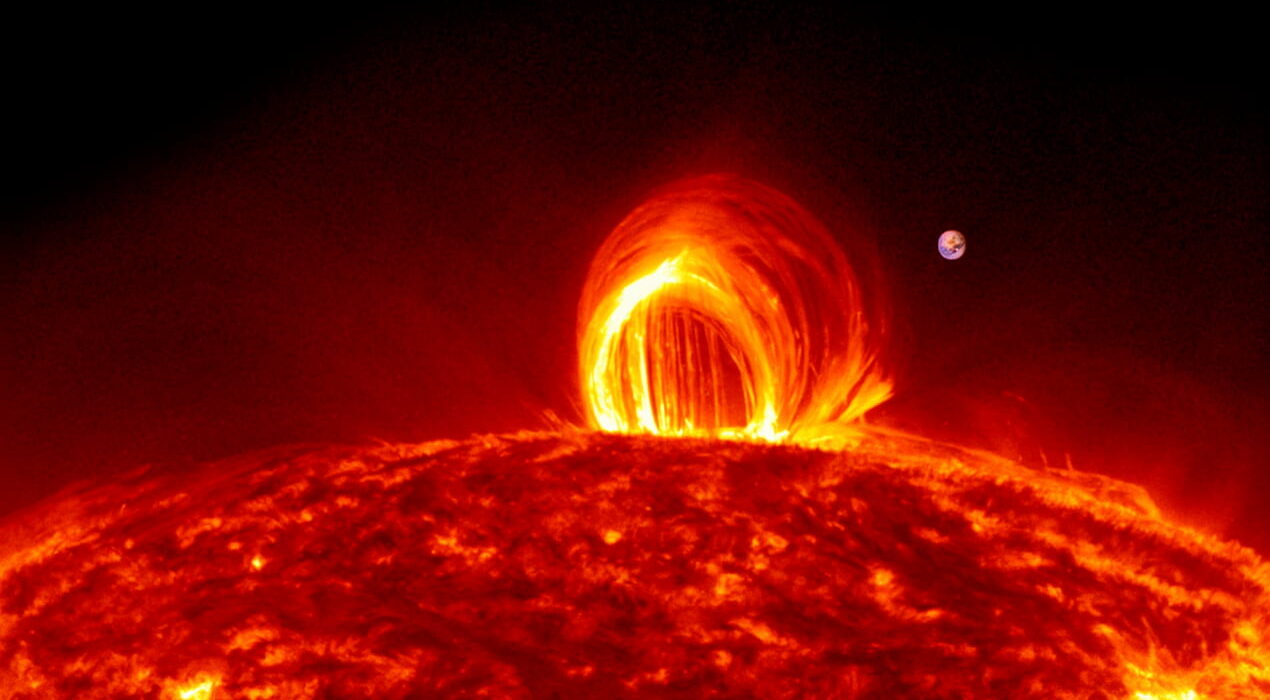
As a result, they gained rare insights into how dangerous solar storms develop. This long-term study marked a major step forward in solar research. Normally, the Sun’s rotation limits how long scientists can observe active regions. However, new space technology changed that limitation. Researchers combined data from two space missions to extend observations. The European Space Agency launched Solar Orbiter in 2020. Meanwhile, NASA’s Solar Dynamics Observatory continued monitoring the Sun from Earth’s side. Together, they created a nearly uninterrupted view. From April to July 2024, scientists followed solar region NOAA 13664. In addition, they tracked it across three full solar rotations. This effort produced 94 days of detailed observations.
This Solar Region Stood Out
NOAA 13664 ranked among the most active regions in two decades. In May 2024, it triggered Earth’s strongest geomagnetic storms since 2003. As a result, bright auroras appeared far beyond polar regions. These storms affect more than night skies.
For example, they can disrupt satellites, power grids, and communication systems.
Even agriculture technology faced serious disruptions during the event.
Magnetic Fields Hold the Key
Active regions form when powerful magnetic fields rise to the Sun’s surface. Over time, these fields can twist and grow unstable. Eventually, they release energy as flares and solar storms. Scientists observed the region’s magnetic structure becoming more complex. Therefore, they could link complexity to storm intensity. This insight may improve future space weather forecasts.
Looking Ahead to Better Forecasts
Researchers still cannot predict exact storm timing or strength. However, new missions aim to close that gap. ESA’s upcoming Vigil mission plans to focus entirely on space weather. Understanding the Sun protects modern technology and daily life. After all, it remains the only star that directly affects Earth.