Small Tweak Makes HPV Vaccine a Powerful Cancer Killer | Northwestern Study
Northwestern University researchers have discovered exactly that. By making a tiny structural change to an HPV cancer vaccine, they transformed it into a far more powerful tumor fighter. The study published February 11 in Science Advances shows that how vaccine components are arranged matters just as much as what they contain.
The Power of Placement
For years, scientists mixed vaccine ingredients together without much thought to structure. Chad A. Mirkin, a nanotechnology pioneer at Northwestern, calls this the “blender approach.” The ingredients are there, but they lack organization. His team took a different path. They built a vaccine using spherical nucleic acids (SNAs)—globular DNA structures that naturally enter immune cells. Then they tested several versions with identical ingredients. The only difference? Where and how a small HPV protein fragment attached to the nanoparticle. One design stood out dramatically.
Stronger Immune Attack
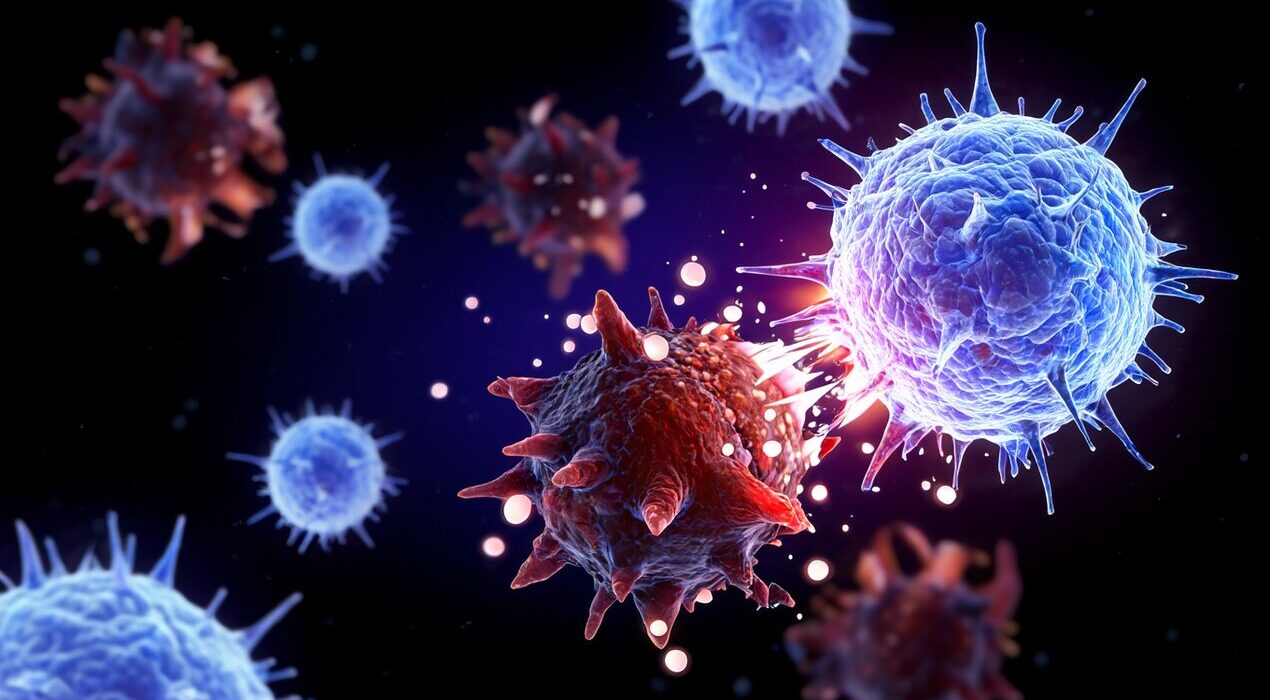
The winning version placed the HPV antigen on the nanoparticle’s surface, attached at a specific spot called the N-terminus. This simple adjustment unleashed far more cancer-killing CD8 T cells. These are the immune system’s most powerful weapons against tumors. In humanized animal models, tumor growth slowed significantly. Survival improved. When tested on tumor samples from head and neck cancer patients, cancer cell killing increased two to three times. “We did not add new ingredients or increase the dose,” said Dr. Jochen Lorch, study co-leader from Northwestern Medicine. “We simply presented the same components in a smarter way. The immune system is sensitive to geometry.”
A New Field Emerges
This precision approach forms the foundation of “structural nanomedicine,” a term Mirkin introduced. The concept is simple: arrange ingredients carefully at the nanoscale, and medicines work better with fewer side effects. The team has already used this strategy to design vaccines for melanoma, breast cancer, colon cancer, and more. Seven SNA-based drugs have entered human trials. Over 1,000 commercial products now incorporate this technology.
Hope for HPV-Related Cancers
HPV causes most cervical cancers and a growing number of head and neck cancers. Preventive vaccines stop infection but cannot treat existing tumors. These therapeutic vaccines aim to fill that gap. Mirkin now plans to revisit earlier vaccine candidates that showed promise but failed in patients. “We may have passed up perfectly good components because they were in the wrong configurations,” he explained. “Now we can restructure them into potent medicines. “Artificial intelligence will likely accelerate this process. Machine learning can rapidly test countless structural combinations to identify the most powerful designs. “The whole concept of structural nanomedicine is a major train roaring down the tracks,” Mirkin said. “We have shown that structure matters—consistently and without exception. “Funding: National Cancer Institute (R01CA257926, R01CA275430), Lefkofsky Family Foundation, Robert H. Lurie Comprehensive Cancer Center