Spinning Gyroscope Could Unlock Ocean Wave Energy | Osaka University Study
Ocean waves hold enormous energy potential. However, capturing that power has frustrated engineers for decades. Most devices only work well under specific wave conditions. The constantly shifting sea makes them inefficient. A researcher at The University of Osaka may have solved this problem. Takahito Iida explored a bold new approach called a gyroscopic wave energy converter (GWEC). The study published this month in the Journal of Fluid Mechanics shows promising results.
The Challenge of Wave Power
Waves are one of Earth’s largest renewable energy sources. They roll consistently day and night. Unlike solar or wind, they don’t stop when the sun sets or the air goes still. Yet traditional wave devices struggle. They perform best only at certain wave frequencies. Ocean waves vary constantly in size, speed, and direction. This mismatch limits energy production.
How It Works
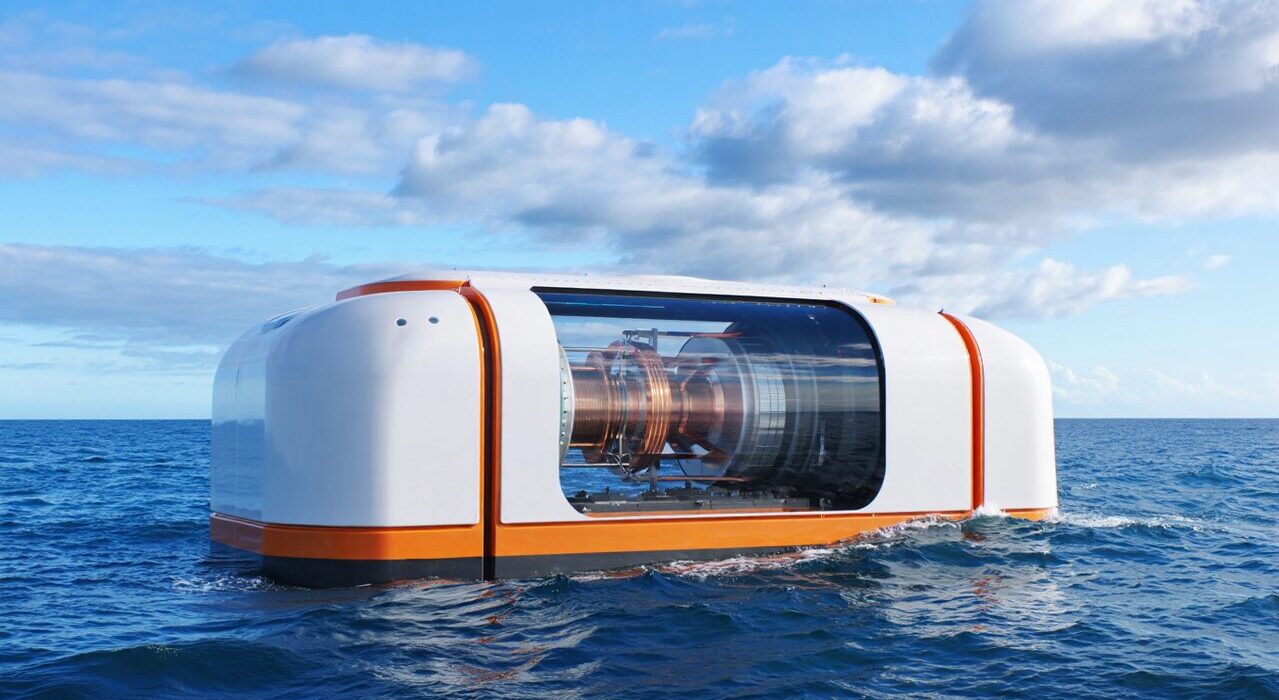
The GWEC uses a spinning flywheel inside a floating platform. As waves rock the device, the flywheel responds through gyroscopic precession. This is the subtle wobble a spinning object makes under outside force.That motion connects to a generator. The result? Clean electricity from ocean movement.”Wave energy devices often struggle because ocean conditions keep changing,” Iida explained. “However, a gyroscopic system can maintain high energy absorption even as wave frequencies vary.”
What the Research Shows
Iida used linear wave theory to model the interaction between waves, the floating structure, and the gyroscope. He identified ideal settings for the flywheel’s speed and generator controls. When properly tuned, the GWEC can reach the theoretical maximum energy absorption efficiency. This limit is one half at any wave frequency. “This efficiency limit is a fundamental constraint,” Iida said. “What excites us is reaching it across broadband frequencies, not just at one resonant condition. “Numerical simulations confirmed these findings. The device performs best near its resonance frequency. That means it works efficiently when its motion matches the waves’ natural rhythm.
Why This Matters
The world needs dependable renewable energy to address climate goals. Oceans represent a massive, largely untapped resource. Making wave power practical could add a powerful tool to the clean energy toolbox. This research offers practical guidance for building flexible wave energy systems. Engineers can now fine-tune gyroscope operating parameters for maximum efficiency. As climate challenges grow, innovations like this help unlock the energy stored in our oceans. Journal Reference: Journal of Fluid Mechanics, February 2026