Study Shows Social Media Travel Videos Provide Emotional Healing
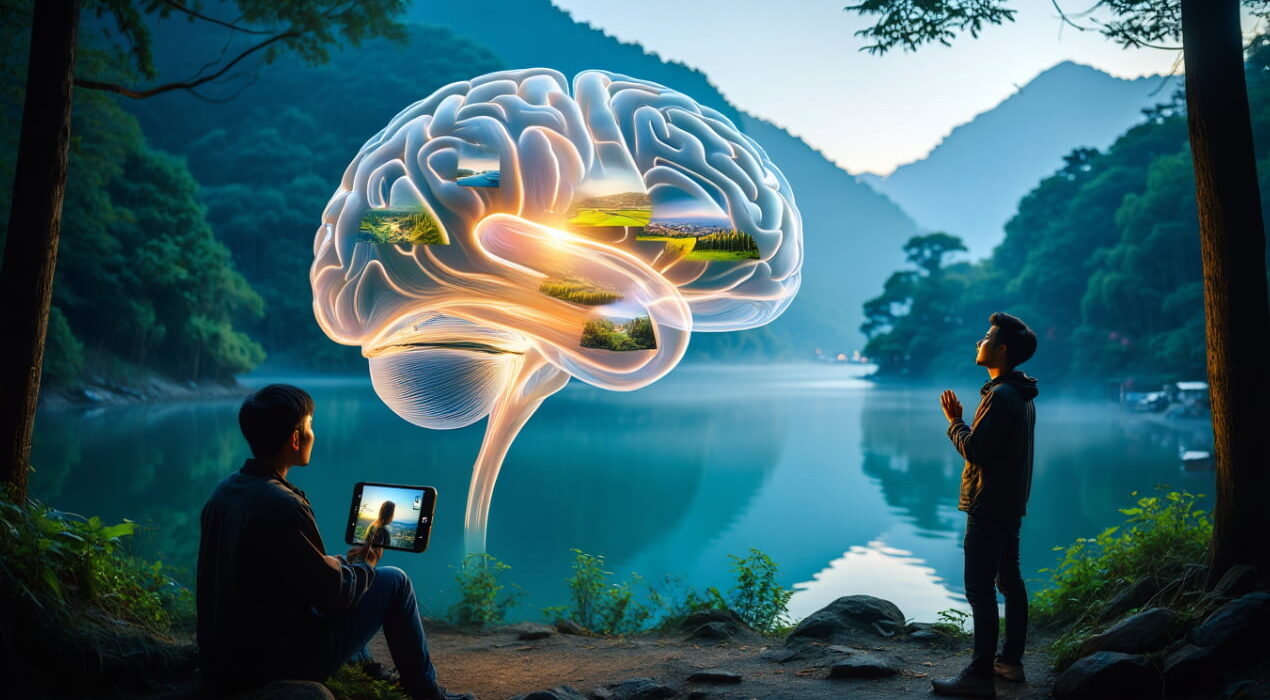
A new scientific study confirms what many travelers already feel intuitively. Digital healing social media tourism through travel videos can actually heal your emotions. The research, published in Scientific Reports, explores how disembodied landscape perception works. The study takes the Erhai Scenic Area in China as its focus. Researchers used web crawling to collect review texts. They then conducted semantic analysis and landscape coding. Video experiments and questionnaire surveys followed the initial analysis. The results reveal a fascinating psychological mechanism at work.
What Is Disembodied Landscape Perception?
In simple terms, it is experiencing a place without being there physically. Social media platforms overflow with travel photos and videos. Short video platforms create a new tourism paradigm. This disembodied tourism acts as both precursor and substitute for physical travel. Modern, high-pressure lifestyles create a growing desire for escape. Digital content fulfills this need in moments when physical travel is impossible. Embodied Cognition Theory traditionally focuses on physical presence. This study challenges that notion by extending it into the digital domain. Digital technologies can activate body schemata and emotional memory.
How Different Landscapes Affect Emotions
Not all landscapes create the same healing effect on viewers. The research identified four distinct landscape types with differentiated effects. Ecological-natural landscapes feature forests and waterscapes prominently. These reduce environmental stressors and alleviate negative emotions effectively. Coastal environments show particularly positive effects on mental well-being. Commercial-leisure landscapes offer different therapeutic qualities entirely. Historical-cultural landscapes tap into deeper cognitive processes. Rural-pastoral scenes connect to traditional life and simplicity. The study confirms that exposure to these landscapes through video triggers genuine emotional responses.
The Path from Screen to Reality
The research mapped a clear pathway from digital to physical experience. Disembodied landscape perception leads to embodied emotional change. This change then leads to embodied travel intention. Emotion plays a partial mediating role throughout this process. In other words, watching videos makes you feel something real. That feeling makes you want to go there yourself. The transformation from digital to physical experience is measurable. Personality traits moderate this relationship significantly. People high in openness respond more strongly to travel videos. Those with neuroticism also show distinct emotional patterns.
Why This Matters for Health Tourism
Health tourism traditionally involves physical travel for well-being. People travel to engage in health-related activities. This includes both disease prevention and medical treatment. This study expands that definition significantly. It extends health tourism into virtualized disembodied experiences. Landscape perception is the core of the tourism process. It directly influences satisfaction and health outcomes. The concept of restorative environmental perception explains how specific environments promote recovery. Natural environments have proven health benefits for centuries. Now digital versions of those environments show similar effects.
Practical Applications for Multiple Industries
The findings have real-world implications for destination marketers. They can design content with specific healing qualities in mind. Landscape architects can incorporate evidence-based elements into designs. Digital healing platforms can develop targeted interventions for users. During COVID-19, virtual social interaction enhanced psychological resilience. Similar mechanisms now apply to virtual tourism. Creative video therapy builds on cinema therapy concepts. Animated videos can soothe psychological wounds effectively. Pet and food content facilitates emotional release for viewers. Visual and tactile stimuli positively impact human emotions.
A New Frontier for Mental Health
This study opens exciting possibilities for future research directions. It provides a theoretical foundation for destination marketing strategies. It contributes to healthy landscape design principles for planners. It supports the development of new health tourism models. The Erhai Lake Scenic Area proved an ideal research site. Its rich natural and cultural resources provided diverse landscape samples. Rural tourism there has driven local revitalization efforts. The area’s pastoral scenery creates strong emotional appeal. As digital technologies advance, the line between virtual and real blurs further. The healing potential of media is now scientifically confirmed.